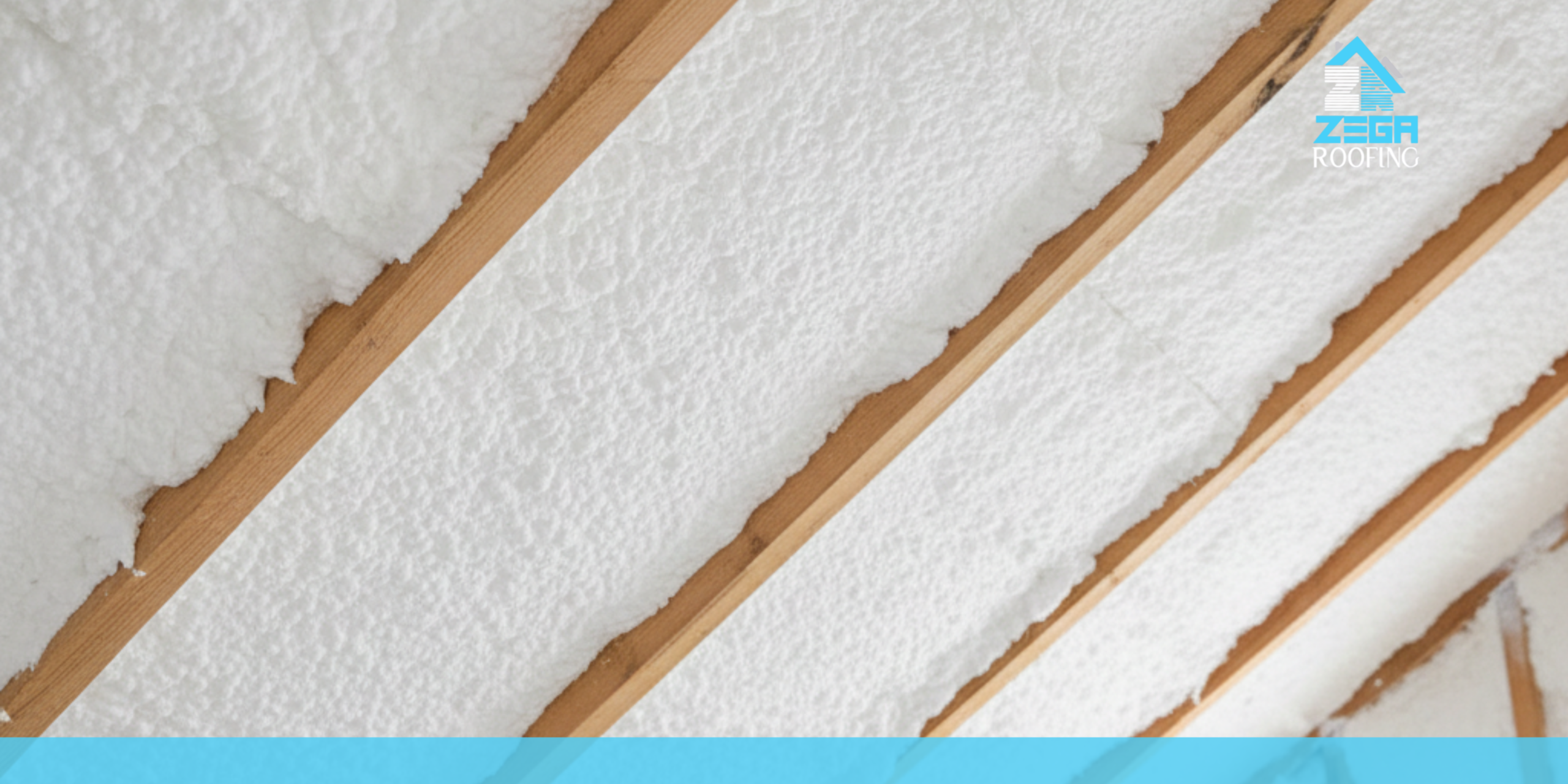
Attic insulation spray foam is one of the most effective ways to keep your Winnipeg home warm during harsh Manitoba winters and cool through summer heat. It creates an airtight seal that stops heat loss, reduces energy bills, and prevents moisture buildup in your attic space.
Spray foam is applied directly between rafters and along the roof deck, expanding to fill every gap and crack that traditional insulation materials often miss.
For Winnipeg homeowners dealing with ice dams, drafty rooms, or rising heating costs, attic insulation spray foam offers a long-term solution that pays for itself over time. Whether you choose open-cell or closed-cell foam, the benefits include better temperature control, improved indoor air quality, and added structural support for your roof.
What Is Attic Insulation Spray Foam?
Attic insulation spray foam is a polyurethane-based material that expands on contact when sprayed onto surfaces inside your attic. It bonds directly to the roof deck, rafters, and any surrounding structures to create a continuous thermal barrier. Unlike fiberglass batts or blown-in cellulose, spray foam does not sag, settle, or leave gaps over time.
There are two main types of spray foam used for attic insulation: open-cell and closed-cell. Open-cell foam is lighter, more flexible, and works well for interior applications where moisture barriers are already present. Closed-cell foam is denser, provides a higher R-value per inch, and acts as both insulation and a vapor barrier.
Both types are commonly used in Winnipeg homes, depending on the specific needs of the attic and the overall roof system. If you are planning a roofing installation in Winnipeg, spray foam insulation is often recommended as part of the project.
Why Is Attic Insulation Spray Foam Ideal for Winnipeg?
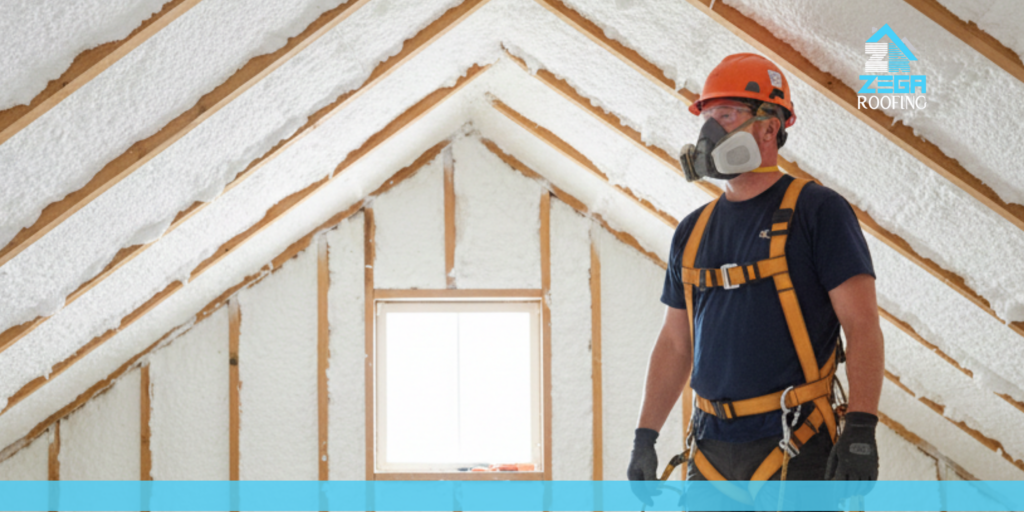
Winnipeg winters can push temperatures well below -30 degrees Celsius, and that kind of cold exposes every weakness in your home’s insulation. Attic insulation spray foam performs exceptionally well in these conditions because it seals the entire attic envelope. Cold air cannot penetrate through the foam barrier, and warm air stays inside where it belongs.
Prevents Ice Dams
Ice dams form when heat escapes through a poorly insulated attic, melting snow on the roof. That water refreezes at the eaves and creates a dam that forces moisture under your shingles. Attic insulation spray foam keeps the roof deck at a consistent temperature, which stops the cycle of melting and refreezing. If you have experienced ice dam issues, a shingle roof replacement combined with spray foam insulation can solve the problem for good.
Reduces Energy Bills
Because spray foam creates an airtight seal, your furnace and air conditioning system do not have to work as hard to maintain a comfortable temperature. Many Winnipeg homeowners report noticeable savings on their energy bills within the first winter after installing attic insulation spray foam.
Blocks Moisture and Condensation
Moisture is a major concern in Canadian attics. When warm, humid air from your living space meets cold surfaces in the attic, condensation forms. Over time, this leads to mold growth and wood rot. Closed-cell attic insulation spray foam acts as a vapor barrier, stopping moisture before it becomes a problem.
Open-Cell vs. Closed-Cell: Which Attic Insulation Spray Foam Is Best?
Choosing between open-cell and closed-cell spray foam depends on your budget, your attic’s ventilation setup, and the level of insulation you need. The table below breaks down the key differences.
| Feature | Open-Cell Foam | Closed-Cell Foam |
| R-Value per Inch | R-3.5 to R-3.8 | R-6.0 to R-7.0 |
| Moisture Barrier | No (requires separate barrier) | Yes (built-in vapor barrier) |
| Density | 0.5 lb per cubic foot | 2.0 lb per cubic foot |
| Best Use | Interior walls, mild climates | Attics, basements, cold climates |
| Sound Dampening | Excellent | Good |
| Structural Support | Minimal | Adds rigidity to walls and roof |
For most Winnipeg attics, closed-cell attic insulation spray foam is the better option. It handles extreme cold, provides a higher R-value, and doubles as a moisture barrier. Open-cell foam can work in certain situations, but you may need additional vapor retarders to protect against condensation.
How Is Attic Insulation Spray Foam Installed?
Professional installation of attic insulation spray foam follows a specific process. A trained technician will first inspect your attic to check for existing insulation, moisture damage, and ventilation issues. Any old or damaged insulation is removed before application begins.
The installer then uses specialized equipment to spray the foam directly onto the underside of the roof deck and between the rafters. The foam expands within seconds, filling every gap, crack, and crevice. After curing, any excess foam is trimmed to create a smooth, even surface.
A proper installation typically takes one to two days for an average-sized Winnipeg home. The team at Zega Roofing handles the full process from inspection to cleanup. You can check out our spray foam insulation services in Winnipeg for more details on how the process works.
Things To Know About Attic Insulation Spray Foam
- Spray foam insulation must be installed by a certified professional. Improper application can lead to off-gassing, uneven coverage, or voided warranties.
- Closed-cell foam has a lifespan of 20 years or more when properly installed, making it one of the most durable insulation options available.
- Attic insulation spray foam does not attract pests. Unlike fiberglass or cellulose, rodents and insects cannot nest in cured foam.
- In Canada, spray foam insulation must meet CAN/ULC-S705.1 standards. Always verify that your contractor uses approved products.
- Your attic ventilation may need to be adjusted after spray foam is applied. A qualified installer will assess airflow before and after the job.
- If you are combining spray foam insulation with a roof replacement, doing both at the same time can save on labour costs and reduce overall project time.
Attic Insulation Spray Foam vs. Other Insulation Types
Homeowners often compare spray foam to fiberglass batts and blown-in cellulose. Each material has its place, but attic insulation spray foam consistently outperforms the alternatives in cold climates like Winnipeg.
| Factor | Spray Foam | Fiberglass Batts | Blown-In Cellulose |
| R-Value per Inch | R-3.5 to R-7.0 | R-2.9 to R-3.8 | R-3.1 to R-3.7 |
| Air Sealing | Yes (complete seal) | No (gaps common) | Partial |
| Moisture Resistance | Excellent (closed-cell) | Poor (absorbs water) | Poor (absorbs water) |
| Lifespan | 20+ years | 10 to 15 years | 15 to 20 years |
| Settling Over Time | None | Yes (sags and compresses) | Yes (settles 10-20%) |
| Pest Resistance | High | Low | Moderate |
As the table shows, attic insulation spray foam leads in nearly every category. Fiberglass is less expensive upfront but loses effectiveness faster. Cellulose offers decent R-value but absorbs moisture and settles over time. For Winnipeg’s climate, spray foam is the clear winner for long-term performance and energy savings.
How To Choose a Contractor for Attic Insulation Spray Foam
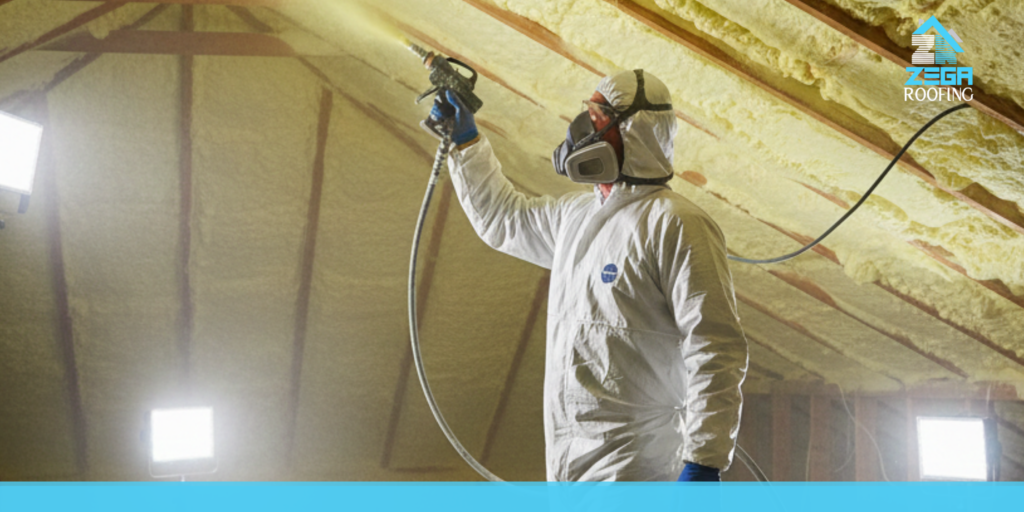
Not all contractors have the training or equipment to install spray foam insulation properly. When choosing a spray foam contractor, look for a company that is licensed, insured, and experienced with both open-cell and closed-cell applications. Ask for references, check online reviews, and confirm that they follow Canadian building codes for insulation.
Zega Roofing has over 25 years of experience serving Winnipeg and the surrounding areas. Our team handles everything from initial inspection to final cleanup, and we stand behind every attic insulation spray foam job we complete. To see examples of our past work, visit our project gallery.
Practical Tips Before Getting Attic Insulation Spray Foam
- Schedule your insulation project during the warmer months. Spray foam performs best when applied in temperatures above 15 degrees Celsius, and spring or summer installation allows for proper curing.
- Have your roof inspected first. If your roof has leaks or damaged shingles, those issues should be addressed before applying attic insulation spray foam. A residential roof installation paired with spray foam gives you a fully protected roofing system.
- Remove stored items from your attic before the installation crew arrives. They need full access to all surfaces for proper coverage.
- Ask about the curing time. Most spray foam products are fully cured within 24 hours, but your contractor will give you a specific timeline based on the material used.
Final Verdict on Attic Insulation Spray Foam for Winnipeg Homes
For homeowners in Winnipeg and across Manitoba, attic insulation spray foam is the top-performing option for keeping your home comfortable year-round. It outperforms fiberglass and cellulose in R-value, air sealing, moisture resistance, and longevity. Whether you are building a new home, renovating an older property, or upgrading your commercial roofing system, spray foam insulation delivers results that last.
If you are ready to upgrade your attic insulation, reach out to Zega Roofing. Our team will assess your home, recommend the right spray foam solution, and handle the full installation. Call us at +1 204-997-2697 or visit our contact page to schedule a free inspection.
Frequently Asked Questions About Attic Insulation Spray Foam
Is spray foam insulation good for attics?
Yes, spray foam insulation is one of the best options for attics. It provides superior air sealing and a high R-value compared to traditional insulation materials. In cold climates like Winnipeg, it helps prevent heat loss and ice dams while keeping energy bills low.
Why are people removing spray foam insulation?
Some homeowners remove spray foam due to improper installation or off-gassing from poorly mixed products. This is why hiring a certified and experienced contractor matters. When installed correctly, spray foam insulation does not cause these issues.
What are the negatives of spray foam insulation?
The main drawbacks include higher upfront cost and the need for professional installation. If mixed incorrectly, it can shrink or produce odours. However, these negatives are almost entirely avoided when you work with a qualified installer.
Can mold grow behind spray foam insulation?
Mold is unlikely to grow behind properly installed closed-cell spray foam because it acts as a moisture barrier. If there are pre-existing leaks or moisture issues that are not fixed before installation, mold can develop. Always address roof repairs before applying spray foam.
Why are lenders rejecting homes with spray foam insulation?
Some lenders flag homes with spray foam because it can make future roof inspections more difficult. The foam covers the roof timbers, which prevents surveyors from visually assessing the wood condition. This is more common in older properties. Working with a reputable contractor who documents the installation can help address lender concerns.