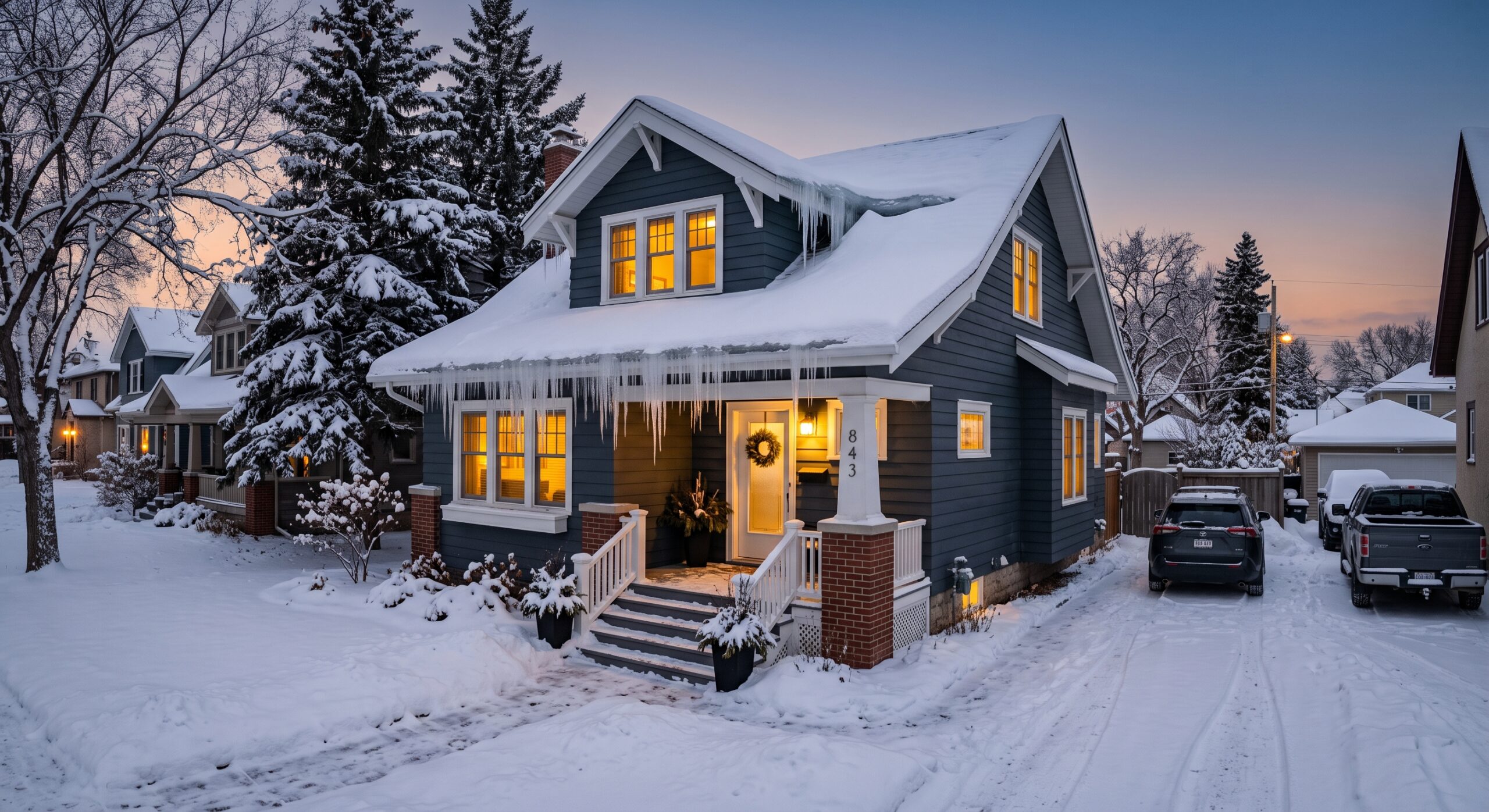
A roof leaking in Winnipeg is almost always tied to one of three culprits: ice damming during freeze-thaw cycles, deteriorated flashing around vents and chimneys, or wind and hail damage from a recent storm. Catching the source early, rather than just mopping up the ceiling stain, is what separates a fifteen-minute patch from a five-figure interior repair.
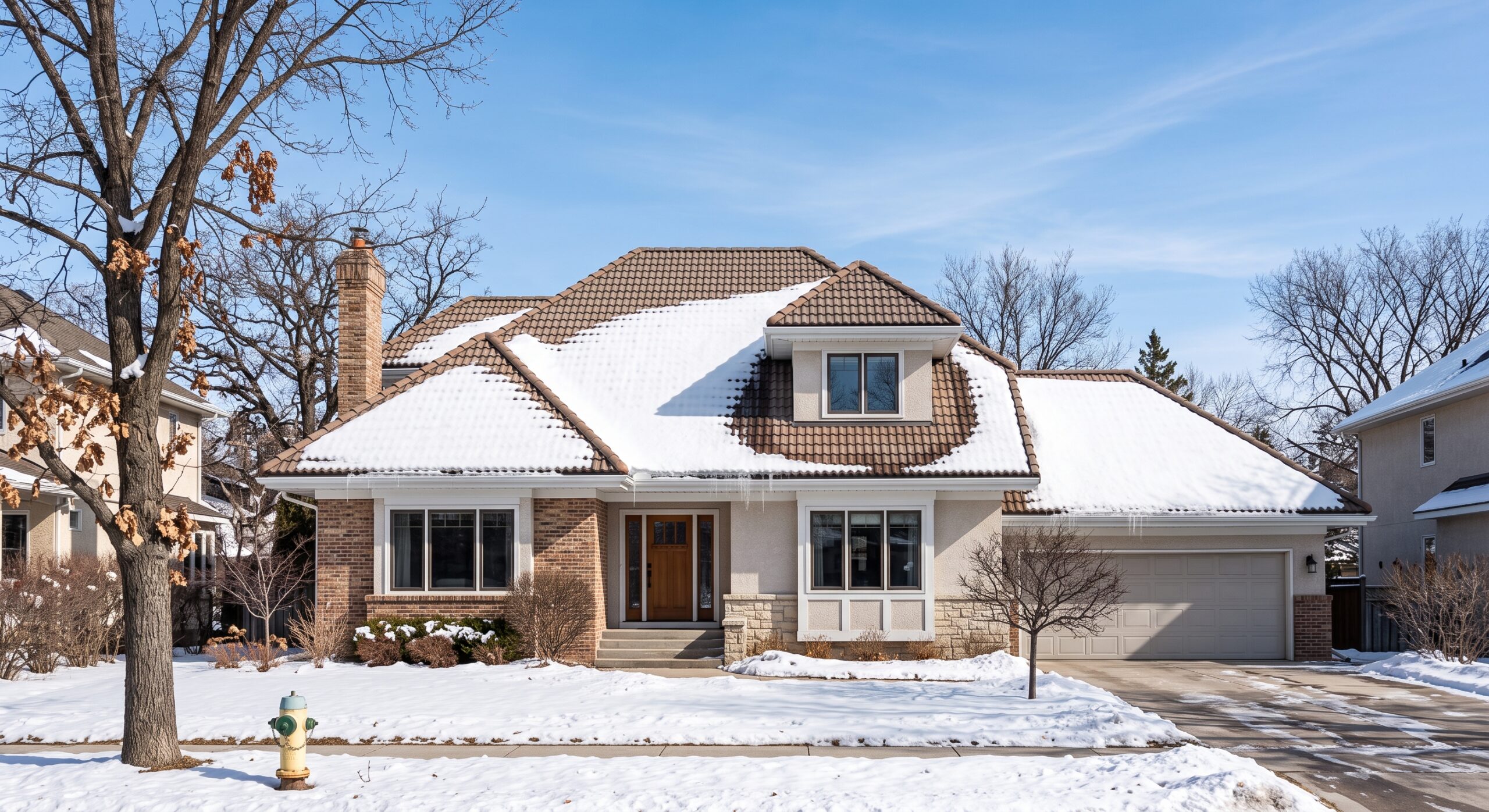
Manitoba winters put more stress on a roof than almost any other climate factor homeowners deal with. Snow accumulates, then partially melts from attic heat loss, refreezes at the colder eaves, and backs water up under the shingles.
That single cycle, repeated dozens of times each winter, is responsible for a large share of the leaks local roofing crews respond to between December and April.
Top 10 Reasons a Roof Starts Leaking in Winnipeg
A roof leaking issue rarely comes from one isolated event. It is usually the end result of small, ongoing wear that finally gives way during a heavy storm or a hard freeze. These ten causes and warning signs show up again and again in Winnipeg inspections.
- Ice damming at the eaves, caused by warm attic air melting snow that refreezes lower on the roofline
- Worn or cracked flashing around chimneys, skylights, and vent pipes
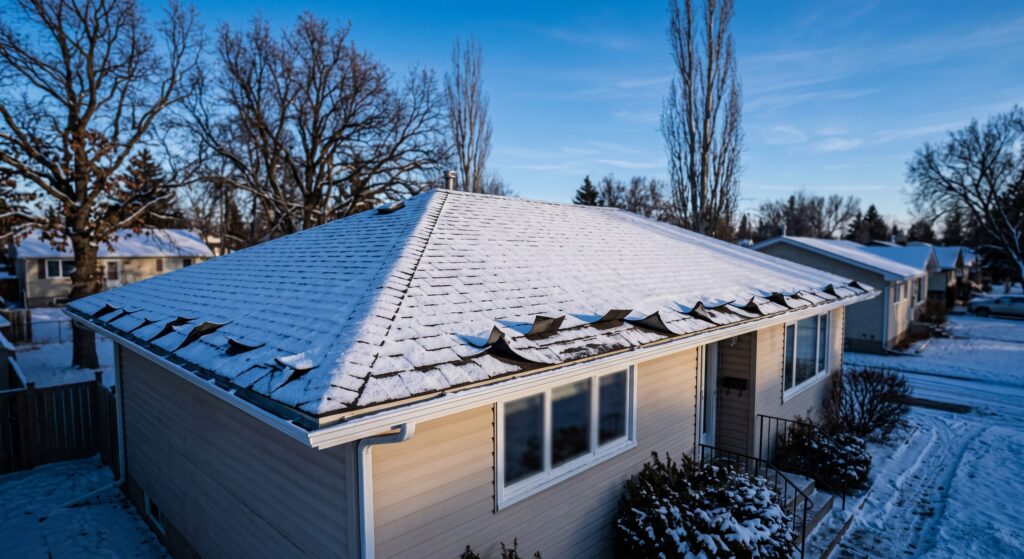
- Wind and hail damage that lifts or cracks shingles during spring and summer storms
- Aging shingles that have lost their granule coating and waterproofing ability
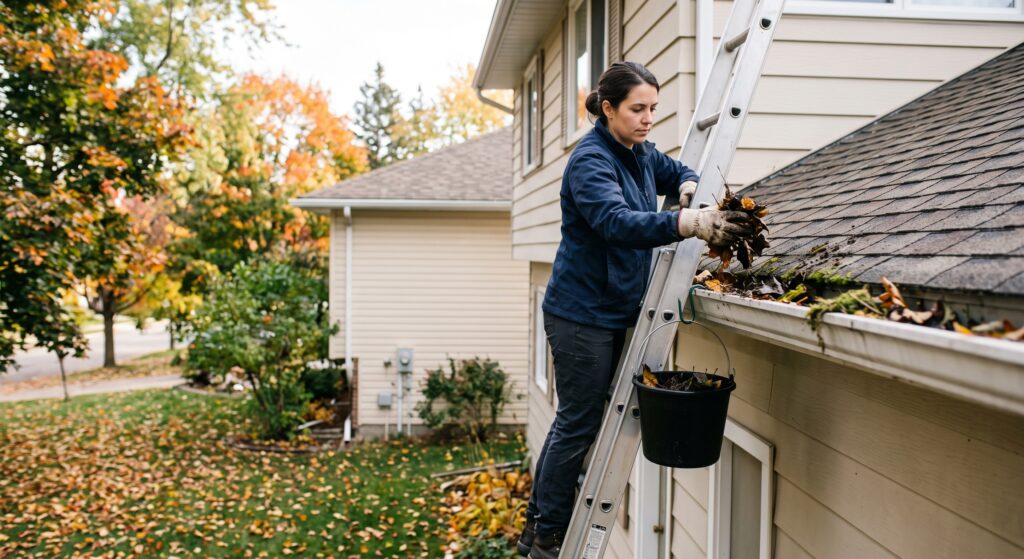
- Clogged gutters and downspouts that force meltwater back under the shingle edge
- Poor attic ventilation, which accelerates the heat loss that drives ice damming
- Cracked pipe boots or vent seals on the roof deck
- Deteriorated chimney mortar or counter-flashing
- Improperly sealed skylights
- Ponding water on low-slope sections after heavy rain or rapid snowmelt
Early Warning Signs Inside Your Attic
Not every leak announces itself with a visible drip. Some of the clearest early indicators show up in the attic or along interior walls long before a stain appears on the ceiling.
- Brown or yellow water rings on ceilings or upper walls
- A musty smell in the attic or top-floor closets
- Peeling paint or bubbling drywall near the roofline
- Visible frost or dampness on the underside of the roof deck
- Sagging sections of the ceiling or ice buildup at the eaves
If two or more of these signs are present, the roof leaking problem has likely been active for weeks, not days.
Roof Leaking Causes by Season in Winnipeg
Winnipeg’s climate shifts dramatically across the year, and each season brings a different leak risk. Understanding the pattern makes it easier to know what to inspect and when.
| Season | Common Trigger | What to Watch For |
| Winter | Ice damming, snow load | Icicles at the eaves, interior ceiling stains |
| Spring | Rapid snowmelt, heavy rain | Overflowing gutters, basement or attic dampness |
| Summer | Wind and hailstorms | Cracked, curled, or missing shingles |
| Fall | Leaf and debris buildup | Clogged downspouts, slow-draining valleys |
A roof leaking in January is almost never the same mechanical failure as one that appears in July, which is why a proper inspection always starts with asking when the problem began.
Repair Options: Which Fix Is Best for a Roof Leaking Issue
Once the source is identified, homeowners generally have three paths forward. Each one suits a different stage of damage, and picking the wrong one either wastes money or leaves the underlying problem untouched.
| Repair Option | Best For | Typical Lifespan Added |
| Spot patch repair | Isolated flashing or shingle damage | 1 to 3 years |
| Ice and water shield installation | Recurring ice damming at eaves and valleys | 10+ years |
| Full roof replacement | Widespread aging, multiple leak points | 20 to 30 years |
Why a leak happens determines how it should be fixed, and which option makes sense comes down to how widespread the damage is. A single cracked flashing seal calls for a spot patch repair, since the surrounding shingles are still structurally sound.
Recurring ice damming in the same valley every winter, however, points to a design or insulation issue that a patch will not solve, which is where a proper roof ice and water shield installation becomes the stronger choice.
When the shingles are past their expected service life and leaks are appearing in several locations at once, a full replacement is typically the most cost-effective option over the long run, even though it carries the highest upfront investment.
For homes already dealing with a roof leaking problem in more than one room, replacement tends to outperform repeated patching because it addresses the aging material underneath, not just the visible symptom.
Preventing a Roof Leaking Problem Before It Starts
Prevention is almost always less disruptive than repair, particularly in a climate where a small gap can turn into a major interior leak within a single freeze-thaw cycle.
Clearing gutters before the first snowfall keeps meltwater moving away from the roofline instead of pooling at the eaves. Checking attic insulation levels reduces the warm-air escape that drives ice damming in the first place. A quick visual check of flashing points after any major windstorm can catch a lifted seal before the next rainfall gets underneath it.
Routine inspections twice a year, once in fall and once in early spring, catch most issues while they are still inexpensive to fix. Homeowners who have had past repairs done, or who are comparing options after a shingle roof replacement elsewhere in the neighbourhood, often find it useful to browse a roofing project gallery to see what a properly sealed roofline actually looks like before deciding on next steps.
Things to Know
A few practical points are worth keeping in mind before scheduling any repair work.
Winnipeg’s building codes and climate conditions make certain underlayment and ventilation standards especially important, so repairs done without proper attic ventilation can cause the same leak to return within a year.
Insurance coverage for a roof leaking incident often depends on whether the damage was sudden, such as from a storm, versus gradual wear from age, so documenting the date and conditions when the leak first appeared can matter for a claim.
Homeowners in older neighbourhoods served by areas like Charleswood and River Heights frequently deal with original 1960s and 1970s roof decking that was never designed for today’s attic insulation standards, which raises the odds of ice damming compared to newer builds.
It also helps to know that a roof leaking in one spot does not always mean the water entered at that exact location. Water can travel along rafters or sheathing before dripping, so the stain on the ceiling is sometimes several feet from the actual breach.
Remember, a roof leaking at the wrong time of year can escalate fast in Manitoba’s climate, which is exactly why a quick inspection now is cheaper than a repair later. Zega Roofing has spent years diagnosing and fixing exactly this kind of damage across Winnipeg and its surrounding communities, and our team can tell you within one visit whether you’re looking at a patch, a shield upgrade, or a full replacement.
If you have any questions about roofing or you’re noticing early signs of a leak, contact us or call +1 204-997-2697 for a free roofing inspection.
Frequently Asked Questions
Can a roof leak without any visible damage outside?
Yes. Ice damming and small flashing gaps often leave no visible exterior sign, while water still enters through the attic from underneath the shingles.
How quickly should a leaking roof be repaired?
As soon as it’s noticed. Delaying even a few weeks can allow water to spread into insulation, drywall, and framing, turning a small fix into a larger project.
Does homeowner’s insurance cover a roof leaking from ice damming?
It depends on the policy. Sudden storm damage is commonly covered, while gradual wear from repeated freeze-thaw cycles may require separate documentation.
Is a temporary patch enough for a roof leak, or is full replacement needed?
It depends on the extent of the damage. Isolated spots suit a patch, while widespread aging or recurring leaks usually call for replacement.
How often should a roof be inspected to prevent leaks?
Twice a year. Fall and early spring inspections catch most developing issues before they turn into active leaks.