

Shingle roof replacement typically costs between $5,000 and $15,000 for an average-sized home, depending on roof size, material quality, and labor involved. A full shingle roof replacement becomes necessary when your existing shingles show widespread damage, are past their expected lifespan (usually 20 to 25 years), or when repairs no longer provide adequate protection.
The process involves removing old materials, inspecting the deck, and installing new underlayment and shingles. Winnipeg homeowners face unique challenges due to harsh winters and temperature swings that accelerate wear. This complete breakdown covers costs, timing, material options, installation steps, and answers to common questions about shingle roof replacement so you can make informed decisions for your home.
What Is Shingle Roof Replacement?
Shingle roof replacement refers to the complete removal and reinstallation of your roof’s shingle layer along with the underlying components. Unlike simple repairs that patch damaged areas, a full replacement addresses the entire roofing system. The process starts with stripping away old shingles down to the roof deck. Contractors then inspect the decking for rot, water damage, or structural issues. After repairs, they install ice and water barriers, underlayment, drip edges, and finally the new shingles themselves.
Many Winnipeg homeowners confuse repairs with replacement. Repairs work well for isolated damage like a few missing shingles or minor leaks. However, when damage covers more than 30% of your roof or when shingles have reached their end of life, full replacement becomes the smarter long-term investment. The professional roofing services provided by experienced contractors ensure proper installation that protects your home for decades.
Signs You Need Shingle Roof Replacement
Knowing when to schedule shingle roof replacement saves you from costly emergency repairs. Your roof communicates its condition through visible warning signs. Curling or buckling shingles indicate moisture damage and age-related deterioration. Missing shingles expose your underlayment to weather damage. Granule loss shows up as bald spots on shingles and accumulation in gutters, signaling that protective coating has worn away. These granules protect the asphalt layer from UV damage, so their loss accelerates aging significantly.
Interior signs matter too. Water stains on ceilings, daylight visible through roof boards, and increased energy bills all point toward failing roofing materials. Sagging roof sections indicate structural problems that require immediate attention. Age remains the most reliable indicator overall. Asphalt shingles last 20 to 25 years under normal conditions. If your roof approaches this age range and shows multiple symptoms, shingle roof replacement offers better value than repeated repairs.
When to Repair vs. When to Replace
| Sign | Repair Recommended | Replacement Recommended |
| Missing Shingles | 1 to 5 shingles | Multiple areas affected |
| Roof Age | Under 15 years | Over 20 years |
| Leaks | Single location | Multiple locations |
| Granule Loss | Minor, isolated | Widespread across roof |
| Curling/Buckling | Few shingles | Visible from ground |
What to Expect During the Shingle Roof Replacement Process
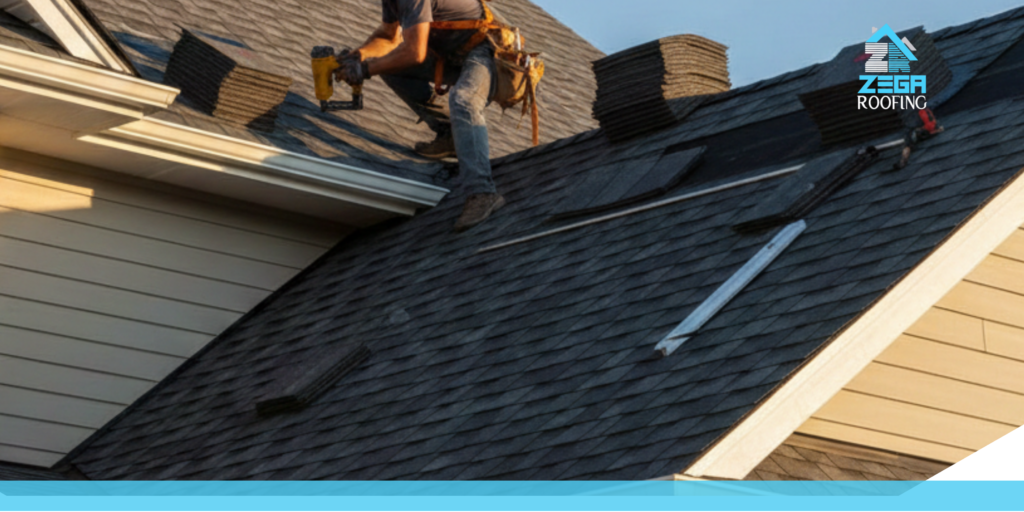
A typical shingle roof replacement takes one to three days depending on roof size and weather conditions. The crew arrives early and begins by protecting your landscaping with tarps. They set up equipment including ladders, safety harnesses, and material staging areas.
Removal comes first. Workers strip old shingles using specialized tools called shingle removers or roofing shovels. They work section by section, disposing of materials into dumpsters positioned in your driveway. Once bare, the deck undergoes inspection. Roofers look for soft spots, water staining, and rot. They replace damaged decking before proceeding.
Installation follows a specific order. Ice and water shield goes down first along eaves and valleys where ice dams form. Synthetic underlayment covers the remaining deck surface. Drip edges attach along the perimeter. Starter strips provide adhesion points for the first row of shingles. The main shingles then go up in overlapping rows from bottom to top. Ridge caps finish the peak. Learn more about different roofing tiles and materials available for Winnipeg homes.
Choosing the Right Shingles for Your Replacement
Material selection directly impacts how long your shingle roof replacement lasts. Three-tab shingles offer the most affordable option with a lifespan of 15 to 20 years. Architectural shingles (also called dimensional or laminate) provide better durability at 25 to 30 years while adding visual depth to your roof. Premium designer shingles replicate the look of slate or cedar shakes and can last 30 to 50 years.
Winnipeg weather demands attention to wind and impact ratings. Look for shingles rated for winds up to 130 mph and Class 4 impact resistance for hail protection. Color choice affects energy efficiency. Lighter colors reflect heat while darker tones absorb it. Consider your home’s style, neighborhood standards, and personal preferences when selecting appearance. For premium options, explore landmark roofing shingles known for durability and style.
Shingle Types Comparison
| Shingle Type | Lifespan | Cost Level | Best For |
| 3-Tab | 15-20 years | Budget | Rentals, budget projects |
| Architectural | 25-30 years | Mid-range | Most homeowners |
| Designer/Premium | 30-50 years | Premium | Luxury homes, long-term |
Factors That Affect Shingle Roof Replacement Cost
Several variables determine your final shingle roof replacement price. Roof size measured in squares (100 square feet each) forms the baseline. A 2,000 square foot roof equals 20 squares. Material costs vary significantly between budget three-tab options and premium architectural selections. The complexity of your roof design also plays a role, with multiple valleys, dormers, and penetrations adding time and materials to the project.
Labor accounts for roughly 60% of total project cost. Steeper roofs require more safety equipment and slower work, increasing labor charges. Multiple roof layers needing removal add disposal fees. Damaged decking requiring replacement raises material and labor costs. Accessibility matters too. Homes with limited driveway space or landscaping obstacles may incur additional setup charges. The number of layers currently on your roof affects removal time and disposal costs as well.
Winnipeg’s climate adds considerations other regions avoid. Ice dam prevention features like ice and water shield membranes should extend further up the roof than in warmer areas. Quality ventilation systems prevent moisture buildup and ice dam formation.
For accurate pricing on your specific project, contact Zega Roofing for a free inspection and detailed quote.
Best Time of Year for Shingle Roof Replacement
Late spring through early fall offers ideal conditions for shingle roof replacement in Winnipeg. Temperatures between 10 and 25 degrees Celsius allow shingles to seal properly. The adhesive strips on shingles need warmth to activate and bond adjacent shingles together. Working during optimal weather conditions also reduces the risk of complications during the installation process.
Summer months bring peak demand and potentially longer wait times for scheduling. Fall provides a sweet spot with moderate temperatures and lower contractor demand. Booking your project during shoulder seasons often means faster scheduling and sometimes better pricing. Avoid scheduling during winter if possible. Cold temperatures make shingles brittle and prevent proper sealing. Emergency winter replacements cost more due to difficult working conditions and the need for specialized techniques. Spring thaw season brings unpredictable weather that can delay projects and create scheduling challenges for homeowners and contractors alike.
Maintaining Your New Roof After Shingle Roof Replacement
Proper maintenance extends the life of your shingle roof replacement investment. Schedule annual inspections, preferably in spring after winter weather and in fall before freeze-up. Look for missing or damaged shingles, clogged gutters, and debris accumulation.
Keep gutters clean to prevent water backup that damages eaves and fascia. Trim overhanging branches that drop debris and provide animal access. Remove moss or algae growth promptly using appropriate cleaning methods. Avoid pressure washing, which can dislodge granules. Ensure attic ventilation remains clear and functional. Good airflow prevents moisture problems and premature shingle aging. Learn about maintaining roof integrity for long-lasting protection.
Final Thoughts on Shingle Roof Replacement
Your roof protects everything inside your home. A well-executed shingle roof replacement delivers decades of reliable protection against Winnipeg’s challenging weather. Selecting quality materials, recognizing the signs that indicate replacement time has arrived, and working with experienced professionals all contribute to a successful project. Homeowners who invest in proper materials and installation see better returns through increased home value and reduced maintenance needs over time.
Investing in professional installation ensures proper technique and warranty coverage. Cutting corners on labor or materials often leads to premature failure and costly repairs down the road. Zega Roofing serves homeowners throughout the Winnipeg area with expert craftsmanship, quality materials, and honest communication. Our team handles everything from initial inspection through final cleanup, making the entire process straightforward and stress-free. Contact us today for a free roof inspection and detailed estimate for your shingle roof replacement project.
Frequently Asked Questions
Can you just replace shingles on a roof?
Yes, you can replace individual shingles if damage is limited to a small area. Spot repairs work well for storm damage affecting a few shingles or isolated wear. However, if your roof shows widespread damage, multiple problem areas, or has reached 20 plus years of age, a full shingle roof replacement provides better long-term value than repeated patch jobs.
How often should shingles be replaced?
Most asphalt shingles need replacement every 20 to 25 years. Three-tab shingles may require replacement sooner at 15 to 20 years. Architectural and premium shingles can last 25 to 30 years or longer with proper maintenance. Winnipeg’s freeze-thaw cycles and severe weather may shorten lifespan compared to milder climates.
Is replacing shingles the same as replacing a roof?
No, these are different scopes of work. Replacing shingles typically refers to removing and installing new shingles while keeping underlayment and decking intact. A full shingle roof replacement includes stripping everything down to the deck, inspecting and repairing structural components, and installing all new underlayment, barriers, and shingles.
Can I put a new roof over old shingles?
Building codes in most areas allow one layer of shingles over existing shingles. However, this approach has drawbacks. The new layer cannot adhere as well, trapping moisture between layers. Added weight stresses your roof structure. Hidden damage goes undetected. Most professionals recommend complete removal for proper roof replacement results.
What is the best material to put under shingles?
Synthetic underlayment combined with ice and water shield provides the best protection. Synthetic underlayment offers superior tear resistance and moisture protection compared to traditional felt paper. Ice and water shield, a self-adhering membrane, should cover vulnerable areas like eaves, valleys, and around penetrations. This combination is especially important for Winnipeg homes facing ice dam conditions.