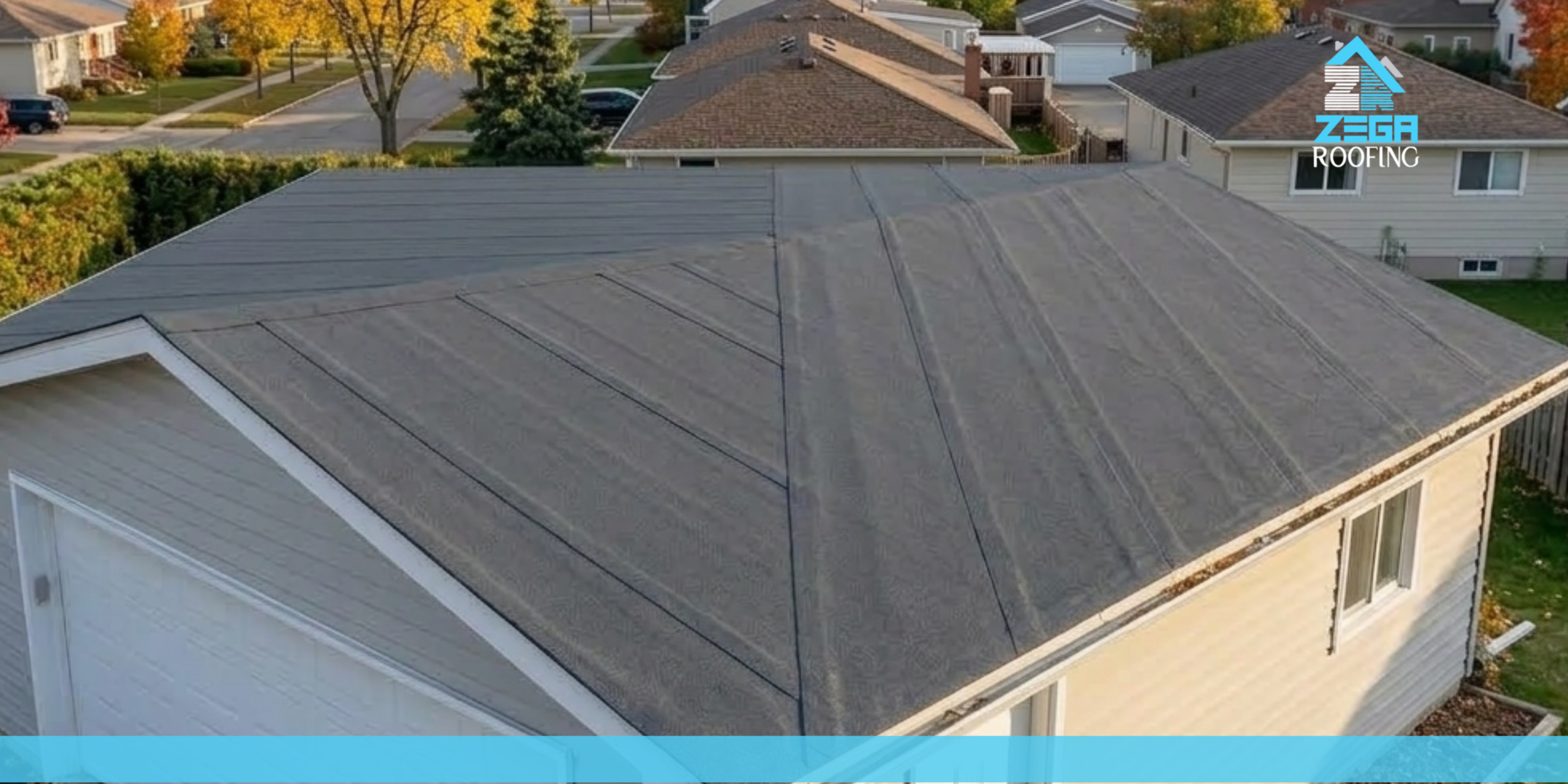
Roofing asphalt roll is a flat, flexible material commonly applied to low-slope and flat roofs across Canada. It offers a budget-friendly solution for sheds, garages, porches, and certain residential rooftops. Below, you will find everything from the different types available to where this material works best, how it gets installed, and how long it holds up in Winnipeg weather.
You will also see practical maintenance tips, comparison tables, and answers to frequently asked questions. If you are considering a roofing installation in Winnipeg, this information will help you decide if rolled asphalt suits your property.
What Is Roofing Asphalt Roll?
Roofing asphalt roll is a large, continuous sheet of asphalt-saturated material that comes in rolls, typically 36 inches wide. It is designed for flat or low-slope applications where traditional shingles may not perform well. The material consists of a base layer (usually fiberglass or organic felt), coated with asphalt, and finished with mineral granules on the top surface for weather protection.
Unlike individual shingles that overlap in rows, this product is laid out in long strips across the roof deck. That makes it faster to apply on larger flat surfaces. It is one of the most affordable options available in Canada, making it popular for secondary structures. For properties that need a full shingle roof replacement, a professional roofer can advise whether roll roofing or shingles are the better fit.
Types of Roofing Asphalt Roll

Not all roofing asphalt roll products are the same. Several types exist for different applications and budgets. Choosing the right one depends on your roof slope, climate exposure, and intended use.
Mineral Surface Roll Roofing
This is the most common type. It has a layer of ceramic granules on the exposed side that protects against UV rays and weathering. Mineral surface roll roofing is often used as the primary covering on low-slope roofs and outbuildings.
Smooth Surface Roll Roofing
Smooth surface varieties do not have granules. Instead, they feature a plain asphalt coating and are typically used as a base layer or flashing material rather than a finished surface.
Self-Adhesive (Peel-and-Stick) Roll Roofing
Self-adhesive roofing asphalt roll comes with a sticky backing that eliminates the need for hot asphalt or roofing cement during application. It works well for small projects like sheds and garden buildings.
Double-Coverage Roll Roofing
This type features a wider exposed mineral surface and a non-granulated selvedge edge for overlapping. Double-coverage roofing asphalt roll provides two layers of protection at every point on the roof, making it more durable for harsh Canadian winters.
Table 1: Comparison of Roofing Asphalt Roll Types
| Type | Surface | Best Use | Durability |
| Mineral Surface | Granulated | Primary flat roof covering | Moderate |
| Smooth Surface | Plain asphalt | Base layer or flashing | Lower |
| Self-Adhesive | Varies | Sheds, small projects | Moderate |
| Double-Coverage | Granulated + selvedge | Cold climates, full roofs | Higher |
Where Should You Use Roofing Asphalt Roll?
Roofing asphalt roll works best on flat or low-slope roofs with a pitch of 1:12 to 4:12. It is not recommended for steep-slope residential roofs because water can seep underneath the seams when rain hits at an angle.
Common applications include detached garages, workshops, storage sheds, covered porches, carports, and temporary repairs. In Winnipeg, where heavy snowfall and freeze-thaw cycles are common, selecting the right material for your roof slope matters. The team at Zega Roofing can assess your property and recommend whether this rolled product or another option is the smarter choice. Check out the areas Zega Roofing serves to see if your neighbourhood is covered.
How Is Roofing Asphalt Roll Installed?
Installing roofing asphalt roll is a straightforward process, but it still requires attention to detail to prevent leaks and premature wear.
First, the roof deck must be clean, dry, and free of debris. Any damaged or rotting plywood should be replaced before the material goes down. A drip edge is then installed along the eaves to direct water away from the fascia.
Next, the first strip is positioned along the bottom edge of the roof. It is secured using roofing nails spaced about 12 inches apart and sealed with roofing cement along the edges. Each subsequent strip overlaps the one below it by at least 2 inches (4 inches for double-coverage types), creating a watertight bond. Seams should always run parallel to the roof slope so that water flows over the overlaps rather than into them.
For the best results, install on a warm day when the material is flexible. Cold temperatures can make it brittle and harder to handle. A common mistake homeowners make is starting the job in early spring when temperatures still dip below freezing overnight. Waiting until consistent warmth arrives helps the asphalt soften and bond properly to the roof deck.
Professional installation is always recommended for the longest lifespan. Contact Zega Roofing for a free inspection and expert advice on your project.
How Long Does Roofing Asphalt Roll Last?
On average, roofing asphalt roll lasts between 5 and 15 years depending on the type, quality of installation, and local climate. In Winnipeg, where temperatures swing from extreme cold to intense summer heat, the lifespan can lean toward the lower end without proper upkeep.
Double-coverage varieties tend to last longer because they provide two layers of protection. Self-adhesive types may wear out sooner if the adhesive breaks down due to temperature fluctuations. Regular inspections and prompt repair of tears or lifted seams will extend the life of your rolled roof significantly. As a practical tip, applying a coat of reflective roof sealant every few years can slow down UV degradation and add extra years to the surface.
Maintenance Tips for Roofing Asphalt Roll

Maintaining this material does not require expensive tools, but consistency matters. Inspect your roof at least twice a year, ideally in spring and fall. Look for cracks, bubbles, lifted edges, and areas where granules have worn away. After major storms, do a quick visual check. Clear debris like leaves and branches regularly, as these trap moisture and accelerate deterioration.
If you spot damage early, small repairs are simple and affordable. For larger issues, Zega Roofing’s gallery shows examples of completed projects across Winnipeg.
Seasonal Maintenance Schedule
| Season | Task | Why It Matters |
| Spring | Full inspection after winter | Identifies freeze-thaw damage early |
| Summer | Check for bubbles and blistering | Heat causes trapped moisture to expand |
| Fall | Clear debris and clean gutters | Prevents moisture buildup before snow |
| Winter | Monitor for ice dams and snow load | Excess weight can damage seams |
Things To Know About Roofing Asphalt Roll
Before committing to roofing asphalt roll, there are a few important points to consider. First, this material is not ideal for steep roofs. It performs best on pitches of 4:12 or less, since steeper slopes increase the risk of water infiltration at the seams.
Second, this product is lighter than shingles, meaning it may be more vulnerable to high winds if not secured properly. Extra fastening and adhesive are necessary in exposed locations.
Third, while the upfront cost is low, it does not last as long as other materials. Factor in potential replacements every 10 to 15 years. Professional installation makes a noticeable difference in performance. Zega Roofing offers free inspections and honest estimates. Learn more about Zega Roofing and the team behind every project.
Finally, if your flat roof also needs better insulation, combining rolled asphalt with spray foam insulation in Winnipeg can improve energy efficiency and protect the roof deck from condensation damage.
Roofing Asphalt Roll vs. Shingles: Which Option Works Best?
Both roofing asphalt roll and traditional shingles are asphalt-based, but they serve different purposes. Shingles are cut into individual tabs and installed in overlapping rows on sloped roofs. Rolled material, on the other hand, is applied in wide continuous sheets on flat or nearly flat surfaces. If your roof has a slope of 4:12 or higher, shingles are the better choice because they shed water more effectively. For lower slopes, rolled asphalt provides adequate coverage at a fraction of the price.
Shingles generally last 20 to 30 years, while rolled asphalt tops out around 15 years under ideal conditions. If your home has a sloped roof that needs attention, read about residential roof installations to explore your options.
For pricing on either option, just contact Zega Roofing directly at +1 204-997-2697 for a free estimate. Choosing the right material is part of building an ideal roofing system that protects your home year-round.
Final Takeaway on Roofing Asphalt Roll
Roofing asphalt roll remains one of the most practical and affordable solutions for flat and low-slope roofs in Canada. It is easy to install, budget-friendly, and available in several types to match different needs. Pair it with regular maintenance and professional installation from Zega Roofing, and you will get the most value from every roll. Reach out about commercial roofing repairs if your business property also needs attention.
Frequently Asked Questions
What is rolled asphalt roofing called?
Rolled asphalt roofing is commonly called roll roofing or mineral surface roll roofing. It is also referred to as MSR in the industry. The name depends on the variety, with smooth, granulated, and self-adhesive types each carrying their own label.
Is rolled asphalt roofing good?
Yes, it is a good option for flat and low-slope roofs, especially when budget is a concern. It provides adequate weather protection for garages, sheds, and secondary structures. However, it does not match the longevity of shingles or membrane systems.
How long is a roll of asphalt roofing?
A standard roll is 36 feet long and 36 inches wide, covering roughly 100 square feet. Some products may differ slightly, so always check the specifications before purchasing.
What kind of roofing is asphalt?
Asphalt roofing refers to any material made with an asphalt-saturated base. This includes traditional shingles, roofing asphalt roll, and modified bitumen membranes. It is one of the most widely used roofing materials in North America.
How long does rolled asphalt last?
Rolled asphalt typically lasts between 5 and 15 years depending on installation quality, climate, and maintenance. In cold climates like Winnipeg, the lifespan may be closer to 8 to 12 years. Regular inspections and timely repairs help extend that range.