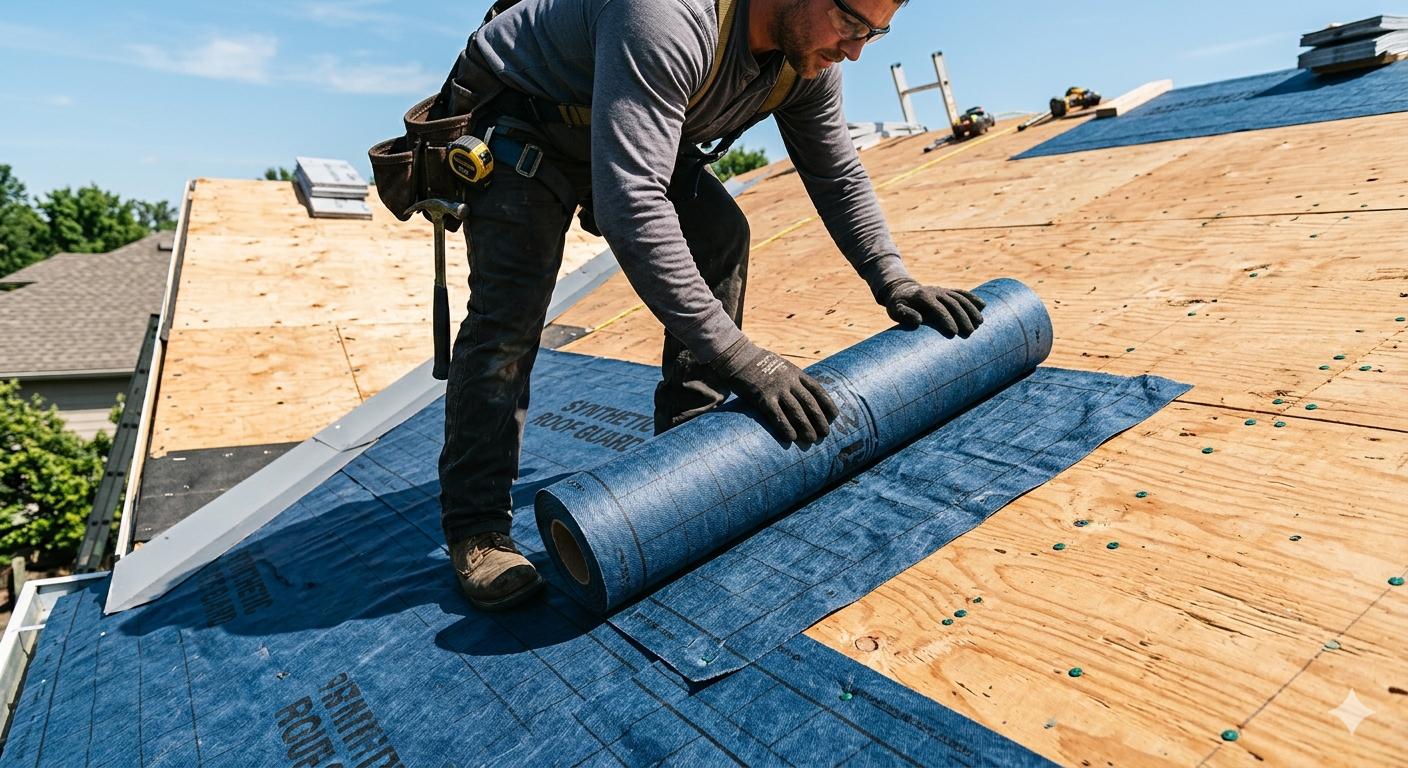
Roofing underlayment is a protective barrier installed between the roof deck and the outer shingles that keeps moisture, wind-driven rain, and ice from reaching the wooden structure beneath.
For Winnipeg homeowners, selecting the right material can mean the difference between a roof that lasts decades and one that fails prematurely. There are three main types, including felt, synthetic, and self-adhering options, each suited for different climates and budgets.
Whether you are building new or planning a roof replacement, the sections below cover roofing underlayment types, benefits, installation tips, and common mistakes to help you make the right call.
Why Does Roofing Underlayment Matter?
Many homeowners focus on the shingles they can see from the street, but roofing underlayment does much of the heavy lifting when it comes to weather protection. Think of it as a second line of defense sitting right beneath your visible roofing material.
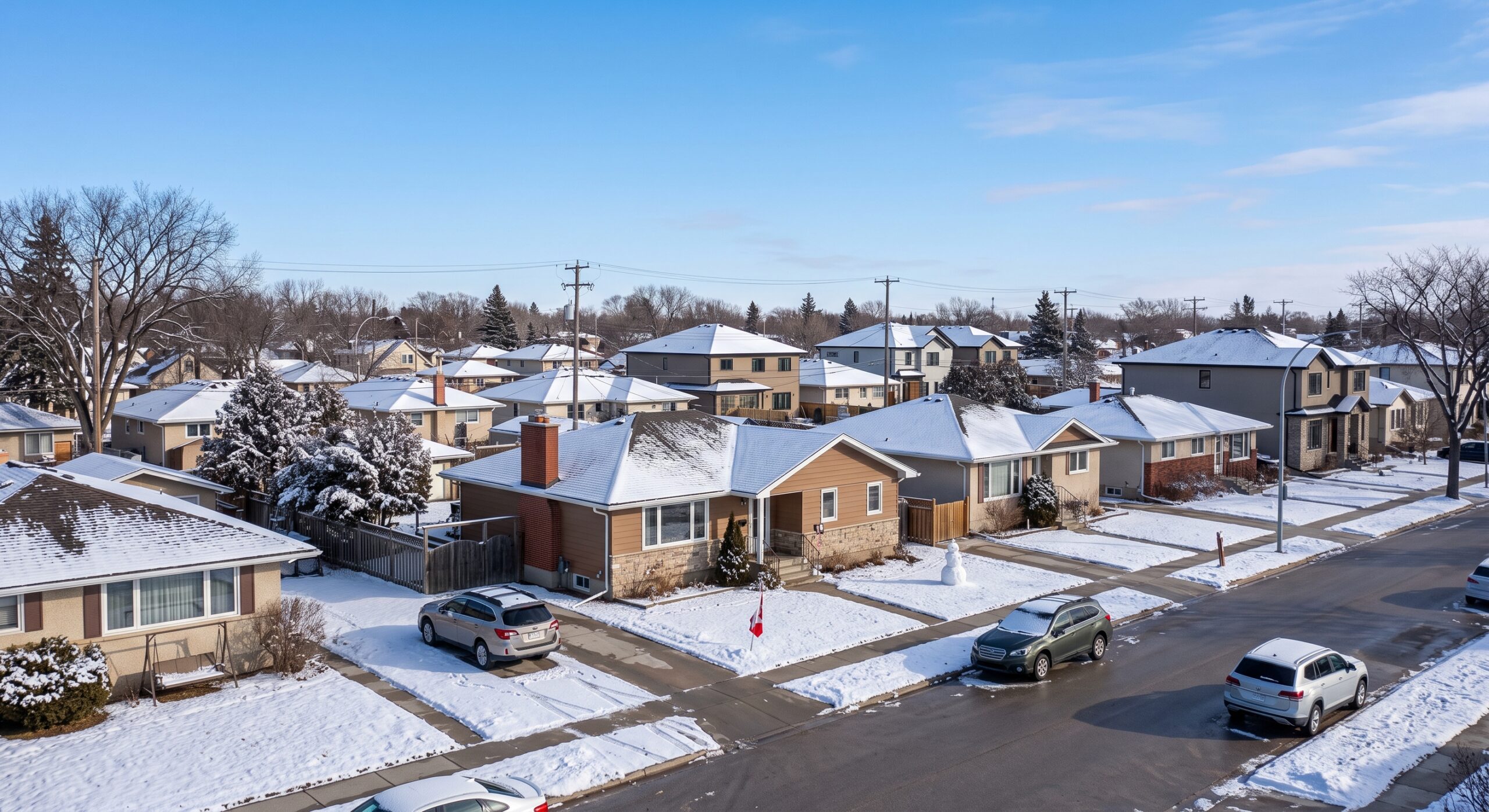
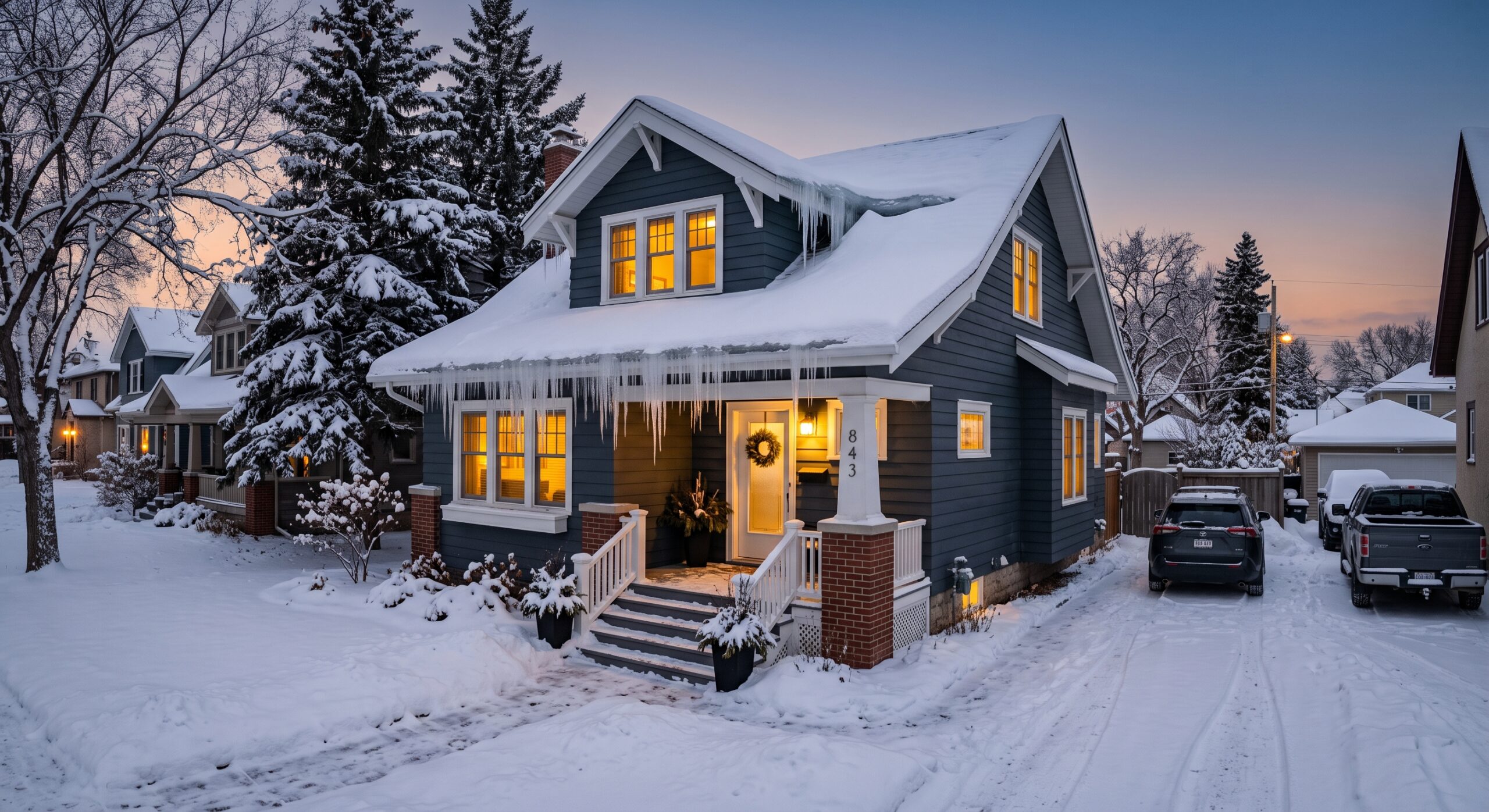
In Winnipeg, the climate brings snow, freezing rain, and temperature swings that test every part of a roofing system. Without this protective layer, water from melting ice can seep through gaps in the shingles and soak into the plywood deck. Once moisture reaches the wood, rot, mold, and structural damage follow quickly.
| Benefit | How It Helps Your Roof |
| Moisture Protection | Blocks water from reaching the deck even if shingles are damaged or lifted by wind |
| Ice Dam Defense | Self-adhering types seal around nail penetrations and prevent ice dam leaks common in Manitoba |
| Extended Roof Life | Reduces wear on the deck, helping the entire system last longer |
| Code Compliance | Canadian building codes require this layer in most residential and commercial applications |
| Wind Resistance | Keeps rain from being pushed underneath shingles during storms |
Professional roofers at Zega Roofing always include proper roofing underlayment as part of every roofing installation in Winnipeg.
Types of Roofing Underlayment Explained
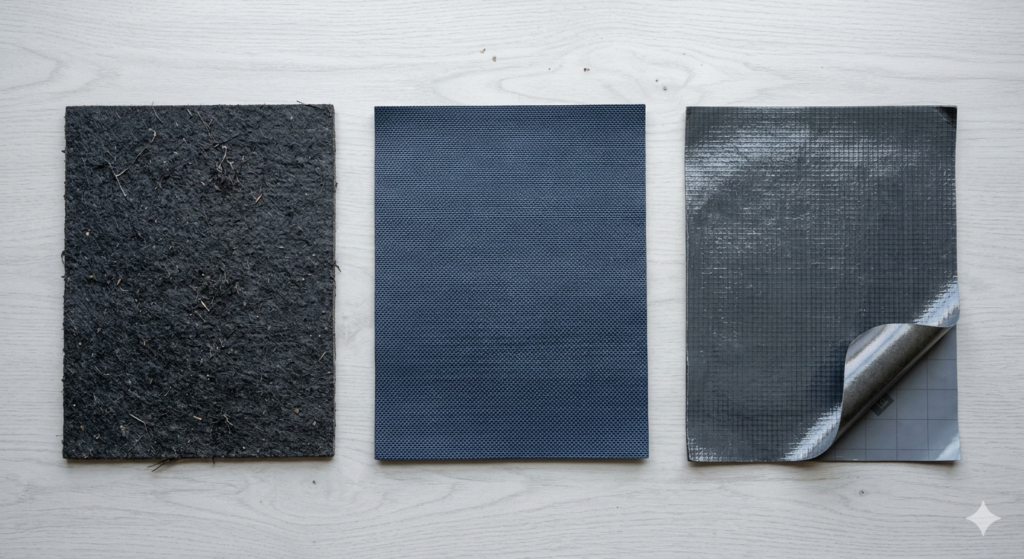
Not all products perform the same way. The right choice depends on your roof style, local weather, and overall budget. Below are the three most common types contractors use across Canada.
Asphalt-Saturated Felt
Felt has been used in roofing for decades and remains popular for budget-conscious homeowners. It comes in two thicknesses, commonly referred to as 15-pound and 30-pound. The thicker option handles heavier rainfall and snowfall better.
Felt roofing underlayment is affordable and widely available, but it can absorb moisture if left exposed to rain and tends to wrinkle or tear in high winds.
Synthetic Options
Synthetic roofing underlayment is made from woven polyethylene or polypropylene. It is lighter, stronger, and more resistant to tearing than felt. Many professional crews prefer synthetic products because they lay flat, resist moisture, and withstand longer exposure during construction. While these products cost more upfront, they deliver better long-term value because they do not degrade as quickly under UV rays.
Self-Adhering (Peel-and-Stick) Membrane
Self-adhering membrane creates a watertight seal around every nail hole and overlap. It bonds directly to the deck without staples or nails, eliminating potential leak points. In Winnipeg, this type is especially useful along eaves, valleys, and around penetrations where ice dams form. Canadian codes often require it along the eaves in cold-climate regions.
How to Choose the Right Roofing Underlayment
Picking the best product depends on several factors, and no single option works perfectly for every situation.
Climate and weather exposure should be the first consideration. In Winnipeg, a combination of self-adhering membrane at the eaves and synthetic roofing underlayment across the rest of the deck is a popular setup that provides maximum ice protection without driving up costs.
Roof slope also matters. Low-slope roofs hold water longer and need a more waterproof product, while steeper roofs can use lighter options.
Budget is always a factor. Felt costs less upfront, but replacing it sooner can eat into savings. Synthetic and self-adhering products pay for themselves by preventing premature deck damage.
For specific pricing, contact Zega Roofing directly for a free estimate tailored to your property.
| Factor | Felt | Synthetic | Self-Adhering |
| Cost | Lowest | Moderate | Highest |
| Durability | Good for short-term exposure | Excellent long-term | Best seal and longest protection |
| Best For | Budget projects | Most residential roofs | Ice dam zones, valleys, eaves |
| Weather Resistance | Absorbs moisture if exposed | High resistance to moisture and UV | Fully waterproof seal |
How Roofing Underlayment Is Installed
Proper installation of roofing underlayment is just as important as the material itself. The process starts with a clean, dry roof deck where old materials, nails, and debris have been removed.
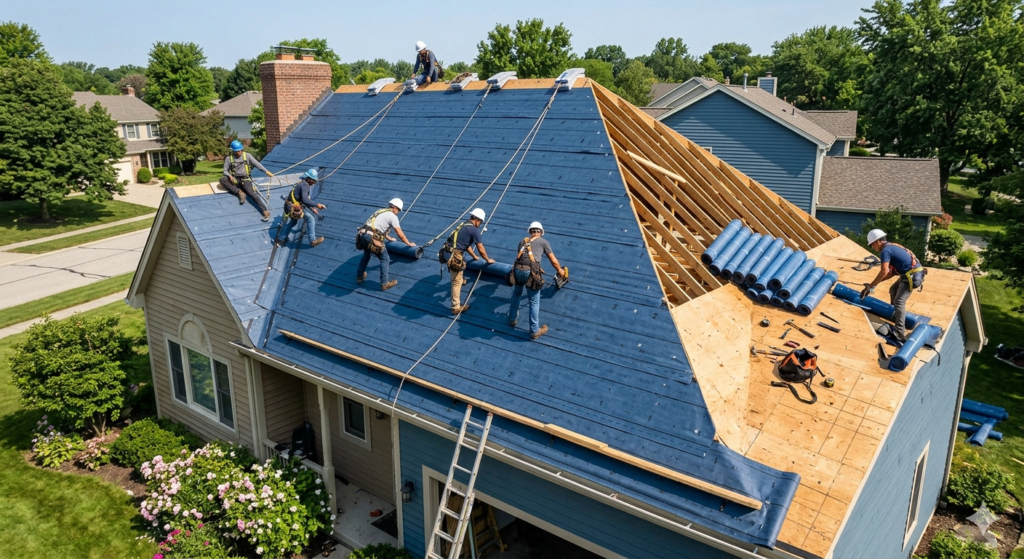
For felt and synthetic products, the material is rolled out horizontally starting from the eaves and working upward toward the ridge. Each row overlaps the one below it by several inches to prevent water from getting underneath. Cap nails or staples secure the material depending on local code requirements.
Self-adhering membrane follows the same bottom-to-top pattern, but the backing is peeled away as the product is pressed firmly onto a clean, dust-free deck surface.
Around vent pipes, chimneys, and skylights, the material must be carefully cut and sealed. Flashing is installed over it at these critical points for added protection.
If you are not confident handling this work yourself, hiring a licensed contractor is the safest route. You can view past projects in our gallery to see examples of Zega Roofing’s workmanship across Winnipeg.
Things To Know About Roofing Underlayment
Before starting any roofing project, keep these practical points in mind:
- This layer should never be left exposed beyond the manufacturer’s recommended timeframe. Most felt needs covering within days, while some synthetic versions handle several weeks.
- Manitoba building codes require ice and water shield membrane along the eaves for at least 36 inches past the interior wall line.
- Roofing underlayment does not replace proper flashing. Both work together to create a watertight system.
- If existing material is damaged during a storm, it must be replaced before new shingles go on. Layering over damaged sections traps moisture and causes hidden rot.
- Not every product is compatible with every outer covering. Metal roofs often require specific synthetic options that allow for heat expansion.
- Proper attic ventilation works alongside your roofing underlayment to manage moisture buildup. Zega Roofing serves homeowners across multiple neighborhoods, and you can check the full list of areas we served to confirm coverage in your community.
Common Mistakes Homeowners Make
Even with good intentions, some homeowners make errors that reduce the effectiveness of roofing underlayment on their property.
Skipping this layer entirely on smaller structures like sheds or garages is one of the most frequent mistakes. Even smaller buildings need protection in climates like Winnipeg’s where freeze-thaw cycles are constant.
Using the wrong type for the roof slope is another issue. A flat or low-slope section needs a product that handles standing water, and standard felt is not designed for that purpose.
Improper overlapping causes problems too. If the rows do not overlap enough, water can wick underneath through capillary action, and professional installers follow manufacturer specifications closely to prevent this.
Leaving material exposed to UV rays for too long breaks down felt quickly, and even synthetic products have limits. Always plan your timeline so the outer roofing goes on promptly.
Finally, reusing old underlayment during a re-roofing project is a false economy. Once the old shingles come off, the material beneath should always be replaced with fresh product.
Roofing Underlayment and Winnipeg’s Climate
Winnipeg’s weather puts extraordinary demands on every component of a roofing system, and roofing underlayment bears much of the burden. Winter temperatures can drop well below minus 30 degrees Celsius, and heavy snow loads create pressure on shingles and the materials beneath them.
When ice dams form along the eaves, melted water backs up under the shingles and looks for any gap to enter the structure. Self-adhering membrane at the eaves prevents this, which is why it is a code requirement in Manitoba.
During spring and fall, rapid temperature changes cause materials to expand and contract. Quality synthetic products handle this movement better than felt because they flex without cracking.
For homeowners dealing with commercial roofing repairs, the right underlayment selection is equally critical, as commercial flat roofs have different drainage patterns that require specialized products.
Your Next Steps With Roofing Underlayment
This protective layer is not a luxury or afterthought. It is a fundamental part of any roofing system that guards your home from moisture, ice, and wind damage. Investing in quality roofing underlayment saves you from expensive repairs down the road.
Zega Roofing can help you select the right roofing underlayment for your property, handle installation professionally, and make sure every detail meets Manitoba’s building codes. With over 25 years of experience serving Winnipeg and surrounding communities, our team delivers results that last.
Call Zega Roofing at +1 204-997-2697 or visit our contact page to schedule a free inspection and get a no-obligation estimate.
Frequently Asked Questions
What is underlayment in roofing?
It is a water-resistant or waterproof material known as roofing underlayment, installed directly on the roof deck before the shingles or outer covering. This layer serves as a secondary barrier that prevents moisture from reaching the wood structure, and most Canadian building codes require it.
What is the best underlayment for a roof?
Synthetic products are considered the top choice for most Canadian homes because they offer strong moisture resistance and durability. For ice dam-prone areas like Winnipeg eaves, combining synthetic with self-adhering membrane provides the most complete protection.
What time of year is the cheapest to replace a roof?
Late fall and early winter tend to be the least expensive seasons because demand for roofing services drops. Scheduling during these periods depends on weather conditions, so contact Zega Roofing to discuss the best timing for your specific project.
Do I need underlayment for roofing?
Yes, it is required by Canadian building codes for most residential and commercial installations. It provides essential moisture protection that extends deck life and prevents costly water damage inside your home.
What are three most common types of roof underlayment?
The three most common types are asphalt-saturated felt, synthetic, and self-adhering (peel-and-stick) membrane. Felt is the most affordable, synthetic offers the best balance of cost and performance, and self-adhering provides the highest level of waterproof protection for vulnerable areas.