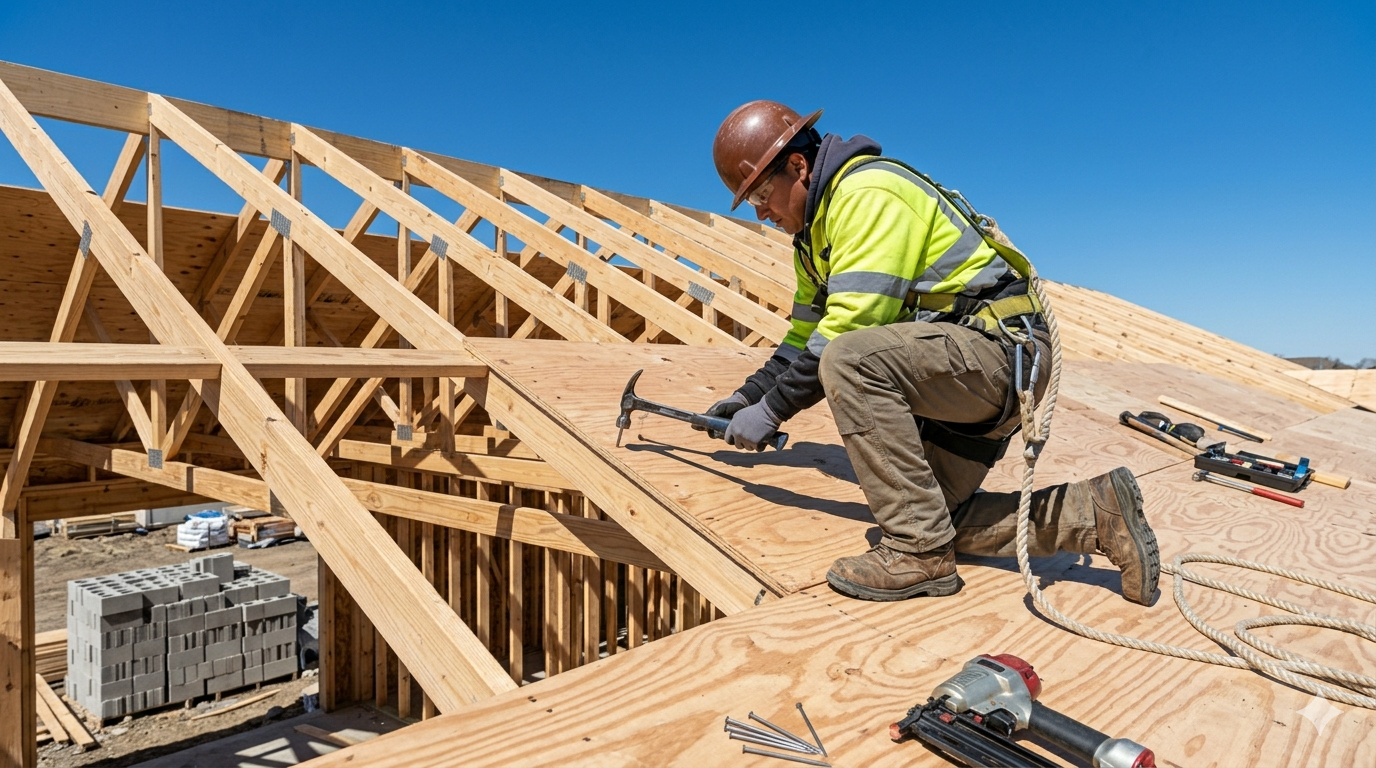
Right roofing plywood is the flat panel material installed over your rafters to form the solid deck that supports shingles, underlayment, and weatherproofing layers. Choosing the correct right roofing plywood affects everything from structural strength to how well your roof handles snow loads, moisture, and temperature swings throughout the year.
This post covers why right roofing plywood matters, which thickness and grade work best for Canadian homes, the differences between roofing plywood and standard plywood, how the installation process works, and what homeowners in Winnipeg should keep in mind before starting a roof replacement or new build.
You will also find practical tips on panel selection, a comparison of common types, and answers to the most frequently asked questions about right roofing plywood so you can make a confident decision for your next project.
Why Right Roofing Plywood Matters for Your Home
Your roof deck is the foundation that everything else sits on. If the right roofing plywood underneath your shingles is warped, thin, or rotted, even the best shingles will not perform the way they should. A solid plywood deck distributes weight evenly across the rafters, resists sagging between supports, and gives nails a firm grip so your shingles stay put during heavy winds.
In Winnipeg and across Manitoba, roofs deal with heavy snow accumulation during winter months and rapid freeze-thaw cycles in spring. Roofing plywood needs to handle these loads without buckling or delaminating. When the deck fails, you end up with soft spots, leaks, and costly interior water damage that could have been avoided with the right material from the start.
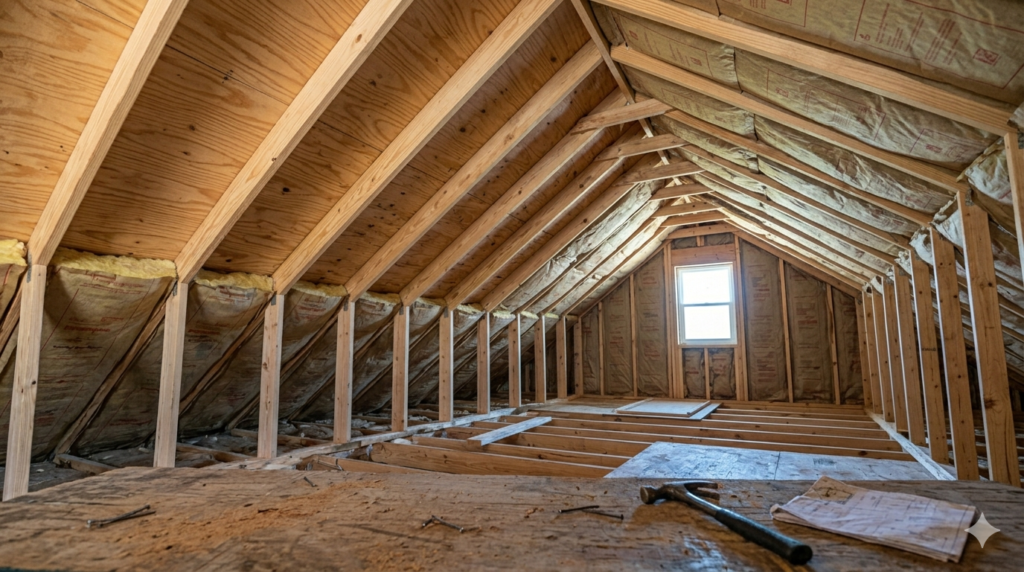
Beyond structural support, right roofing plywood also plays a role in your attic ventilation system. A flat, consistent deck surface allows underlayment and ice-and-water shield membranes to lay flush, which prevents gaps where moisture can sneak in.
Homeowners who invest in quality roofing plywood during a roof installation in Winnipeg typically see fewer callbacks and longer-lasting results compared to those who cut corners on the deck layer.
How to Choose the Right Roofing Plywood
Selecting right roofing plywood is not just about grabbing the cheapest sheet at the lumber yard. Several factors determine which panel will perform best on your specific roof, and understanding these factors saves you money and headaches down the road.
Check the Span Rating
Every sheet of right roofing plywood carries a span rating stamped on its surface. This rating looks like two numbers separated by a slash, such as 32/16 or 48/24.
The first number tells you the maximum distance in inches the panel can span between roof rafters when used as roof sheathing. The second number refers to floor joist spacing. For most residential roofs with rafters spaced 24 inches apart, a panel rated 32/16 or higher is a safe choice.
Pick the Right Thickness
Thickness matters more than most homeowners realize. For roofs with standard 24-inch rafter spacing, 15mm (roughly 5/8 inch) right roofing plywood is the most commonly recommended option across Canadian building codes.
Thinner panels, such as 12mm (about 1/2 inch), can work on roofs where rafters are spaced 16 inches apart, but they may not hold up as well under heavy snow loads typical in Manitoba winters.
Look at the Grade Stamp
Right roofing plywood is graded based on the quality of its face and back veneers. The most common grades you will encounter for roof sheathing are CDX and OSB-rated panels.
CDX means the face veneer is C-grade, the back is D-grade, and the X indicates it uses exterior-grade glue that resists moisture. For right roofing plywood, exterior-grade adhesive is non-negotiable because the panels will be exposed to humidity, condensation, and occasional leaks throughout their lifespan.
Consider Your Local Climate
Winnipeg homeowners face unique challenges. The combination of extreme cold, heavy snowfall, and summer heat means your right roofing plywood needs to handle expansion and contraction without warping. Leaving a small gap (about 3mm) between sheets during installation allows for natural thermal movement and prevents buckling when temperatures shift.
Roofing Plywood vs. Regular Plywood: Key Differences
Not all plywood is created equal, and understanding the differences between roofing plywood and regular plywood helps you avoid a costly mistake. The table below breaks down the main distinctions.
| Feature | Roofing Plywood | Regular Plywood |
| Adhesive Type | Exterior-grade (waterproof) | Interior-grade (not waterproof) |
| Moisture Resistance | High, built to handle humidity and condensation | Low, swells and delaminates when wet |
| Span Rating | Stamped for specific rafter/joist spacing | Often not rated for structural spanning |
| Typical Use | Roof decking, wall sheathing | Furniture, cabinets, interior projects |
| Veneer Quality | C or D grade faces (functional, not decorative) | A or B grade faces (smooth, sanded) |
Regular plywood designed for interior furniture or cabinetry uses adhesive that breaks down when exposed to moisture over time. If you install regular plywood on your roof, the layers will separate within a few years, leaving you with a soft, spongy deck that cannot support your shingles properly. Roofing plywood uses waterproof glue between its layers specifically because it will be exposed to condensation, ice damming, and occasional water intrusion throughout its life.
The veneer quality on right roofing plywood is also rougher than what you would see on furniture-grade panels. That rough surface is intentional because it gives underlayment and shingles better grip, which actually improves the performance of your overall roofing system.
If you are planning a shingle roof replacement, always confirm that your contractor is using rated roofing plywood rather than generic interior-grade panels.
Types of Plywood Used in Roofing
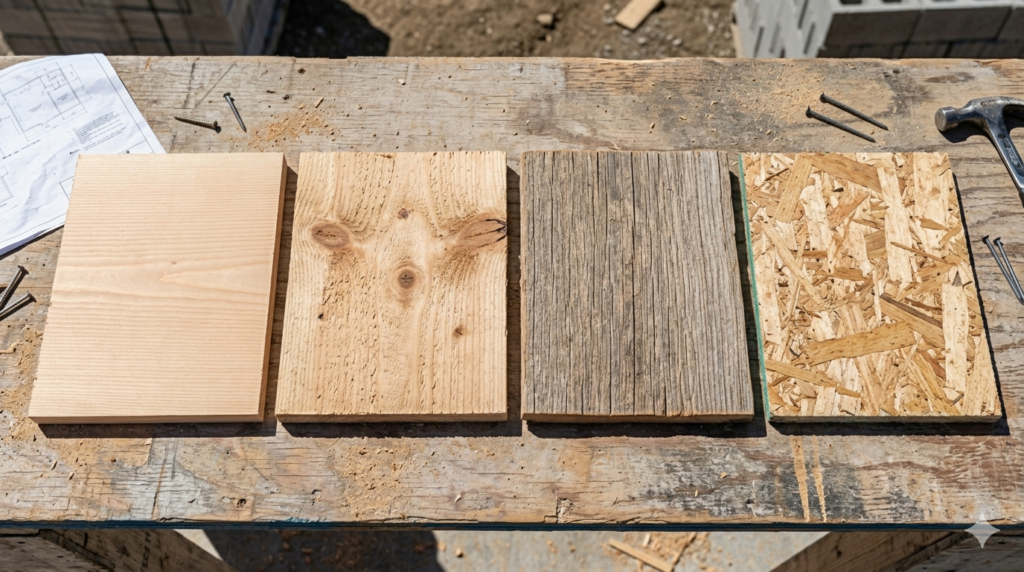
Several types of plywood and engineered wood panels are used for roof decking across Canada. Each type has its own strengths and best-use scenarios, so knowing the options helps you have a more productive conversation with your roofing contractor.
CDX Plywood
CDX is the most popular choice for rigjht roofing plywood in residential construction. The “C” and “D” refer to the veneer grades on the front and back, while “X” means the glue is rated for exterior exposure. CDX panels are affordable, widely available, and strong enough for most standard residential roofs. They handle moisture well and provide a solid nailing surface for shingles.
Oriented Strand Board (OSB)
OSB is an engineered wood product made from compressed wood strands bonded with waterproof resin. It is often used as an alternative to traditional roofing plywood because it costs less per sheet and performs similarly in many applications. OSB tends to be slightly heavier than plywood and can swell along its edges if exposed to standing water for extended periods, so proper installation and underlayment are essential.
Structural Plywood (Sheathing Grade)
Structural sheathing plywood is manufactured specifically for load-bearing applications like roof decks and wall sheathing. These panels carry an official span rating and meet building code requirements for structural use. They are a step above generic CDX in terms of consistency and performance under load.
Marine-Grade Plywood
Marine-grade plywood uses the highest quality veneers and fully waterproof adhesive. It is rarely used for standard roofing because the cost is significantly higher than CDX or OSB. However, it can be a good option for flat roof sections, areas prone to ponding water, or commercial applications where moisture exposure is extreme.
| Plywood Type | Best For | Moisture Resistance | Relative Cost |
| CDX | Standard residential roofs | Good | Moderate |
| OSB | Budget-friendly residential projects | Moderate | Lower |
| Structural Sheathing | High-load or code-strict applications | Good | Moderate to High |
| Marine-Grade | Flat roofs, extreme moisture areas | Excellent | High |
For pricing on materials and installation specific to your project, contact Zega Roofing directly for a free estimate tailored to your home.
How Roofing Plywood Is Installed
The installation process for roofing plywood follows a specific sequence that ensures structural integrity and long-term performance. Whether you are building a new home or replacing damaged decking during a reroof, the steps below outline how professionals handle the job.
First, the roofing crew inspects and repairs the rafters or trusses to make sure every support member is straight, solid, and properly spaced. Damaged or rotted rafters need to be sistered or replaced before any roofing plywood goes down.
Next, panels are laid horizontally across the rafters starting from the bottom edge of the roof and working upward. Each sheet is staggered so that the end joints do not line up from one row to the next. This staggered pattern distributes stress more evenly and prevents weak lines from forming across the deck.
A small expansion gap of about 3mm is left between each sheet to allow for natural wood movement caused by temperature and humidity changes. Without this gap, panels can push against each other and buckle during warm weather.
Each panel is fastened to the rafters using ring-shank nails or screws spaced approximately 150mm apart along the edges and 300mm apart in the field (the interior area of the panel). Ring-shank fasteners grip the wood better than smooth nails and resist pulling out under wind uplift.
After all the right roofing plywood is secured, the crew installs underlayment, ice-and-water shield along the eaves, and then the shingles or other finish roofing material. The quality of the plywood deck directly affects how flat and uniform the finished roof looks from the street.
Things To Know About Right Roofing Plywood
Before you commit to a purchase or hire a contractor, keep these practical points in mind.
Right Roofing plywood stored outdoors before installation should be kept covered and elevated off the ground. Panels that absorb moisture before they are installed can warp, swell, and create an uneven deck surface that shows through the shingles.
Always check the stamp on every sheet before it goes on the roof. The stamp confirms the span rating, adhesive type, and grade. If a panel does not carry a recognized rating stamp, do not use it for roof decking.
In Canada, local building codes dictate the minimum thickness and grade of right roofing plywood allowed for your region. Manitoba’s code requirements reflect the heavy snow loads common in Winnipeg and surrounding communities, so cutting below the minimum is not worth the risk.
If your existing right roofing plywood shows signs of water staining, soft spots, or delamination during a tear-off, those sections need to be replaced before new shingles go on. Layering new material over damaged decking only hides the problem temporarily and leads to bigger repairs later.
For homeowners curious about how right roofing plywood works alongside proper attic ventilation and insulation, exploring options like spray foam insulation in Winnipeg can help you build a more energy-efficient roof system from the inside out.
About Zega Roofing: Your Winnipeg Roofing Professionals
Zega Roofing is a trusted Canadian roofing company with 25 years of experience helping property owners across Winnipeg and surrounding areas. From complete roof replacements to emergency leak repairs, the team delivers dependable solutions for residential and commercial clients.
Every project is handled by certified, licensed, and insured roofing professionals who use only top-grade materials suited for Manitoba’s climate.
Whether you need a full deck replacement with new roofing plywood or a simple inspection to check your existing sheathing, Zega Roofing provides honest estimates and quality workmanship on every job.
To learn more about the team and their approach, visit the about page for details.
Choosing the Best Right Roofing Plywood for Your Next Project
Getting the right roofing plywood right is one of the most important decisions you will make during a roof replacement or new construction project. The deck layer affects the strength, longevity, and weather resistance of your entire roofing system, and skipping on quality here leads to problems that are expensive to fix later.
Whether you go with CDX, OSB, or structural sheathing, make sure the panels are rated for exterior use, matched to your rafter spacing, and installed with proper gapping and fastening techniques.
If you are unsure which right roofing plywood fits your home best, reaching out to a professional roofing team in Winnipeg is the smartest first step. Contact Zega Roofing at +1 204-997-2697 for a free inspection and personalized recommendation.
Frequently Asked Questions About Right Roofing Plywood
Which plywood is best for roofing?
CDX plywood is the most recommended option for residential roofing across Canada. It combines exterior-grade waterproof adhesive with a durable layered construction that handles moisture, temperature changes, and structural loads. For standard homes with 24-inch rafter spacing, a 5/8-inch CDX panel provides the right balance of strength and affordability.
What plywood do you put on a roof?
Most roofers use CDX-rated or structural sheathing-grade plywood for roof decking. These panels carry a span rating that confirms they can support the weight of shingles, snow, and foot traffic across the rafter spacing used in your home. OSB is also commonly used as a cost-effective alternative, though traditional right roofing plywood tends to handle edge moisture exposure better over time.
Is roofing plywood different than regular plywood?
Yes, roofing plywood differs from regular plywood primarily in its adhesive and structural rating. Right Roofing plywood uses exterior-grade waterproof glue designed to resist delamination from humidity and condensation. Regular plywood intended for furniture or interior use relies on adhesive that breaks down when exposed to moisture, making it unsuitable for roof decking applications.
What are the 4 types of plywood?
The four main types are softwood plywood, hardwood plywood, marine plywood, and structural plywood. Softwood plywood (like CDX) is the most common for construction and roofing. Hardwood plywood is used for cabinetry and furniture. Marine plywood offers maximum water resistance. Structural plywood is engineered specifically for load-bearing applications like roof and wall sheathing.
Can you use 12mm plywood for roofing?
You can use 12mm plywood for roofing only if your rafters are spaced 16 inches apart or closer. For the standard 24-inch rafter spacing found in most Canadian homes, 12mm is too thin to safely support snow loads and foot traffic during maintenance. Most building codes in Manitoba require a minimum of 15mm (5/8 inch) roofing plywood for 24-inch spacing to meet structural and safety standards.