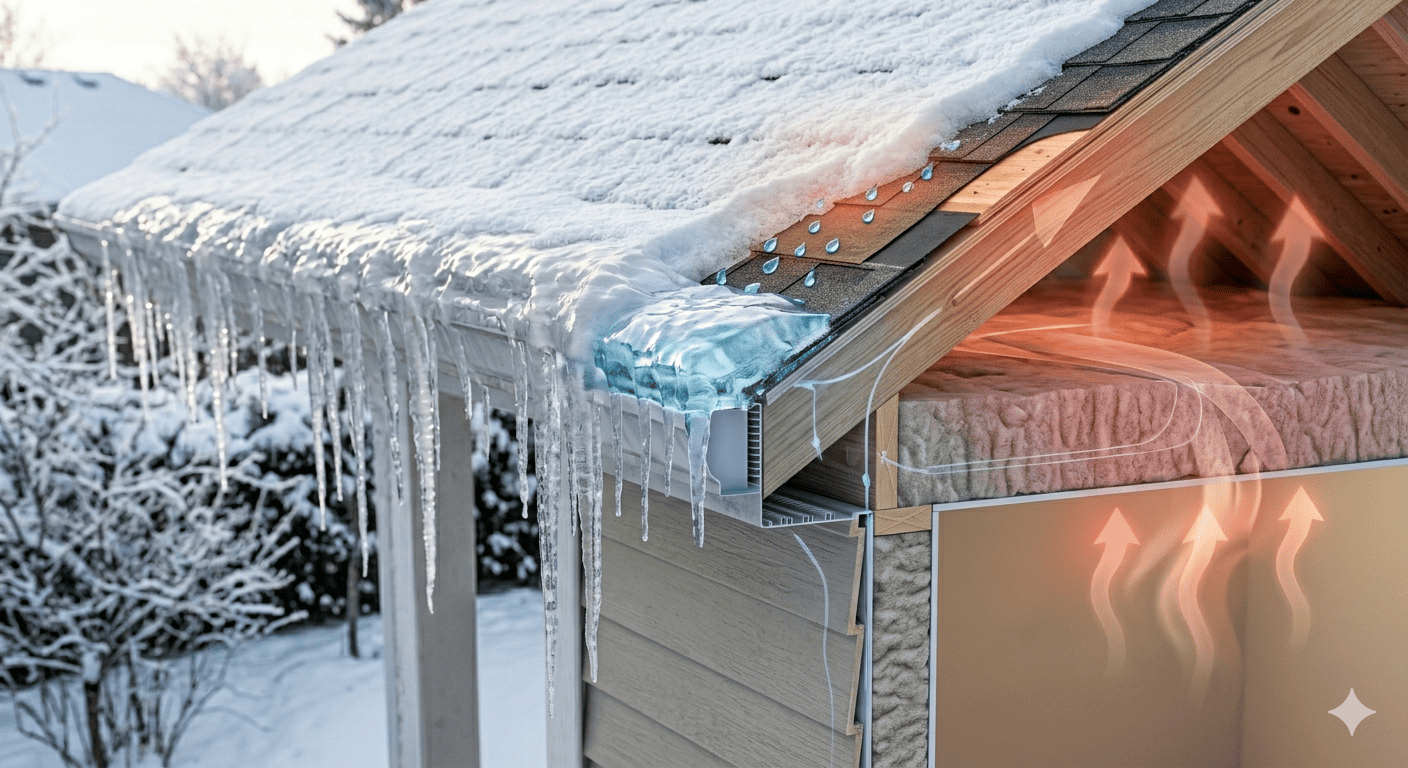
A roofing ice dam is a thick ridge of frozen water that builds up along the edge of your roof, blocking melted snow from draining properly and potentially causing leaks, structural damage, and costly repairs. If you live in Winnipeg or anywhere across Manitoba, dealing with roofing ice dam issues during the long winter months is something most homeowners will face at some point.
When snow piles up on your roof and the attic below stays too warm, the snow closest to the surface melts. That water runs down toward the eaves, which are colder because they extend past the heated interior of your home. Once the water reaches that cold edge, it refreezes into a solid barrier.
Over time, more melted water pools behind this frozen wall, and that standing water can seep under shingles, into your attic, and even down through your ceilings and walls. A roofing ice dam left unaddressed can lead to mold, rotted wood, damaged insulation, and peeling paint.
The good news is that proper prevention, early detection, and professional roofing support can protect your home all winter long.
How Does a Roofing Ice Dam Form?
Understanding why a roofing ice dam develops is the first step toward stopping one. The process starts when heat escapes from your living space into the attic. That warm air raises the temperature of the roof deck, causing the snow sitting on top of the roof to melt, even when it is still below freezing outside.
The melted water flows downhill beneath the snow layer toward the roof’s edge. Because the eaves and gutters do not sit above the heated portion of your home, they stay much colder. When the flowing water reaches this colder zone, it refreezes into ice. As this cycle repeats over several days or weeks, the frozen buildup grows larger and larger.
Eventually, the roofing ice dam becomes tall enough to trap pools of liquid water behind it. That trapped water has nowhere to go except sideways, and it works its way under shingles, through nail holes, and into any tiny gap in your roofing system. From there, the water enters your attic space and begins soaking insulation, wood framing, and drywall.
Key Factors That Cause Roofing Ice Dam Formation
- Poor attic insulation that allows too much indoor heat to escape upward
- Inadequate ventilation that traps warm air in the attic space
- Complex roof shapes with valleys and dormers where snow collects
- Heavy snowfall followed by fluctuating temperatures above and below zero
- Clogged or improperly installed gutters that restrict normal water flow
Each of these factors plays a role, and in most Winnipeg homes, a combination of two or three of them is usually responsible for roofing ice dam formation.
Warning Signs of a Roofing Ice Dam on Your Home
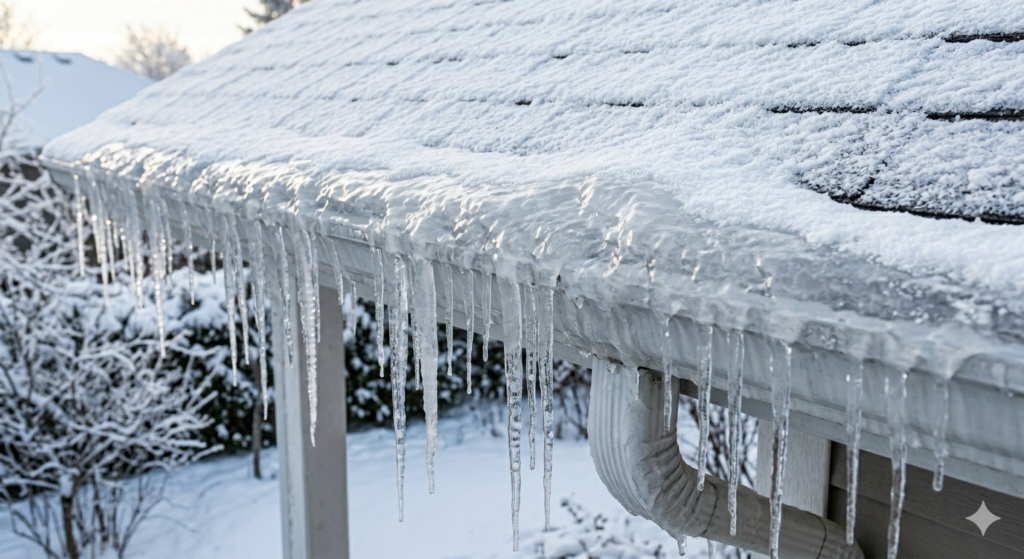
Catching a roofing ice dam early can save you thousands of dollars in repair costs. Here are the most common warning signs that homeowners should watch for during winter months.
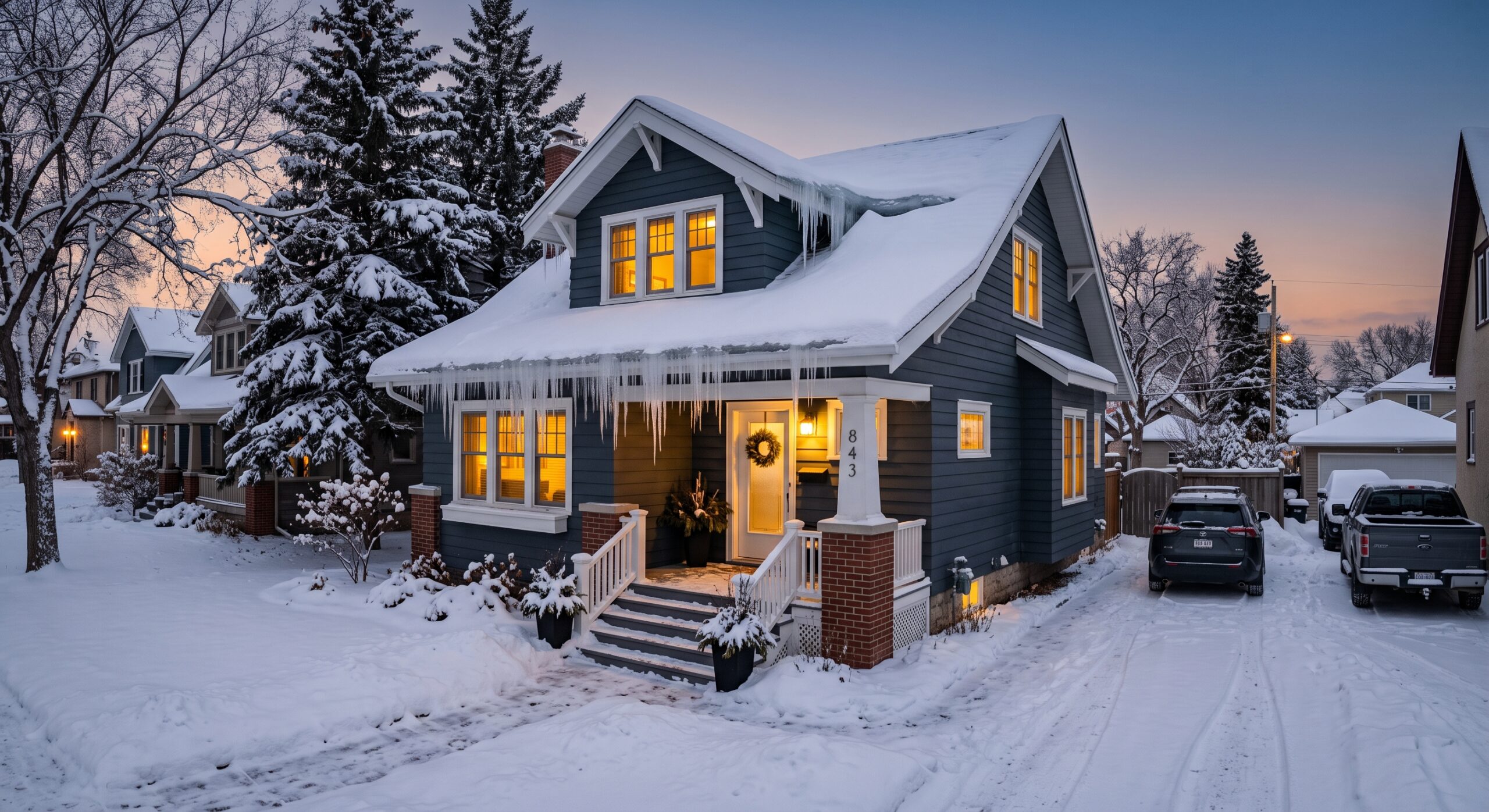
Large icicles hanging from the edge of the roof or from gutters are often the earliest visible clue. While a few small icicles are normal, thick clusters that grow rapidly signal that water is melting on the roof surface and refreezing at the edge. Ice buildup visible along the lower edge of the roof, especially if it looks uneven or thick in certain spots, is another clear indicator.
Inside your home, water stains appearing on ceilings or walls near exterior walls can point to a roofing ice dam that has already caused a leak. Peeling paint, damp spots, or a musty smell in your attic are all red flags. If you notice any of these symptoms, act quickly to minimize damage.
| Warning Sign | Where to Look | What It Means |
| Large or thick icicles | Roof edge, gutters | Water is melting and refreezing at the eave |
| Ice buildup along eaves | Lower roof perimeter | A roofing ice dam is actively forming |
| Water stains on ceilings | Interior rooms below the roofline | Water has penetrated past the roofing materials |
| Damp or wet attic insulation | Attic space | Trapped water is soaking through from above |
| Peeling exterior paint | Soffit and fascia areas | Moisture is escaping through the roof edge |
How to Prevent Roofing Ice Dam Damage
Prevention is always more effective and less expensive than dealing with the aftermath of a roofing ice dam. The most reliable approach combines proper insulation, adequate ventilation, and smart snow management.
Improve Your Attic Insulation
The single most important step you can take is making sure your attic has enough insulation. In Winnipeg, the recommended insulation level for attics is R-50 or higher. When insulation is too thin or has settled over time, heat from your living areas passes right through into the attic, warming the roof deck and starting the melt-refreeze cycle that causes a roofing ice dam.
If you are not sure whether your insulation meets current standards, a professional inspection can help. Zega Roofing offers attic insulation services designed specifically for Winnipeg’s climate, and upgrading your insulation is one of the fastest ways to reduce ice dam risk.
Ensure Proper Roof Ventilation
Good attic ventilation works alongside insulation to keep your roof surface cold and uniform in temperature. Ridge vents, soffit vents, and gable vents all work together to move cold outside air through the attic, flushing out any warm air before it can heat the roof deck.
Without balanced ventilation, warm air gets trapped at the peak of your attic and creates hot spots on the roof. Those hot spots melt snow unevenly, and the resulting water flow feeds directly into a roofing ice dam at the eaves.
Remove Excess Snow From the Roof
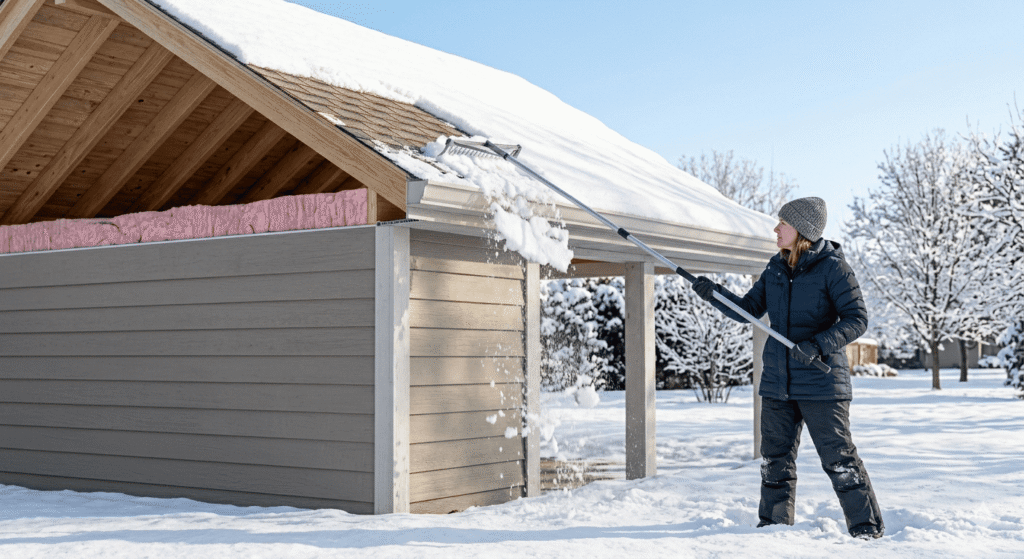
After heavy snowfalls, using a roof rake to pull snow off the lower three to four feet of your roof can help break the melt-refreeze cycle. By removing the snow before it has a chance to melt and refreeze at the edge, you reduce the raw material that builds a roofing ice dam.
Be careful when raking snow from the roof. Standing on a ladder in icy conditions is dangerous, and pulling too aggressively can damage shingles. For homes with steep pitches or hard-to-reach areas, professional rooftop snow removal is the safer option.
Seal Air Leaks in the Attic
Small gaps around plumbing vents, electrical wires, light fixtures, and attic hatches allow warm air to leak into the attic space. Sealing these penetrations with caulk, spray foam, or weatherstripping helps keep the attic cold and reduces the chance of a roofing ice dam forming.
Pay special attention to recessed lighting fixtures, which are common sources of heat loss into the attic. Even a few small leaks can raise attic temperatures enough to trigger the ice dam cycle.
Which Roofing Materials Help Prevent Ice Dams?
Not all roofing systems handle winter weather the same way. Choosing the right materials during a roof installation or replacement can significantly lower your risk of roofing ice dam formation.
Metal roofing panels are one of the most effective options in cold climates. Their smooth, slippery surface allows snow and ice to slide off before it has a chance to build up into a dam. Metal roofs also shed water more efficiently than textured shingle surfaces, which means less opportunity for water to pool and refreeze.
Steep-slope roof designs also help because gravity pulls snow and water downward more quickly. Flatter roofs tend to hold snow longer, giving heat more time to melt the snow and feed a roofing ice dam.
Ice and water shield membranes, which are installed beneath the shingles along the eaves, add a critical waterproof barrier. Even if water backs up behind an ice dam, the membrane prevents it from reaching the roof deck and leaking into your home. Building codes in Manitoba typically require this membrane on the first three feet of roof overhang, but extending it further up the roof offers even better protection.
| Roofing Feature | How It Helps Prevent Ice Dams | Best For |
| Metal roofing panels | Snow slides off the smooth surface before ice can form | Homes with frequent heavy snowfall |
| Steep roof pitch | Gravity moves snow and water faster, reducing buildup | New construction or major renovations |
| Ice and water shield membrane | Creates a waterproof barrier under shingles at the eaves | All homes in cold climates |
| Proper soffit and ridge vents | Maintains uniform cold temperature across the roof deck | Existing homes needing ventilation upgrades |
| Adequate attic insulation (R-50+) | Prevents indoor heat from warming the roof surface | Older homes with insufficient insulation |
Things To Know About Roofing Ice Dam Problems
Before winter hits, there are several practical points every Winnipeg homeowner should keep in mind about roofing ice dam prevention and repair.
First, calcium chloride ice melt can be placed in a stocking and laid across a roofing ice dam to create a channel for trapped water to drain. However, this is a temporary fix and should not replace proper insulation and ventilation upgrades. Never use rock salt on your roof, as it can corrode metal flashing and damage shingles.
Second, a single roofing ice dam event can void portions of your homeowner’s insurance if the insurer determines that the damage resulted from poor maintenance. Regular roof inspections and documentation of maintenance activities help protect your coverage.
Third, removing a roofing ice dam with a hammer, chisel, or pressure washer can cause serious damage to your shingles and roof deck. Always use gentle methods like calcium chloride or call a professional who has the right tools and experience.
Fourth, roofing ice dam problems tend to worsen over time if the root causes are not addressed. Each winter cycle adds more stress to your roofing materials, and water damage compounds with every leak. Addressing insulation and ventilation now prevents much larger expenses later.
Fifth, even newer homes can develop roofing ice dam issues if they were built with insufficient attic ventilation or if insulation was improperly installed. Age alone does not determine your risk level.
About Zega Roofing: Your Winnipeg Roofing Professionals
Zega Roofing is a trusted Canadian roofing company with over 25 years of experience serving residential and commercial property owners across Winnipeg and surrounding communities.
From emergency leak repairs to complete roof replacements, attic insulation, and spray foam insulation, Zega Roofing delivers dependable solutions backed by expert craftsmanship, quality materials, and honest communication.
Every project is handled by certified, licensed, and insured roofing professionals who understand Manitoba’s harsh winter conditions. If you are dealing with a roofing ice dam or want to prevent one before the next freeze, call Zega Roofing at +1 204-997-2697 for a free roofing inspection.
Frequently Asked Questions
What is an ice dam on a roof?
An ice dam is a ridge of ice that forms along the edge of a roof, preventing melted snow from draining off the surface. It happens when heat from inside the home warms the upper portion of the roof, causing snow to melt. The water flows down to the colder eaves and refreezes into a solid barrier. Over time, water pools behind this barrier and can leak into the home.
How to fix a roof that has ice dams?
The best fix involves improving attic insulation, sealing air leaks, and ensuring proper roof ventilation. For immediate relief, you can use calcium chloride in a nylon stocking placed across the roofing ice dam to melt a drainage channel. Long-term solutions include upgrading insulation to R-50 or higher and adding balanced intake and exhaust ventilation to keep the roof deck uniformly cold.
What is the best roof for an ice dam?
Metal roofing is widely considered the best option for preventing roofing ice dam formation. Its smooth surface allows snow to slide off before it melts and refreezes at the eaves. Steep-slope designs combined with ice and water shield membranes underneath the roofing material also provide strong protection against ice dam damage.
How to stop ice dams on your roof?
The most effective way to stop ice dams is to keep your attic cold by adding proper insulation and ventilation. Seal any air leaks around plumbing vents, electrical wires, and light fixtures. After heavy snowfalls, use a roof rake from the ground to clear the lower edge of the roof. These steps prevent the heat transfer that triggers roofing ice dam development.
Do I need to worry about ice dams on my roof?
Yes, if you live in a cold climate like Winnipeg, roofing ice dam problems should be on your radar every winter. Even minor ice dams can cause water to seep under shingles and damage your attic insulation, ceiling drywall, and structural wood. Regular inspections, proper insulation, and adequate ventilation are the best ways to reduce your risk and avoid expensive repairs.