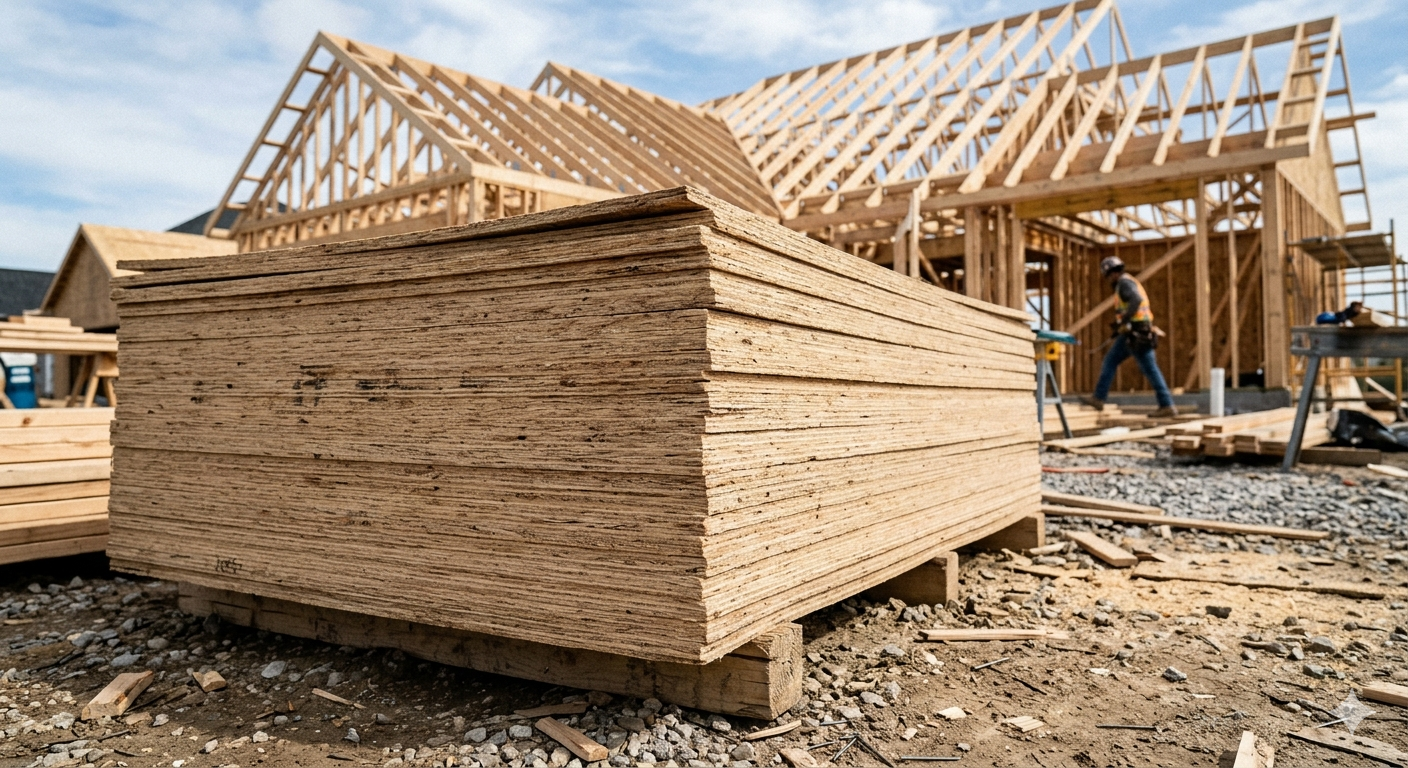
Roofing plywood is the flat, layered wood panel installed directly over your roof’s framing to create a stable base for shingles, tiles, or metal panels. For most Winnipeg homes, 5/8-inch exterior-grade plywood offers the best balance of strength, moisture resistance, and long-term durability.
Choosing the right roofing plywood affects how well your roof handles heavy snow loads, resists moisture, and supports the weight of your roofing materials over many years. The wrong thickness or grade can lead to sagging, leaks, and expensive repairs down the road. In Winnipeg, where winters bring extreme cold and significant snowfall, selecting proper roof sheathing is even more critical than in milder climates.
This content covers the types of roofing plywood available, how to pick the correct thickness for your rafter spacing, the differences between roofing plywood and regular plywood, and practical tips for a solid installation. You will also find a comparison table for quick reference, things every homeowner should know, and answers to the five most common questions about roofing plywood. If you need help with roofing installation in Winnipeg, the team at Zega Roofing is ready to assist.
Which Roofing Plywood Is Best for Your Roof?
The best roofing plywood for most residential projects is CDX-grade plywood in 5/8-inch thickness. CDX stands for the front veneer grade (C), back veneer grade (D), and the exterior-rated glue (X) that bonds the layers together. This combination makes it water-resistant enough to handle temporary exposure during construction and strong enough to support standard asphalt shingles.
For Winnipeg homeowners, exterior-grade roofing plywood is the safest choice because of the heavy snow loads and freeze-thaw cycles common to Manitoba. The cross-laminated layers in quality plywood give it excellent dimensional stability, meaning it resists warping and shrinking even when temperatures swing drastically between seasons.
If your roof will carry heavier materials like metal panels or clay tiles, you may need to step up to 3/4-inch thick roofing plywood. Homes with wider rafter spacing (24 inches on center) also benefit from thicker panels to prevent deflection under load.
For personalized advice based on your specific roof design and local building code requirements, contact Zega Roofing for a free inspection.
Types of Roofing Plywood You Should Know
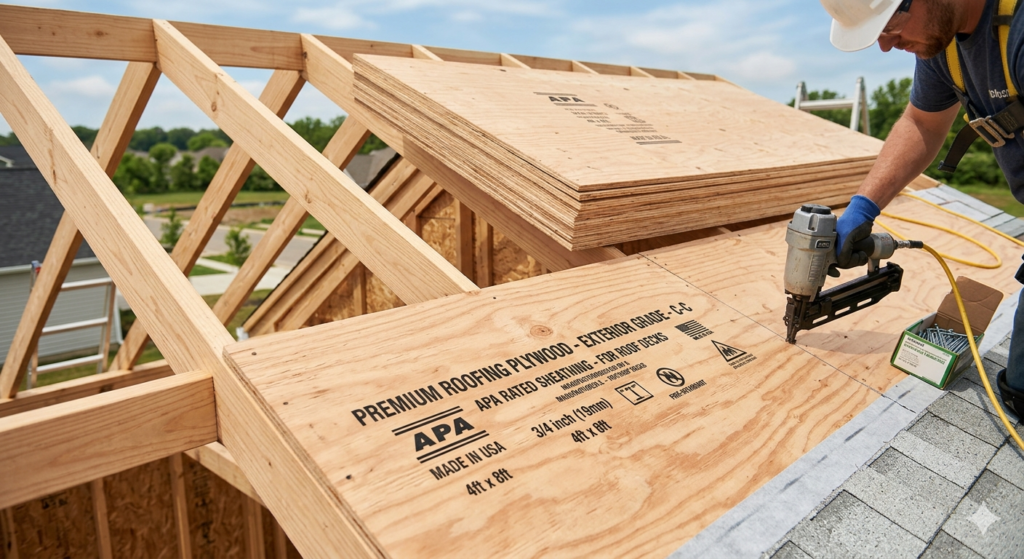
Not all plywood panels perform the same way on a roof. Here are the most common types used in Canadian roofing projects:
CDX Plywood
This is the go-to option for most residential roof installations. The exterior glue resists moisture, and it comes in thicknesses from 3/8-inch to 3/4-inch. It is affordable, widely available, and works well for standard shingle roofs.
Fire-Retardant-Treated Plywood
This roofing plywood undergoes a pressure treatment with fire-retardant chemicals. Some Canadian building codes require it for multi-family residences or commercial properties. Keep in mind that the treatment can slightly affect the wood’s structural properties, so consulting a professional before using it is a smart move.
Tongue-and-Groove Plywood
These panels interlock along their edges, providing extra stability for roofs with wider rafter spacing. Tongue-and-groove roofing plywood reduces the need for H-clips and creates a tighter deck surface.
Oriented Strand Board (OSB)
While not technically plywood, OSB is a common alternative for roof sheathing. It costs less and comes in large panels. However, OSB absorbs moisture more readily at cut edges and takes longer to dry once wet. In Winnipeg’s wet spring seasons, this is worth considering before choosing it over traditional roofing plywood.
How to Choose the Right Roofing Plywood Thickness
Picking the right thickness depends on several factors, including your rafter spacing, the type of roofing material, and your local climate conditions. Here is a practical reference table:
| Rafter Spacing | Recommended Plywood Thickness | Best For |
| 12 inches on center | 3/8-inch | Sheds, small utility structures |
| 16 inches on center | 1/2-inch | Standard residential roofs with light shingles |
| 24 inches on center | 5/8-inch | Most Winnipeg homes, asphalt shingles |
| 24+ inches or heavy loads | 3/4-inch | Metal roofing, clay tiles, heavy snow regions |
In Canada, the minimum acceptable thickness for roof deck construction is 1/2-inch (12.7 mm), according to Canadian roofing standards. However, for Winnipeg properties dealing with significant snow accumulation, 5/8-inch roofing plywood is the preferred standard because it provides better stiffness between trusses and reduces the risk of sagging over time.
Always check your local building code before purchasing materials. The span rating printed on each panel tells you the maximum distance it can safely span between supports. A rating of 32/16, for example, means the panel can span 32 inches for roof decking and 16 inches for subflooring.
If you are unsure which thickness suits your roof, the experts at Zega Roofing can evaluate your structure and recommend the right roofing plywood for your project.
Roofing Plywood vs. Regular Plywood: What Is the Difference?
Many homeowners assume all plywood is the same. That is not the case. Roofing plywood is engineered specifically for exterior structural use, while regular plywood may only be rated for interior applications.
| Feature | Roofing Plywood (CDX/Exterior Grade) | Regular Plywood (Interior Grade) |
| Glue Type | Exterior-rated, water-resistant | Interior glue, not moisture-resistant |
| Moisture Handling | Withstands temporary rain exposure | Delaminates quickly when wet |
| Structural Rating | Load-bearing, rated for span distances | Often not rated for structural use |
| Veneer Quality | C/D grade (rough but strong) | A/B grade (smooth, decorative) |
| Typical Use | Roof sheathing, wall sheathing | Cabinets, furniture, shelving |
Using interior-grade plywood on a roof is a serious mistake. The glue holding the layers together will break down when exposed to moisture, causing the panel to warp, delaminate, and eventually fail. This leads to leaks, mould growth, and potentially a full shingle roof replacement.
Always verify that your roofing plywood carries an exterior rating before installation. If you spot an “X” in the grade stamp, the panel uses exterior-grade adhesive.
Practical Tips for Installing Roofing Plywood
Getting the right roofing plywood is only half the job. Proper installation makes the difference between a roof that lasts decades and one that needs early repairs. Here are tips that Winnipeg homeowners and contractors should follow:
Leave a 1/8-inch gap between panels. Wood expands and contracts with temperature changes, and this small gap prevents buckling. In Winnipeg, where temperatures can range from -35C in winter to +35C in summer, this expansion space is essential.
Stagger the joints. Never align plywood seams in a straight line across the roof. Staggering the panels distributes weight more evenly and strengthens the overall deck.
Use corrosion-resistant fasteners. Galvanized or stainless steel nails and screws resist rust, which is important in a climate with freeze-thaw moisture cycles.
Keep roofing plywood dry during construction. If panels get soaked before installation, let them dry completely. Trapping moisture under shingles creates conditions for mould and rot.
Install underlayment over the plywood before laying shingles. This weather-resistant barrier adds another layer of moisture protection.
For a professional installation backed by quality workmanship, check out the gallery of completed projects at Zega Roofing to see the standard of work you can expect.
Things To Know About Roofing Plywood
Before you purchase roofing plywood or hire a contractor, keep these key points in mind:
Every panel has a stamp. Look for the grade, span rating, and exposure rating on the APA or CSA stamp. This tells you exactly what the panel is designed to handle.
Thicker does not always mean better. Over-specifying thickness adds unnecessary weight and cost. Match the thickness to your rafter spacing and load requirements.
Winnipeg building codes may differ from other Canadian provinces. Always confirm local requirements before starting your project.
Roofing plywood should be stored flat and off the ground before installation. Leaning panels against a wall can cause them to warp before they ever reach your roof.
If your existing roof deck shows signs of water damage, soft spots, or visible rot, the plywood needs to be replaced before new roofing materials go on top. Covering damaged sheathing with fresh shingles only hides the problem temporarily.
For pricing on roofing plywood replacement or any roofing service in Winnipeg, contact Zega Roofing directly at +1 204-997-2697 for a free estimate.
Why Roofing Plywood Matters for Winnipeg Homes
Winnipeg’s climate puts roofs through extreme stress. Heavy snow loads in winter, rapid temperature swings in spring, and summer storms all test the structural integrity of your roof deck. Roofing plywood acts as the foundation for everything above it, from the underlayment to the final layer of shingles or metal panels.
When roofing plywood fails, it compromises the entire roofing system. Sagging panels create low spots where water pools. Delaminated sheets lose their ability to hold fasteners, causing shingles to lift in high winds. Moisture trapped in damaged plywood leads to mould that can spread into your attic and living spaces.
Investing in quality roofing plywood up front saves you from costly commercial roofing repairs or premature replacement later. Zega Roofing uses only top-grade materials suited for Manitoba’s harsh conditions, and every project is handled by licensed, insured professionals who understand local building standards.
If you have questions about your roof deck or want to schedule an inspection, visit the contact page to get started.
Choosing the Right Roofing Plywood for a Lasting Roof
Selecting the right roofing plywood is one of the most important decisions you will make during any roofing project. The type, thickness, and grade of your roof sheathing directly affect how well your home stands up to Winnipeg’s tough weather. CDX exterior-grade roofing plywood in 5/8-inch thickness remains the standard recommendation for most residential properties, while heavier loads and wider rafter spacing call for 3/4-inch panels.
Whether you are building new or replacing damaged sheathing, working with experienced professionals ensures your roofing plywood is installed correctly and meets all local code requirements. Zega Roofing brings over 25 years of experience to every project, from spray foam insulation to full roof replacements across Winnipeg and surrounding areas.
Ready to get started? Call Zega Roofing at +1 204-997-2697 or visit zegaroofing.ca for a free roofing inspection today.
Frequently Asked Questions About Roofing Plywood
Which plywood is best for roofing?
CDX exterior-grade plywood in 5/8-inch thickness is the best choice for most residential roofs. It offers water-resistant glue, solid structural strength, and works well with standard asphalt shingles. For heavier roofing materials or wider rafter spacing, 3/4-inch is recommended.
What plywood do you put on a roof?
You put CDX-grade or exterior-rated plywood on a roof. These panels are designed to handle moisture exposure and support roofing materials. Interior-grade plywood should never be used for roof sheathing because its glue breaks down when wet.
Should I use 1/2 or 5/8 plywood for roofing?
For most Winnipeg homes, 5/8-inch roofing plywood is the better option. While 1/2-inch works with 16-inch rafter spacing, 5/8-inch provides more stiffness and handles heavier snow loads more effectively. It also reduces the risk of sagging over time.
Is roofing plywood different than regular plywood?
Yes, roofing plywood uses exterior-rated glue and is structurally graded for load-bearing use. Regular plywood often uses interior adhesive that fails when exposed to moisture. Roofing plywood also carries a span rating that tells you the maximum distance between supports.
Can you use 12mm plywood for roofing?
12mm (roughly 1/2-inch) plywood can work for roofing if the rafter spacing is 16 inches or less. It meets the minimum Canadian standard for roof deck construction. However, for 24-inch rafter spacing or regions with heavy snowfall like Winnipeg, stepping up to 15.5mm (5/8-inch) or thicker is strongly recommended.