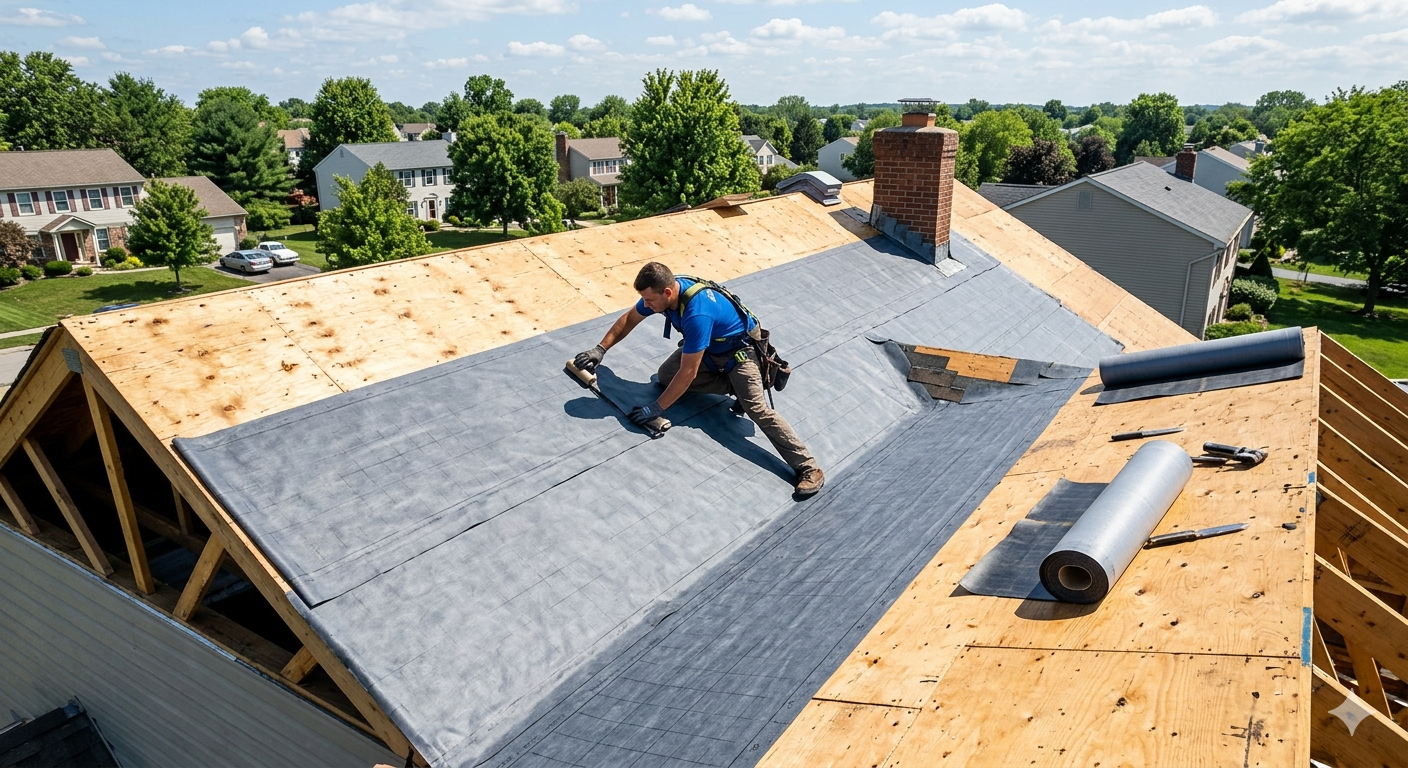
Roofing ice and water shield is a self-adhering, waterproof underlayment installed beneath your shingles to block water infiltration caused by ice dams, heavy rain, and freeze-thaw cycles. It bonds directly to your roof deck and seals around nails, creating a watertight barrier that standard roofing felt simply cannot match.
If you own a home in Winnipeg or anywhere across Manitoba, roofing ice and water shield is one of the most important components of a properly built roof. This article covers how it works, where it should be applied, how it compares to regular felt, whether covering your entire roof makes sense, and what limitations come with roof sealant products. Understanding these details will help you make smarter decisions the next time a roofing project is on your agenda.
How Does Roofing Ice and Water Shield Actually Work?
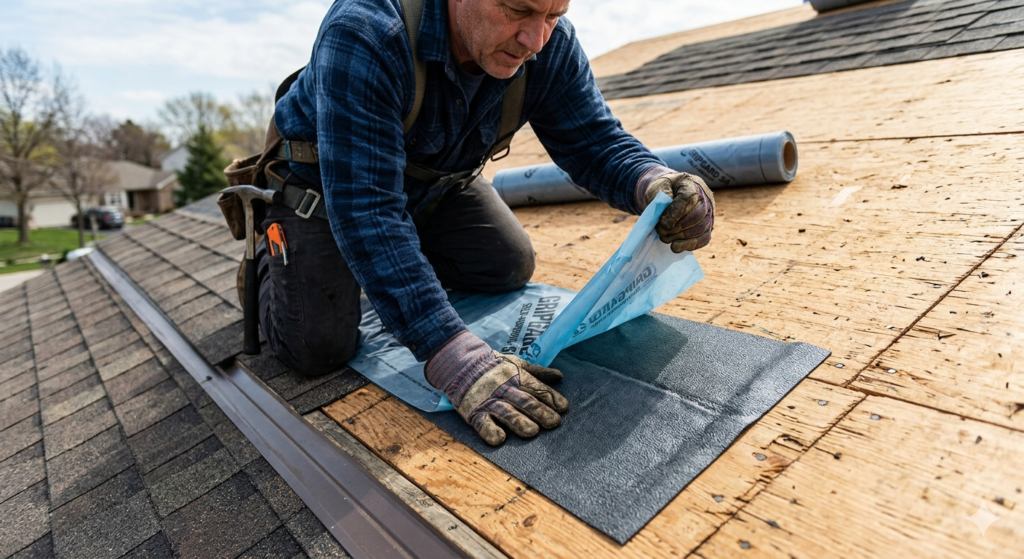
Roofing ice and water shield is engineered with two key layers that work together to stop water from entering your home. The top surface is a tough, weather-resistant material designed to handle foot traffic during installation and tolerate temporary UV exposure before shingles are laid over it. The bottom layer is a rubberized asphalt adhesive that bonds to your roof deck on contact and forms a flexible, waterproof seal that moves with your structure through temperature changes without cracking.
What separates this product from ordinary underlayment is its self-sealing capability around fasteners. When roofing nails or staples penetrate the membrane, the rubberized adhesive contracts around each fastener and closes the puncture, preventing water from entering through the very holes created during installation. On a standard roofing felt, those same punctures remain open pathways for moisture.
Ice dams are one of the leading causes of interior water damage in cold climates. They form when warm air escaping through the attic melts snow at the ridge, and that meltwater runs down the slope and refreezes at the cold eaves and overhangs.
The resulting ice buildup forces backed-up water under shingles, and without a proper barrier beneath, that water seeps into the roof deck and eventually into the living space. This membrane installed along the eaves creates a continuous watertight zone that prevents this from happening, and roofing ice and water shield is specifically engineered to handle this kind of sustained hydrostatic pressure. Wind-driven rain is another major threat that it handles effectively, since its adhesive bond ensures that even when water gets beneath shingles, it hits the barrier and runs off cleanly.
Where Should Roofing Ice and Water Shield Be Installed?
Placement follows a clear logic based on where a roof is statistically most vulnerable to water entry. There are specific zones where roofing ice and water shield is either required by code or strongly recommended for reliable performance in a cold climate.
Along the Eaves
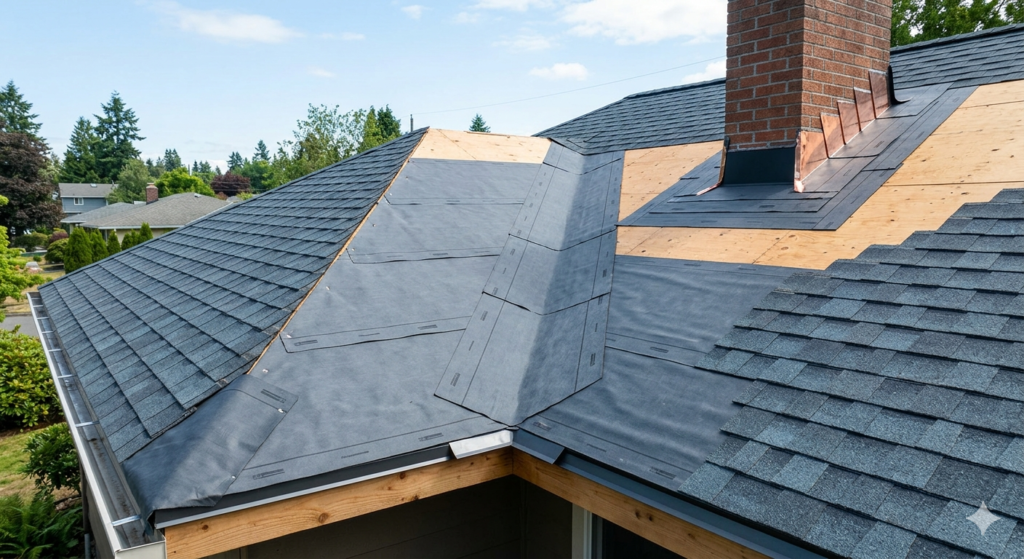
The eave zone is the most critical placement area for roofing ice and water shield. Building codes across Canada, including in Manitoba, typically require the membrane to extend from the eave edge up past the interior wall line by at least 600 mm. In areas with harsh winters, extending coverage further up the slope by an additional foot or two adds meaningful protection against backed-up meltwater from ice dams.
In Roof Valleys
Valleys channel runoff from two converging slopes into a single concentrated stream, handling significantly more water than any other section of the roof. Applying roofing ice and water shield through the full length of every valley is standard practice on a well-built roof because the volume and pressure of water passing through these zones make them particularly prone to penetration.
Around Penetrations and Flashings
Every pipe, vent, chimney, or skylight that passes through your roof creates a seam. Water finds seams. Overlapping roofing ice and water shield around each penetration and combining it with flashing creates a compound barrier far more reliable than flashing alone.
Rakes and Ridges
The rake edges along a gable roof and the ridge at the peak can also benefit from this membrane, particularly in high-wind areas where wind-driven rain and ice push moisture under shingles from the sides and top of the structure.
Roofing Ice and Water Shield vs. Roofing Felt: Which Offers Better Protection?
Both products serve as underlayment beneath shingles, but they are built differently and perform at very different levels in cold climates.
| Feature | Roofing Ice and Water Shield | Roofing Felt |
| Adhesion | Self-adhering, bonds to deck | Mechanically fastened with nails |
| Waterproofing | Fully waterproof membrane | Water-resistant only |
| Nail Hole Sealing | Self-seals around fasteners | Does not seal punctures |
| Cold Climate Performance | Flexible in low temperatures | Can become brittle and crack |
| Ice Dam Resistance | Highly effective | Minimal resistance |
Roofing felt has a long history and still plays a legitimate role on the general roof field as a secondary moisture barrier. It is less expensive per square foot. However, felt is not waterproof. It resists water temporarily, but when water is forced through it under sustained pressure or ponded on its surface, moisture will eventually penetrate. In a Canadian climate with recurring ice dams and heavy rainfall, felt alone at the eaves is simply not adequate protection compared to roofing ice and water shield.
The most effective roofing systems in cold climates use both products strategically. Roofing ice and water shield goes in all vulnerable zones, while breathable synthetic underlayment or roofing felt covers the remaining field area. This layered approach delivers maximum protection without applying the more expensive product to every square inch. For pricing on materials and installation, contact Zega Roofing directly for a free estimate tailored to your specific roof.
Is It Okay to Cover the Entire Roof With Ice and Water Shield?
Yes, applying the membrane across the full roof deck is acceptable and in some cases is the recommended approach, depending on the slope, roof design, and the type of finished material being installed.
For steep-slope roofs with standard shingles, full coverage with roofing ice and water shield is not always code-required across the entire field but is sometimes chosen as a premium upgrade. The self-adhering membrane across the full deck creates an exceptionally watertight assembly that performs well even if shingles are later damaged by wind or hail.
For low-slope roofs, full coverage of roofing ice and water shield is often a system requirement. When a slope is too gentle for shingles to shed water quickly, the risk of water working under laps increases considerably, and some roofing systems specify full-coverage membrane as a mandatory component for low-pitch applications.
One important consideration with full-deck coverage is attic ventilation. A fully adhered membrane creates a more vapour-tight assembly on the exterior. If attic ventilation is not adequate, moisture that condenses inside the attic space has fewer paths to escape.
Before applying the membrane across the entire deck, confirm that your attic venting meets current code requirements. In many cases, using the membrane at all vulnerable zones combined with a breathable synthetic on the general field offers a balanced solution that addresses both waterproofing and moisture management.
You can learn more about how ventilation and underlayment work together by exploring residential roof installations in detail.
Things To Know About Roofing Ice and Water Shield
Before scheduling your next roofing project, keep these practical points in mind.
- Deck conditions matter at installation. The membrane must be applied to a clean, dry surface. Moisture, debris, or frost on the deck prevents the adhesive from bonding properly, leaving hidden gaps in your waterproofing system.
- Temperature affects adhesion. Most self-adhering membranes have a minimum application temperature, usually between 4 and 10 degrees Celsius. In Winnipeg’s shoulder seasons, temperatures can drop quickly, and applying the product in too-cold conditions results in poor adhesion.
- Overlaps must be correct. Each course must overlap the one below by the manufacturer-specified minimum. Incorrect laps are one of the most common installation errors and a frequent source of callbacks and leak complaints.
- UV exposure limits apply. Shingles or other finished roofing materials must be installed over the membrane within the window specified by the manufacturer, typically 30 to 60 days, before UV degradation affects performance.
- Local building codes set the minimums. Manitoba’s building code has specific requirements for the width of the ice barrier at eaves and other locations. A qualified roofing contractor will know these minimums and ensure your installation meets them.
- Pair it with proper ventilation. The membrane stops water from entering from outside. Adequate attic ventilation prevents moisture buildup from inside. Both components are necessary for a roof that performs well over its full service life. If you are considering attic-level protection, reading about spray foam insulation in Winnipeg explains how the full building envelope works together.
Why Winnipeg Homeowners Rely on This Roofing Protection Layer
Winnipeg sits in one of Canada’s most demanding climate zones for roofing. Winters push temperatures well below minus 30 degrees Celsius, and freeze-thaw transitions in spring can happen rapidly and repeatedly over the course of weeks. The conditions that create ice dams occur here every single year without exception, which is exactly why roofing ice and water shield is not optional in this climate.
At Zega Roofing, we have spent 25 years working on roofs across Winnipeg and surrounding communities including Charleswood, River Heights, St. James, and North Kildonan. We have seen firsthand the damage that ice dams and moisture infiltration cause when proper underlayment is either skipped or applied incorrectly. Every roof we install or replace includes roofing ice and water shield at the eaves, valleys, and all penetrations as a standard part of our process.
If you are planning a shingle roof replacement or a new installation, our team will assess your current underlayment, identify vulnerable zones, and recommend the right coverage plan for your roof design. Call us at +1 204-997-2697 or visit zegaroofing.ca for a free inspection and quote.
Roofing ice and water shield is one of the most practical investments a homeowner in a cold climate can make. It prevents the kind of water damage that compromises structural integrity, ruins insulation, and results in expensive repairs. Knowing where it belongs on your roof, how it compares to felt, and when full-deck coverage makes sense puts you in a much better position when planning any roofing work across Winnipeg and the surrounding area.
Frequently Asked Questions
Does ice and water shield really work?
Yes, roofing ice and water shield is highly effective when installed correctly. It creates a fully waterproof, self-sealing membrane that prevents water from ice dams, wind-driven rain, and roof penetrations from reaching the deck below. The rubberized adhesive bonds directly to the surface and contracts around fasteners, closing potential leak points that standard felt leaves open.
What does an ice and water shield do on a roof?
It acts as a secondary waterproof barrier beneath your shingles, designed to stop water from entering through the most vulnerable areas of the roof. It protects against ice dam backflow at the eaves, concentrated valley runoff, and moisture infiltration around flashings and penetrations. Unlike roofing felt, roofing ice and water shield adheres directly to the deck and self-seals around nails.
Is it okay to put an ice and water shield on the entire roof?
Yes, full-deck application is acceptable and sometimes recommended, particularly for low-slope roofs or premium installations. For steep-slope roofs, it is not always code-required across the full field but is a strong protective upgrade. The main consideration before full coverage is ensuring attic ventilation is adequate, since the impermeable membrane can affect interior moisture movement if venting is insufficient.
Is ice and water shield better than roofing felt?
For waterproofing performance in cold and wet climates, yes, it significantly outperforms roofing felt. Felt is water-resistant but not waterproof, does not self-seal around fasteners, and can become brittle in cold temperatures. The membrane is fully waterproof, flexible in low temperatures, and self-adhering. That said, roofing felt still serves a cost-effective role on the general roof field, and most well-designed cold-climate roofs use both products in their appropriate zones.
What are the disadvantages of roof sealant?
Roof sealant has real limitations that homeowners should understand before relying on it as a primary water barrier. It can crack and shrink from UV exposure and temperature cycling over time, creating new entry points for water. Some sealants are incompatible with certain roofing materials and can cause surface deterioration. Sealant applied on a wet or cold surface may not bond properly, leaving the area as vulnerable as before. It works best as a targeted repair supplement to proper underlayment, not as a replacement for a quality membrane system.