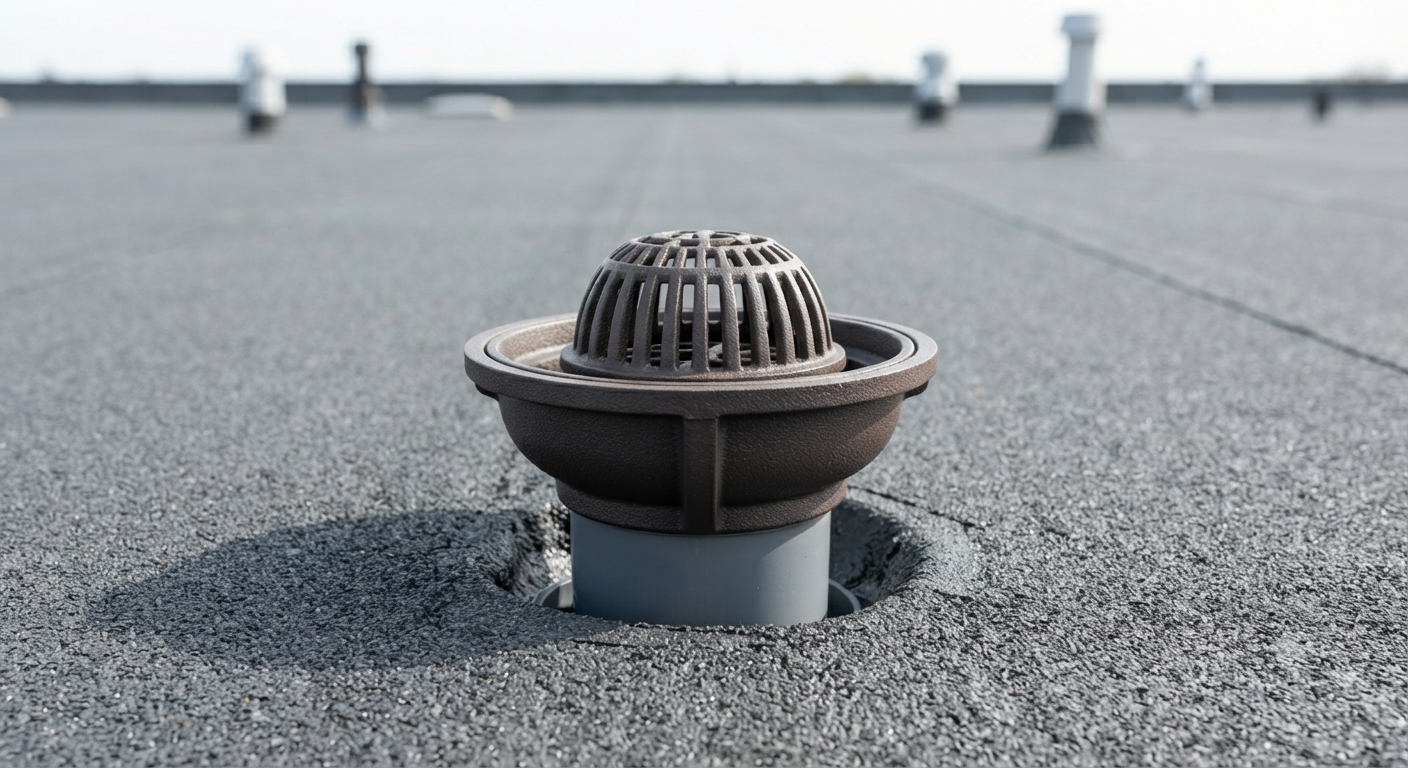
A roof drain works by pulling standing water off a flat or low-slope roof and channeling it through an internal piping system down to the ground or a municipal storm system, keeping water from pooling on the roof surface.
Winnipeg property owners with flat commercial roofs or low-slope additions rely on a properly installed roof drain to prevent ponding, membrane damage, and interior leaks during heavy rain or fast spring melt.
It typically includes a strainer basket to catch debris, a clamping ring to seal the membrane around the opening, and a vertical pipe that carries water away from the roof deck. When it becomes clogged or damaged, water has nowhere to go, which puts extra weight on the roof structure and increases the risk of membrane tears and ceiling stains below.
How Does a Roof Drain Work to Protect a Roof System?
It works by creating a low point in the roof surface where water is guided through a sloped membrane toward an opening connected to interior plumbing.
Once water reaches the roof drain, it passes through a strainer basket that blocks leaves, gravel, and other debris from entering the pipe, then flows down through a vertical drain line that runs through the building and out to a storm sewer or designated discharge point.
This process keeps water from sitting on the roof surface for extended periods, which matters because standing water adds significant weight to a roof deck and accelerates the breakdown of roofing membrane material.
It also works alongside the overall slope of the roof, since even a well-built drain cannot function properly if the surrounding membrane does not direct water toward the opening.
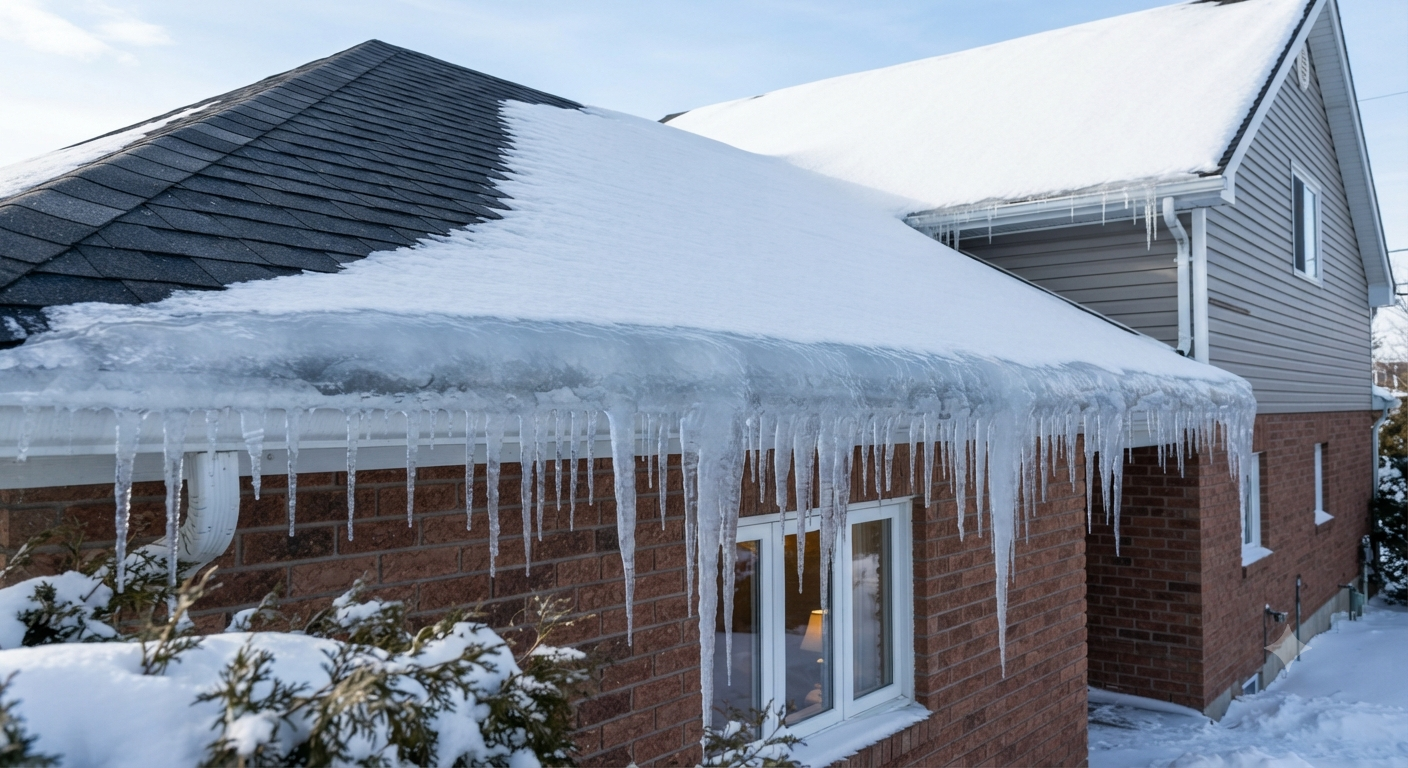
During Winnipeg winters, a roof drain has to manage both rainwater and snowmelt, and any blockage from ice or debris can cause water to back up and refreeze, which puts additional stress on the drain assembly and the surrounding membrane seal.
What Is a Roof Drain and Where Is It Installed on a Building
It is a plumbing fixture installed at the lowest point of a flat or low-slope roof, designed to collect and remove water before it can pool or seep into the building below.
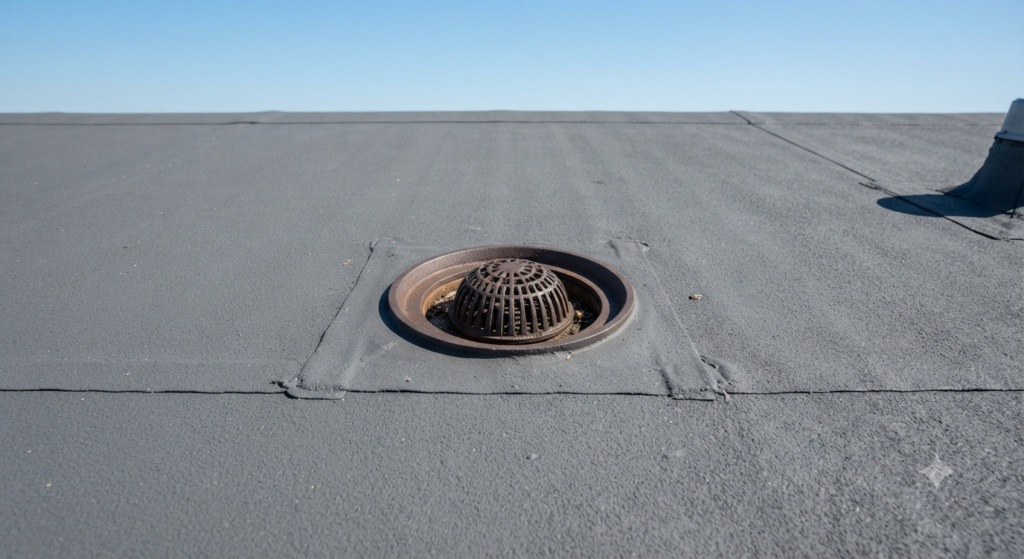
It typically sits flush with the roof surface and includes a metal or plastic body, a strainer dome or basket on top, and a clamping ring that presses the roofing membrane down to create a watertight seal around the opening.
They are most commonly installed on commercial buildings, apartment complexes, and additions with flat or gently sloped roofing, since these roof types do not shed water the way a steeply pitched residential roof does.
The placement of a roof drain depends on the roof’s drainage design, and larger roofs often include multiple drains spaced across the surface to handle water volume evenly rather than relying on a single low point.
Buildings with parapet walls or raised roof edges depend heavily on interior roof drains because water has no other way to exit the roof surface once it accumulates.
Correct placement during construction or replacement is critical, since they are in the wrong elevation, which will leave low spots elsewhere on the roof where water continues to pool.
Why Roof Drains Matter for Flat and Low-Slope Roofs
It matters because flat and low-slope roofs do not have enough pitch to let gravity clear water on its own, which means the drainage system has to do that job instead.
Without a functioning it, water collects in low areas of the roof, adding substantial weight that can stress the roof deck and framing over time, especially during heavy Manitoba rainstorms or rapid snowmelt in early spring.
Standing water also speeds up the deterioration of roofing membrane material, since prolonged exposure to moisture causes the surface to soften, blister, and eventually crack or tear.
It protects the interior of the building as well, since water that cannot exit through the drainage system often finds its way through membrane seams or flashing details, leading to ceiling stains, insulation damage, and mold growth.
It also helps control ice formation during Winnipeg winters, since water that drains properly has less opportunity to refreeze and expand within roofing layers. Buildings that neglect their maintenance tend to experience membrane failure years earlier than properties that keep their drainage system clear and functioning correctly.
Types of Roof Drains Used on Winnipeg Properties
It comes in several configurations, and the right type depends on the roof’s size, slope, and how much water volume the drainage system needs to handle during peak storm conditions.
Primary (Gravity) Roof Drains
Primary roof drains rely on standard gravity flow to move water from the roof surface down through the interior piping system, and they are the most common type installed on commercial flat roofs. These drains work continuously during normal rainfall and handle the bulk of everyday water removal.
Secondary (Overflow) Roof Drains
Secondary roof drains, sometimes called overflow drains, sit slightly higher than the primary roof drain and only activate when water rises above a certain level, usually because the primary drain has become blocked or overwhelmed. This backup system protects the building from serious water damage if the main roof drain fails during a major storm.
Scupper Drains
Scupper drains are openings built directly into a parapet wall or roof edge that allow water to exit the roof surface horizontally rather than through an internal pipe. This type of roof drain is often paired with a gravity drain system to give the roof multiple exit points for water.
Siphonic Roof Drains
Siphonic roof drains use a specially engineered piping system that creates a vacuum effect, pulling water off the roof at a much faster rate than a standard gravity roof drain. This type is typically reserved for larger commercial buildings where rapid water removal is a priority during intense storm events.
Signs Your Roof Drain Is Failing or Needs Repair
It rarely shows obvious damage right away, which is why property owners need to know the early warning signs before a small clog turns into a major leak. Water pooling around the drain opening long after a storm has passed usually means the strainer basket or pipe below it has become partially blocked.
Gurgling sounds coming from interior pipes during heavy rain can indicate trapped air or a partial obstruction inside the line. Visible rust or corrosion on the drain body itself often signals that the metal components are breaking down and may soon fail to hold a watertight seal against the membrane.
Ceiling stains or damp patches on the top floor of a building are frequently traced back to a roof drain that has stopped channeling water away properly. The table below breaks down the four common roof drain types and how each one typically performs across different conditions.
| Roof Drain Type | Primary Function | Best Suited For | Maintenance Needs |
| Primary (Gravity) | Everyday water removal | Standard flat commercial roofs | Regular strainer cleaning |
| Secondary (Overflow) | Backup during blockages | Roofs with parapet walls | Occasional inspection |
| Scupper | Horizontal water exit | Roofs needing multiple outlets | Debris clearing at openings |
| Siphonic | Rapid water removal | Large commercial roofs | Periodic professional checks |
How to Maintain a Roof Drain Through Each Season
It needs consistent seasonal attention because Winnipeg’s weather shifts dramatically between heavy summer downpours, falling leaves, and winter snow accumulation. Property owners who schedule regular roof drain checks tend to avoid the expensive interior repairs that come from prolonged water backup.
Clearing debris before it accumulates keeps the entire drainage system working the way it was designed to, and catching small issues early prevents them from becoming structural problems. The table below outlines what to check during each season and why that task matters for the long-term performance of a roof drain system.
| Season | Maintenance Task | Why It Matters |
| Spring | Clear ice and slush from drain openings | Prevents backup during rapid snowmelt |
| Summer | Remove leaves and debris from strainer baskets | Keeps water flowing freely during storms |
| Fall | Inspect clamping rings and membrane seals | Stops leaks before winter freeze sets in |
| Winter | Check for ice buildup around the drain body | Signals blockages before major thaw events |
Which Roof Drain Option Is Best for Your Property
Choosing the right setup depends on the size of the roof, how much water volume it needs to handle, and whether the building has parapet walls or open edges.
Primary gravity drains paired with a secondary overflow drain tend to be the strongest choice for most Winnipeg commercial properties, since this combination handles everyday rainfall while providing a built-in safety net if the main drain becomes blocked.
Scupper drains work well as a supplementary option on roofs that already have a solid gravity drain system, since they give water an additional path to exit during unusually heavy storms.
Siphonic roof drains are generally the better fit for larger buildings with expansive flat roofs, where standard gravity drainage would struggle to remove water fast enough during intense weather.
The reason a primary and secondary drain pairing works best for most properties comes down to reliability, since having a backup system in place means a single clog or piece of debris will not lead to a full roof drain failure during a major storm.
Property owners who are unsure which configuration fits their building can reach out to Zega Roofing for a professional assessment based on the roof’s current slope, size, and drainage history.
Buildings with aging or brittle roofing membrane around the drain area may also want to look into roof drain membrane systems that seal more effectively around the drain body.
For commercial properties dealing with recurring drainage problems, a review of commercial roof drain repairs can help identify whether the issue is isolated to the drain itself or tied to a larger membrane concern.
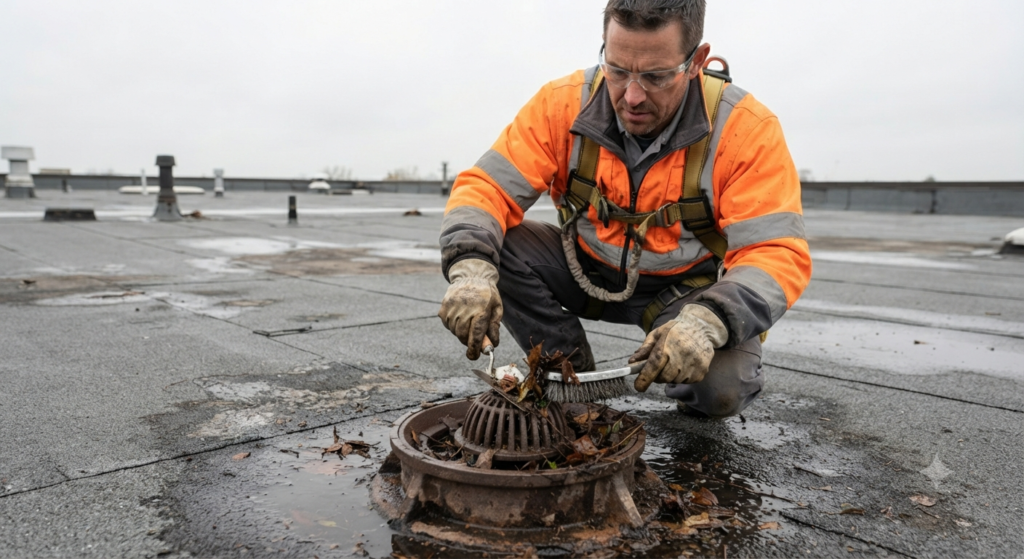
Things To Know About Roof Drains
There are several practical details about roof drains that often get overlooked until a problem shows up during a storm. A single roof drain is rarely designed to handle an entire roof surface on its own, which is why most commercial buildings include multiple drains spaced according to the roof’s total square footage and slope pattern.
Strainer baskets sitting on top of a roof drain are not optional accessories, since they prevent leaves, gravel, and roofing granules from entering the pipe and causing a blockage further down the line. Roof drains installed near parapet walls often work alongside roof drain and gutter systems to manage water at both the interior and exterior edges of the roof.
Ice buildup around a roof drain during winter is not always a sign of a broken drain, but it does mean the area needs closer monitoring since trapped ice can crack the clamping ring once temperatures rise. For roof drain repair or replacement costs, it is best to just reach out for a direct quote, since pricing depends on the drain type, roof size, and the extent of any membrane damage found during inspection.
Wrapping Up on Roof Drains
A roof drain may be a small fixture compared to the rest of a roofing system, but its role in moving water away from the surface makes it one of the most important components on any flat or low-slope roof.
Understanding how a roof drain functions, the different types available, and the early signs of a failing drain gives property owners a clear path toward preventing costly interior damage. Whether a building relies on a gravity roof drain, a scupper system, or a siphonic setup, seasonal maintenance keeps the entire drainage system working the way it was designed to during Winnipeg’s heaviest storms and fastest snowmelt. Staying ahead of roof drain upkeep now means fewer emergencies the next time a downpour tests the roof’s ability to clear water quickly.
Frequently Asked Questions About Roof Drains
What is the drain on a roof called?
The drain on a roof is called a roof drain, a fixture installed at the low point of a flat roof to remove standing water.
What are the different types of roof drains?
The main types are primary, secondary, scupper, and siphonic roof drains, each suited to different roof sizes and water volumes.
What are the signs of a failing roof drain?
Pooling water, gurgling pipes, rust on the drain body, and ceiling stains are common signs a roof drain needs attention.
What are the 4 types of drainage?
The four common drainage types are gravity, siphonic, scupper, and combined systems, each managing roof water differently.