
A roofing gutter is one of the most important yet overlooked components of any Canadian home. It channels rainwater and snowmelt away from your roof edges, walls, and foundation, preventing costly structural damage over time. If you own a property in Winnipeg, understanding how a roofing gutter works, what types are available, and how to maintain or repair one can save you thousands in future costs.
How a Roofing Gutter Actually Works
A roofing gutter is a channel fixed along the lower edge of a roof that collects water flowing off the surface during rain or snowmelt. Water travels horizontally through the trough toward a vertical downspout, which carries it away from the building’s foundation. Without this system, water cascades freely off the roofline, saturates soil beside the foundation, seeps into basement walls, erodes landscaping, and causes fascia rot and soffit deterioration.
The roofing gutter works as a complete unit. The trough collects runoff, the brackets and hangers maintain the correct pitch — roughly a quarter inch of slope per ten feet — and the downspout directs the flow toward a splash block, underground drain, or rain barrel. When any part of this chain fails, whether it is a clogged section, a loose hanger, or a cracked downspout, water finds alternate paths into your home.
In Winnipeg specifically, roofing gutters face extreme seasonal demands. Ice damming forms when heat escapes through the roof, melts snow near the ridge, and the water refreezes at the colder eaves. If the roofing gutter is already clogged with leaves or debris, this freeze-thaw cycle causes severe damage to both the gutter itself and the roof edge. Keeping your system clear and well-maintained is a structural necessity in the Canadian climate, not just a cosmetic preference.
Why Roofing Gutters Matter More Than Most Homeowners Realize
Most property owners don’t think seriously about their roofing gutter until something is clearly wrong — water pouring over the sides during a storm, gutters pulling away from the fascia, or sagging sections visible from the street. By that point, damage underneath is often already in progress.
A properly functioning roofing gutter protects several layers of your home simultaneously. It keeps water off the fascia and soffits, which rot when consistently wet. It prevents water from pooling near the foundation, where long-term pressure leads to cracks and basement leaks. It also reduces water splash-back onto lower siding courses, which causes paint failure, staining, and mold growth on exterior walls.
For flat or low-slope commercial roofs, a roofing gutter system is equally important. Standing water on a flat roof adds significant weight load, promotes organic growth, and accelerates membrane failure. Whether you own a single-family home or a commercial building in Winnipeg, a well-installed roofing gutter is one of the most cost-effective investments you can make in protecting the entire building envelope from the outside in.
If water pooling near your foundation or fascia damage is already visible, exploring residential roof installations in Winnipeg can help you understand whether broader roofline work is needed alongside gutter repairs.
Types of Roofing Gutters and Which Option Fits Winnipeg Homes
Not every roofing gutter is built the same way, and selecting the wrong type or material for your climate means replacing the system far sooner than expected. Understanding your main options leads to a more informed decision before any money is spent on installation.
K-Style Gutters
K-style is the most widely installed roofing gutter profile across Canada. The flat back and decorative front profile resembles crown moulding, giving rooflines a finished look. K-style gutters hold more water volume than rounded profiles of the same width and are available in five-inch and six-inch widths, making them effective for most residential applications in Winnipeg.
Half-Round Gutters
Half-round gutters have a curved semicircular shape, most common on older or heritage-style homes. Their smooth interior surface allows water and debris to flow through more freely, reducing corrosion buildup at the base of the trough. They hold slightly less volume than K-style gutters per linear foot and require specific bracket hardware to mount against the fascia correctly.
Box Gutters
Box gutters are integrated directly into the roof structure at the eaves, most commonly on commercial buildings or flat-roof residential properties. They offer larger water capacity and a fully concealed appearance, but because they are built into the roofline, repairs are more complex and typically require a professional roofing team to address safely.
Gutter Material Comparison for Canadian Climates
| Material | Typical Lifespan | Best Application | Key Consideration |
| Aluminum | 20 to 30 years | Residential homes | Rust-resistant, lightweight, widely available |
| Galvanized steel | 15 to 25 years | High snow load areas | Strong but can rust if coating chips |
| Vinyl | 10 to 20 years | Mild climates only | Budget option; brittle in severe cold |
| Copper | 50 or more years | Heritage or premium builds | Long-lasting, expensive upfront |
| Zinc | 40 to 50 years | Long-term investment | Self-healing patina, higher initial cost |
For most Winnipeg homeowners, aluminum roofing gutters offer the best balance of durability, weight, and resistance to freeze-thaw cycles. Vinyl is generally not recommended for Manitoba winters because it becomes brittle in extreme cold and tends to crack under ice load.

How to Maintain Your Roofing Gutter Through Every Season
A well-installed roofing gutter can still fail prematurely without regular maintenance. Winnipeg’s four distinct seasons each place different demands on the system, and a consistent maintenance schedule is the most effective way to maximize the life of your gutters.
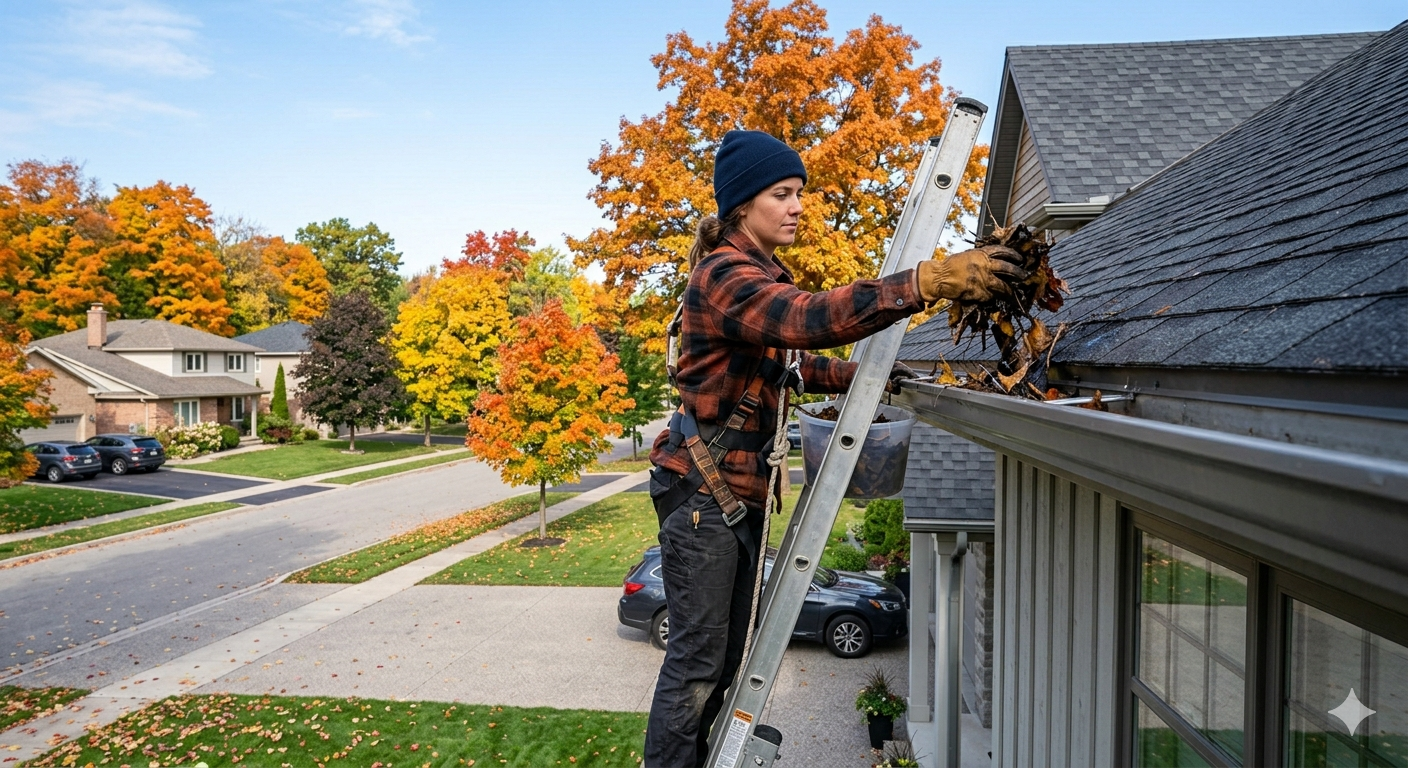
Clean your roofing gutter at least twice per year — once in late spring after tree buds and seeds have settled, and again in late fall after leaves have dropped. Homes with large trees nearby may need cleaning three or four times annually to prevent debris buildup that leads to overflow and added structural weight on the gutter. During each cleaning, remove all organic material from the trough, flush the system with water to confirm proper flow toward the downspout, and check all brackets and screws for tightness.
Downspout maintenance matters as much as trough cleaning. A blockage inside the downspout causes water to back up into the trough and overflow at the weakest joint. Use a garden hose at high pressure or a plumber’s snake to clear obstructions, and confirm that the downspout extension or splash block is directing water at least five to six feet away from the foundation perimeter.
In winter, avoid using sharp tools to chip ice from a frozen roofing gutter, as this easily punctures aluminum and cracks vinyl. Using a roof rake to reduce snow load above the eaves minimizes the volume of meltwater entering the gutter. Combining snow removal with adequate attic insulation reduces ice damming at its source by limiting heat escape at the roofline — a particularly important strategy for older Winnipeg homes with insufficient attic ventilation.
Signs Your Roofing Gutter Needs Repair or Replacement
Spotting problems early prevents minor roofing gutter issues from escalating into full fascia board replacements. Several clear warning signs tell you the system needs professional attention before water damage spreads further into the building structure.
Sagging along any section of the roofing gutter means hangers have pulled away from the fascia or the fascia board itself has softened from moisture. A sagging trough loses its proper pitch, causing water to pool in the low spot and worsen the sag progressively. Peeling paint or rust staining on the wall directly below the gutter indicates persistent overflow — from a clog, incorrect pitch, or an undersized trough for the roof area above.
Cracks, holes, or separated joints in the roofing gutter allow water to drip directly onto the fascia rather than flowing to the downspout. Small cracks can sometimes be addressed with interior sealant, but larger damage or joint separation usually means the affected section needs replacing. A roofing inspection helps determine whether patching or replacement is the right call, and it also reveals whether the fascia behind the gutter has sustained water damage that needs to be corrected before remounting.
| Warning Sign | Likely Cause | Recommended Action |
| Sagging gutter sections | Loose hangers or rotted fascia | Rehang or replace fascia first |
| Overflow during rain | Clogged trough or undersized profile | Clean or upgrade to wider gutter |
| Rust staining on siding | Leaking joints or persistent overflow | Seal joints or replace that section |
| Water pooling near foundation | Blocked or misdirected downspout | Extend or clear downspout |
| Visible cracks or holes | Age, freeze damage, or physical impact | Patch small areas or replace the section |
If you’re seeing multiple signs of roofline deterioration alongside your gutter issues, looking into shingle roof replacement at the same time can be a cost-effective way to address everything in one visit rather than scheduling separate work.
Things To Know Before Installing or Replacing a Roofing Gutter
There are several practical points that often get overlooked before a homeowner commits to buying or replacing a roofing gutter system.
Seamless gutters are fabricated on-site using a roll-forming machine and contain no seams along their length except at corners and downspout connections. Because most leaks in a conventional sectional gutter system occur at the joints between sections, seamless roofing gutters dramatically reduce the risk of leaks and are the preferred choice for new installations across Manitoba.
Gutter guards and leaf screens lower cleaning frequency but do not eliminate maintenance entirely. Fine debris like shingle granules, seed pods, and organic buildup still collects on top of many screen designs. If guards are installed, a yearly inspection of the system is still recommended rather than assuming it is fully hands-off.
The fascia board behind any roofing gutter must be in solid structural condition before new gutters are mounted. Soft, delaminating, or visibly rotted fascia will not hold the hanger screws securely, and the new gutter will fail within one to two seasons. Always inspect and replace any compromised fascia before the gutter is installed.
Downspout spacing is more important than many people expect. For runs longer than 40 feet, a second downspout is recommended to balance drainage and prevent overflow at the midpoint of a long trough. Working with a professional who understands Winnipeg’s rainfall patterns and snow load conditions ensures the roofing gutter is designed to handle realistic water volumes through all four seasons.
For pricing on roofing gutter installation, repair, or a full inspection, contact Zega Roofing directly at +1 204-997-2697 or visit zegaroofing.ca. With over 25 years of experience serving Winnipeg and surrounding communities, their team provides free inspections and transparent quotes for all roofing and drainage work. You can also pair your gutter assessment with spray foam insulation in Winnipeg to address ice damming at its source and protect your roofline through Manitoba winters.
Protecting Your Home Starts With a Reliable Roofing Gutter
A properly installed and maintained roofing gutter system does far more than manage rainwater — it protects the entire structure of your home from the kind of slow, compounding water damage that grows invisibly over seasons. From selecting the right profile and material for Winnipeg’s climate to scheduling seasonal cleaning, reading early warning signs, and understanding when professional help is needed, every decision you make about your roofing gutter system directly affects the long-term health of your property. Getting it right from the start, with the help of an experienced local roofing team, is always the most cost-effective path forward.
Frequently Asked Questions About Roofing Gutters
What is a roof gutter called?
A roofing gutter is also commonly called an eavestrough, rain gutter, or drainage channel. In Canada, the term eavestrough is used most frequently in Ontario and the Prairie provinces, though both terms describe the same horizontal trough mounted along the eaves of a roof to collect and redirect surface water runoff.
What is a gutter in roofing?
A gutter in roofing is a horizontal channel that collects water running off the roof surface and directs it toward a downspout and away from the building’s foundation. It is a key component of the building’s water management system, protecting the fascia, soffits, siding, and foundation from the gradual damage caused by uncontrolled water runoff.
What are the different types of gutters?
The main types of roofing gutters are K-style, half-round, and box gutters, each available in materials including aluminum, steel, vinyl, copper, and zinc. K-style is the most common for residential properties, half-round suits heritage architectural styles, and box gutters are integrated into commercial or flat-roof building structures. Material selection should be based on climate, budget, and expected system lifespan.
What’s another name for roof gutters?
Roof gutters are also called eavestroughs, rain gutters, drainage channels, or spouting depending on the region. In Canada, eavestrough is the most widely used regional term, particularly in Manitoba and Ontario. In the United Kingdom, the term spouting is common, while Australians typically use the word guttering to describe the same system.
Do roofers also fix gutters?
Yes, most professional roofing contractors handle roofing gutter repair, cleaning, and installation as part of their standard service offering. Since gutters attach directly to the fascia and roofline, roofing professionals are well-positioned to identify both gutter problems and any underlying roofline damage at the same time, ensuring nothing is missed before a new system is installed.