Roof membrane is one of the most critical layers in any roofing system, acting as the primary waterproof barrier between your structure and the elements. A roof membrane is a continuous, flexible sheet of material applied to the roof deck to prevent water infiltration, reduce heat transfer, and extend the life of your roof.
Whether you have a flat or low-slope roof, choosing the right roof membrane and having it installed correctly can mean the difference between a dry, protected home and costly water damage. This article covers how roof membrane works, the different types available, how they are installed, common problems to watch out for, and what the best option looks like depending on your roofing needs in a Canadian climate.
How Does Roof Membrane Work on a Flat or Low-Slope Roof?
A roof membrane functions as a seamless, waterproof skin stretched across the entire roof deck surface. Unlike sloped roofs where water naturally runs off shingles and tiles, flat and low-slope roofs rely almost entirely on the integrity of the roof membrane to redirect water toward drains and prevent pooling from seeping into the building below.
When properly installed, a roof membrane bonds tightly to the roof substrate, eliminating gaps where moisture could enter. The material itself is designed to be flexible enough to move with the natural expansion and contraction of your building caused by temperature shifts, which is especially important in Winnipeg where winters are extremely cold and summers can be intensely hot. This thermal movement, if not accommodated, can crack rigid materials and create entry points for water.
The roof membrane also serves as a reflective or absorptive surface depending on the type chosen. Lighter-coloured membranes reflect sunlight and reduce heat buildup inside the building, which helps with energy efficiency during warm months. Darker membranes absorb heat, which can be useful in colder climates for assisting snow melt. Either way, the roof membrane creates a continuous envelope of protection that keeps your building dry, thermally regulated, and structurally sound over many years.
In commercial and residential flat roof applications, the roof membrane is typically layered over rigid insulation boards, which sit on the roof deck. The membrane is then fastened, adhered, or ballasted on top to create a stable, long-lasting roofing system. Some installations also use a vapour barrier beneath the insulation to control moisture movement from inside the building into the roof assembly, making the roof membrane part of a multi-layer system rather than a standalone solution.
The 4 Types of Roof Membrane Explained
There are four main categories of roof membrane used in residential and commercial roofing across Canada, each with distinct properties, installation methods, and performance characteristics.
Single-Ply Membranes
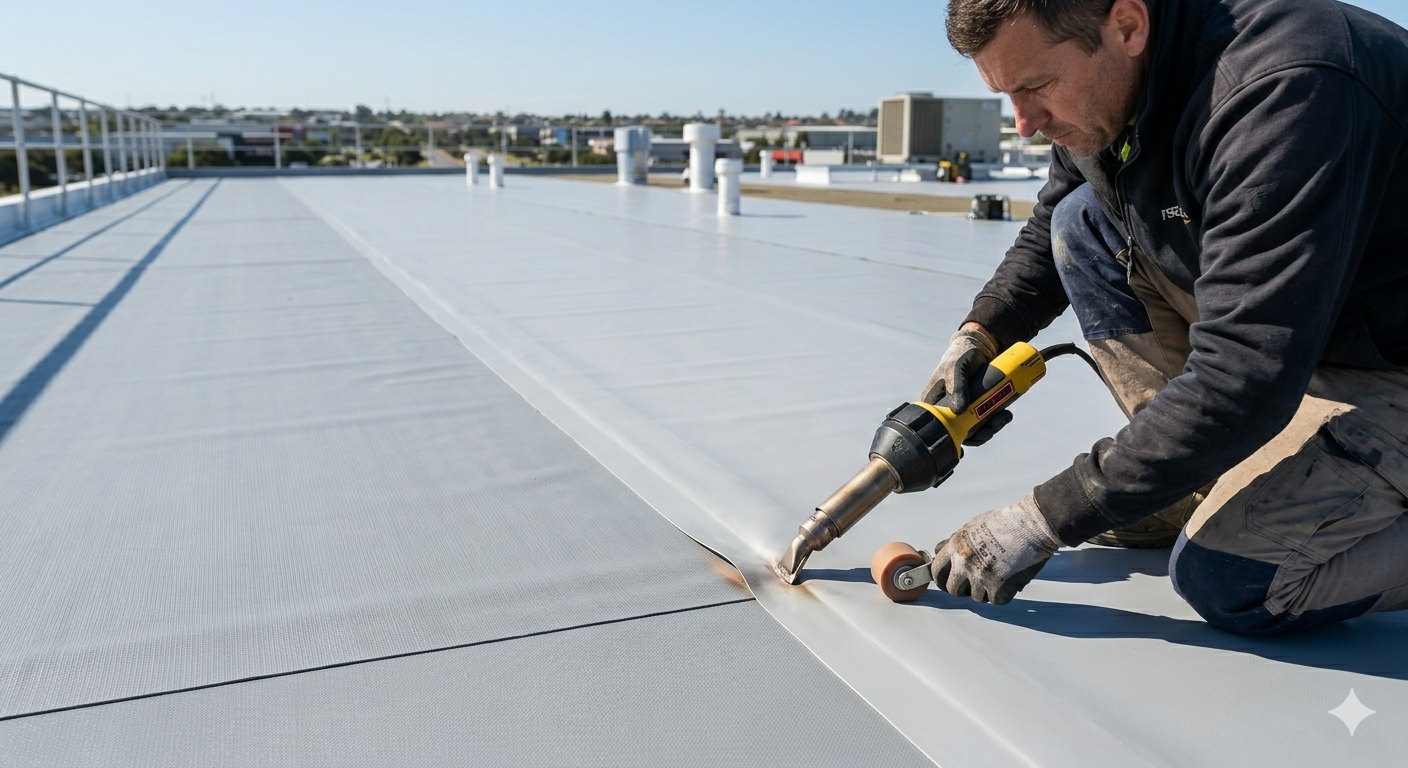
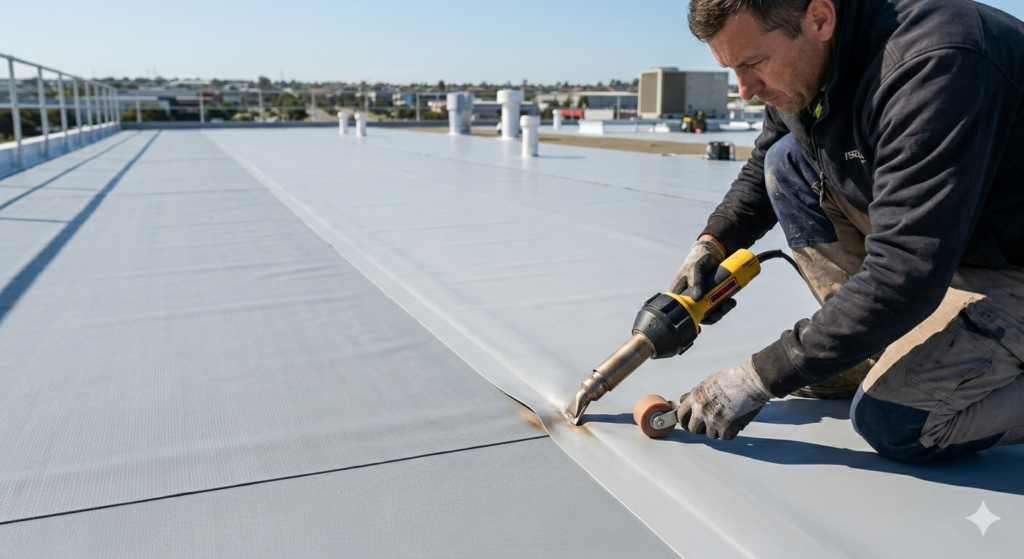
Single-ply roof membrane products are manufactured as flexible sheets and are among the most widely used options today. They are light, easy to handle, and available in two primary varieties. The first is a thermoplastic membrane, which can be heat-welded at the seams to create a continuous, watertight bond. The second is a thermoset membrane, which is vulcanized during manufacturing and joined at seams using bonding adhesives or tape. Both types perform well in extreme temperature fluctuations, making them particularly suited to Canadian climates.
Modified Bitumen Membranes
Modified bitumen roof membrane is an evolution of traditional built-up roofing. It combines layers of asphalt with polymer modifiers that dramatically improve flexibility, especially in cold weather. This type of roof membrane can be applied using a torch, cold adhesive, or a self-adhering peel-and-stick method. Modified bitumen is known for its durability and its ability to handle foot traffic better than many other membrane types, which is useful on roofs that require regular maintenance access.
Built-Up Roofing Membranes
Built-up roofing, sometimes called BUR, is one of the oldest forms of roof membrane systems. It consists of multiple alternating layers of bitumen and reinforcing fabric, creating a thick, multi-ply barrier. The resulting roof membrane is extremely durable and offers excellent waterproofing, though it is heavier and more labour-intensive to install than modern single-ply systems. Built-up roofing remains a reliable choice for commercial rooftops that need proven, long-term protection.
Liquid-Applied Membranes
A liquid-applied roof membrane is applied as a coating that cures into a seamless, rubbery layer directly on the roof surface. Because it is applied in liquid form, it can conform to complex shapes, curves, and penetrations without any seams, which are often the weakest points in any roofing system. Liquid membranes are frequently used for roof repairs and as flashings around chimneys, vents, and skylights, as well as on entire roof surfaces where a seamless result is prioritized.
| Membrane Type | Best For | Key Advantage |
|---|---|---|
| Single-Ply | Flat commercial and residential roofs | Lightweight, thermally flexible, quick installation |
| Modified Bitumen | Low-slope roofs needing foot traffic durability | Cold-weather flexibility, multiple install methods |
| Built-Up Roofing | Heavy-duty commercial applications | Multi-layer strength, proven longevity |
| Liquid-Applied | Complex shapes, repairs, penetration sealing | Completely seamless, no joints or overlaps |
Which Roof Membrane Is Best for Canadian Climates?
Choosing the best roof membrane depends on several factors, including your roof type, budget, building use, and local climate conditions. In Winnipeg and across Manitoba, roofing systems face some of the most demanding weather conditions in North America, including extreme freeze-thaw cycles, heavy snow loads, and significant UV exposure during summer months.
For most residential flat roofs in Winnipeg, a modified bitumen roof membrane is frequently recommended because of its outstanding flexibility in cold temperatures. When the mercury drops well below zero, some roofing materials become brittle and crack, but modified bitumen retains its elasticity and continues to provide a reliable waterproof seal. Its polymer-modified asphalt base also resists cracking from thermal expansion and contraction over many seasons.
For larger commercial buildings, single-ply thermoplastic membranes are often the preferred roof membrane choice due to their combination of durability, UV resistance, and energy efficiency. Their heat-welded seams create bonds that are often stronger than the membrane material itself, dramatically reducing the risk of seam failure from wind uplift or movement.
If budget is a primary concern or if the project involves a roof with many penetrations and unusual geometry, a liquid-applied roof membrane can be an excellent solution because it eliminates the seam-related failures that are common in sheet membrane systems. It can also be applied over existing roofing in many cases, reducing demolition and disposal costs.
For anyone unsure of which roof membrane system fits their specific situation, reaching out to Zega Roofing for a professional assessment is the most reliable first step. Their team has over 25 years of experience with roofing in Winnipeg and can evaluate your roof’s current condition, slope, drainage, and insulation to recommend the most appropriate membrane system.
How Roof Membrane Is Installed: A Step-by-Step Overview
The process of installing a roof membrane varies depending on the type of material selected, but there are core steps that apply across most systems. Understanding the installation process helps property owners know what to expect and how to evaluate whether a job has been done correctly.
Roof Deck Inspection and Preparation
Before any roof membrane is applied, the existing roof deck must be thoroughly inspected for damage, rot, moisture saturation, or structural weaknesses. Any deteriorated decking boards must be replaced before installation begins. A clean, flat, and dry substrate is essential for the roof membrane to adhere correctly and perform as intended over its lifespan. Skipping this step is one of the most common causes of premature membrane failure.
Insulation Installation
In most modern roof assemblies, rigid insulation boards are fastened to the roof deck before the roof membrane layer is applied. The insulation thickness is determined by the building’s energy requirements and local building code. In Manitoba, building codes require a minimum level of roof insulation, and many roofing installations in Winnipeg go beyond that minimum to achieve better energy performance. Proper insulation also creates a smooth, consistent surface for the roof membrane to lay flat against.
Membrane Application
Depending on the type of roof membrane being installed, the application method differs. Single-ply membranes are rolled out across the roof and either mechanically fastened around the perimeter, fully adhered with bonding adhesive, or ballasted with gravel. Modified bitumen membranes are either torch-applied, cold-adhered, or self-adhered. In all cases, the seams and overlaps between membrane sheets are the most critical areas and must be sealed completely to prevent water entry.
Flashing and Edge Details
Roof membrane installation is only as good as its edge and flashing details. Every penetration through the roof, including pipes, vents, drains, and mechanical equipment, must be flashed with compatible membrane material to prevent water from entering at those points. Edges and parapets must also be terminated and sealed correctly. Improper flashing is one of the most common sources of roof leaks even on roofs with otherwise properly installed membranes.
Final Inspection
Once the roof membrane and all flashings are complete, a thorough inspection should be carried out to identify any missed spots, bubbles, open seams, or inadequate coverage at penetrations. Professional roofing contractors will conduct a detailed walkthrough and, in some cases, use water testing or infrared scanning to confirm that the installed roof membrane is performing as expected before the project is signed off.
Common Problems With Roof Membrane Systems
Even the best roof membrane materials can develop issues over time, particularly when installation quality is poor or maintenance is neglected. Knowing the most common problems helps property owners identify concerns early and address them before they become expensive failures.
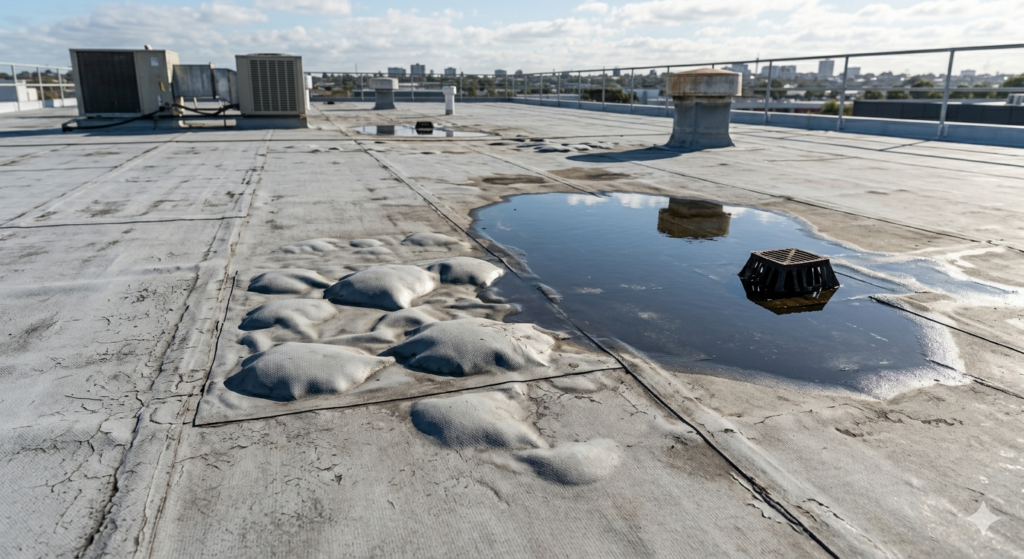
Ponding water is one of the most frequently cited issues with flat roof membranes. When water sits on a roof membrane for extended periods, it accelerates UV degradation, adds structural weight, and can eventually find its way through even minor imperfections in the membrane surface. Proper drainage design is essential to prevent this.
Seam and lap failures are another common source of trouble, particularly in single-ply membrane systems. Over time, adhesive bonding can weaken, and thermally welded seams can develop micro-separations if the welding was inconsistent during installation. Regular inspections catch these issues before they turn into active leaks.
Membrane blistering occurs when air or moisture becomes trapped between the roof membrane and the substrate during installation. These blisters expand and contract with temperature changes and can eventually rupture, creating open pathways for water infiltration. Proper substrate preparation and correct adhesive application are the main ways to avoid blistering.
Shrinkage is a problem more common with thermoset single-ply membranes. Over many years, the material can contract slightly, pulling away from flashings and termination points and opening gaps at the most vulnerable locations on the roof. Selecting the right membrane for your climate and ensuring proper installation tension significantly reduces this risk.
For any of these roof membrane issues, prompt professional attention through commercial roofing repairs or residential service is far more cost-effective than waiting until water damage has spread into the building interior.
Things To Know Before Installing or Replacing a Roof Membrane
Before committing to a roof membrane installation or replacement, there are several important points that every property owner should understand to make an informed decision.
- Not all roof membranes are appropriate for all slope levels. Roof membrane systems are specifically designed for flat and low-slope applications. Using them on a steep-pitched roof is neither effective nor structurally appropriate.
- Membrane lifespan varies significantly by type and installation quality. A well-installed roof membrane can last anywhere from 15 to 30 or more years depending on the material and maintenance program in place.
- Rooftop equipment affects membrane selection. If your roof has HVAC units, solar panels, or other equipment that requires regular servicing, you need a roof membrane that can handle frequent foot traffic without cracking or puncturing.
- Pricing depends on roof size, membrane type, and condition of the existing deck. For accurate pricing tailored to your property, contact Zega Roofing directly for a free inspection and estimate.
- Proper ventilation matters. A roof membrane alone does not address moisture issues caused by poor attic or building ventilation. Pairing your membrane system with adequate insulation and vapour control is important for preventing condensation damage from within the building.
- Building permits may be required. In Winnipeg and surrounding municipalities, certain roofing projects require permits. A licensed roofing contractor will advise you on local requirements.
Why Zega Roofing Is Winnipeg’s Trusted Choice for Roof Membrane Work
When it comes to roof membrane installation and repair in Winnipeg, experience and material knowledge are everything. Zega Roofing has spent over 25 years serving homeowners and commercial property owners across Winnipeg and surrounding communities, developing a deep understanding of which roof membrane systems perform best under Manitoba’s demanding climate conditions. From residential roof installations to full commercial membrane replacements, the team brings certified expertise, honest assessments, and quality materials to every project.
Every roof membrane project starts with a thorough inspection of the existing roof to identify structural issues, insulation deficiencies, and drainage problems before any material is applied. This approach ensures that the new membrane is installed on a sound foundation and is set up for a long, problem-free service life. Zega Roofing is licensed, insured, and committed to completing every project with the craftsmanship that Winnipeg properties deserve.
To get started with a free roof inspection or to request a quote for roof membrane installation or repair, call Zega Roofing at +1 204-997-2697 or visit zegaroofing.ca/contact.
Frequently Asked Questions About Roof Membrane
What is a membrane on a roof?
A roof membrane is a continuous waterproof layer applied to flat or low-slope roofs to prevent water from penetrating the roof deck and entering the building below. It acts as the primary barrier against rain, snow melt, and moisture, and is available in several materials including single-ply sheets, modified bitumen, built-up asphalt layers, and liquid-applied coatings. The membrane is installed over the roof deck and insulation, and it typically covers the entire roof surface including all edges and penetration points to create a complete seal.
Does a roof need a membrane?
Yes, flat and low-slope roofs absolutely require a roof membrane because they cannot rely on gravity alone to shed water the way a steeply pitched shingle roof can. Without a properly installed roof membrane, water pools on the surface and eventually finds its way through joints, seams, and small gaps in the deck. For sloped roofs, an underlayment membrane beneath the shingles or tiles is also strongly recommended as a secondary layer of protection against wind-driven rain and ice dam infiltration.
What are the problems with roof membranes?
The most common roof membrane problems include ponding water, seam failures, blistering, shrinkage, and punctures from foot traffic or falling debris. Ponding water accelerates UV degradation and creates structural load issues. Seam failures allow water to enter at the most vulnerable points of the system. Blistering occurs when air or moisture gets trapped during installation. Shrinkage causes the membrane to pull away from flashings over time. Most of these problems are preventable with proper installation and regular maintenance inspections.
What’s the best membrane for a roof?
The best roof membrane depends on your specific roof type, climate, and budget, but modified bitumen is widely regarded as an excellent choice for cold Canadian climates due to its flexibility in freezing temperatures. For larger commercial applications, single-ply thermoplastic membranes offer outstanding durability and UV resistance with fast installation. Liquid-applied membranes are ideal for roofs with complex shapes or numerous penetrations. Consulting with a licensed roofing contractor is the most reliable way to determine which roof membrane suits your property.
What are the 4 types of membranes?
The four main types of roof membrane are single-ply membranes, modified bitumen membranes, built-up roofing membranes, and liquid-applied membranes. Single-ply membranes include thermoplastic and thermoset varieties. Modified bitumen combines asphalt with polymer modifiers for improved cold-weather performance. Built-up roofing uses multiple alternating layers of bitumen and reinforcing fabric. Liquid-applied membranes are brushed or rolled on as a coating and cure into a seamless, flexible layer. Each type has specific applications where it performs best.
Need professional roof membrane installation or repair in Winnipeg? Reach out to Zega Roofing at +1 204-997-2697 or visit zegaroofing.ca for a free inspection.