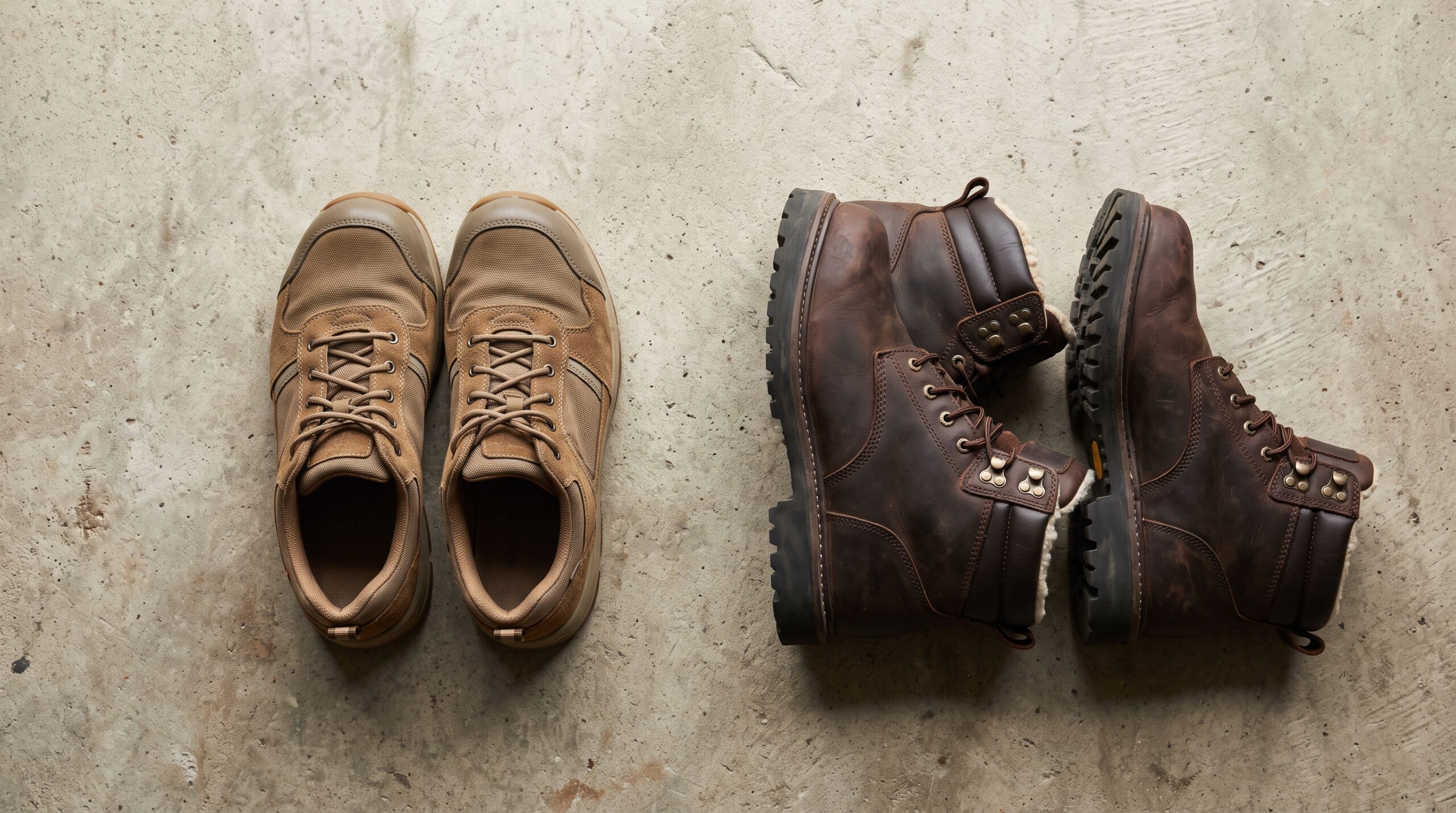
Roofing shoes are purpose built footwear with soft, high grip rubber soles designed to cling to steep, wet, or icy shingles far better than ordinary work boots. They lower the risk of slips and falls, a risk that grows sharply in Winnipeg, where freeze thaw cycles and sudden snow squalls change roof conditions within hours.
The right pair affects comfort, traction, and how safely a roofing job gets finished. Sole softness, tread pattern, and insulation all decide whether a pair of roofing shoes performs well through a Manitoba winter or falls short on the first frosty morning.
Why Roofing Shoes Matter for Roof Safety in Winnipeg
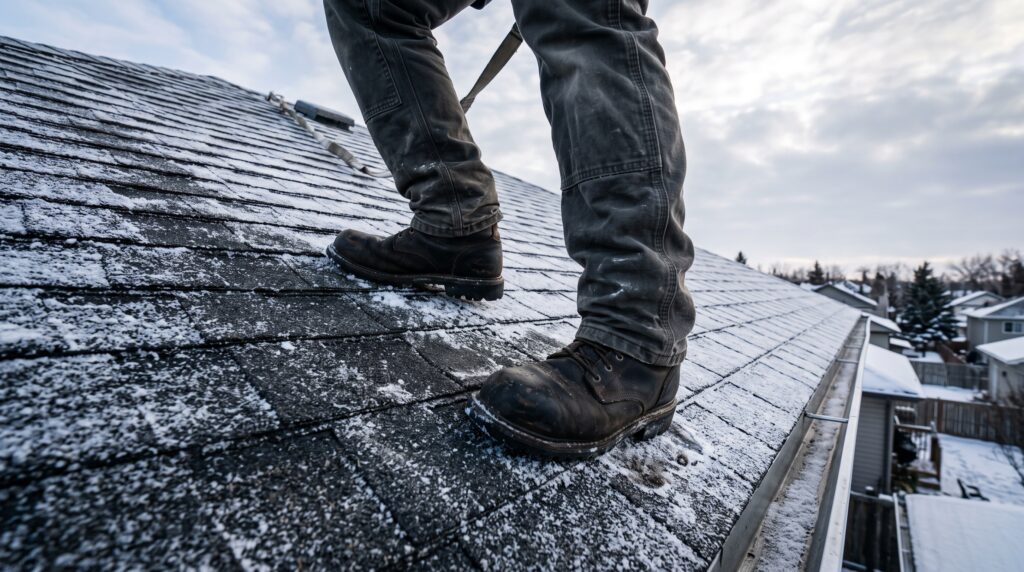
Falls remain one of the most common causes of injury in roofing work, and footwear is the first line of defense against that risk. Roofing shoes are built with soft rubber compounds that mold slightly around shingle granules, creating friction that stiff soled boots cannot match. On a steep Winnipeg roof coated in morning frost, that extra grip can be the difference between a steady step and a dangerous slide.
Winnipeg’s climate adds another layer of difficulty. Temperatures can swing from well below freezing to a sunny afternoon thaw within the same day, leaving roofs damp, icy in shaded sections, and dry in others.
Roofers who move between these surfaces need footwear that adapts quickly, which is exactly what quality roofing shoes are designed to do. Crews at Zega Roofing treat proper footwear as a non negotiable part of every job, pairing it with harnesses and other fall protection for added safety. For homeowners searching for a crew that takes these precautions seriously, roofers near me is a useful place to start.
What Makes Roofing Shoes Different From Regular Work Boots
Not every durable boot qualifies as proper roofing footwear. Regular work boots prioritize ankle support, steel toes, and puncture resistance, features built for walking across uneven ground or construction debris. Roofing shoes trade some of that bulk for flexibility and sole softness, since a stiff sole cannot flex around a shingle ridge or grip a wet surface the way a softer one can.
The differences come down to a handful of design choices that matter once a worker is standing on a slope instead of flat ground.
Key Features That Set Roofing Shoes Apart
- Soft, non marking rubber soles that flex with foot movement
- Low heel to toe drop for better balance on slopes
- Lightweight construction that reduces fatigue during long shifts
- Breathable materials that handle temperature swings without trapping moisture
- Reinforced stitching that resists granule abrasion from shingles
Together, these features let a roofer feel the surface underfoot rather than fighting a rigid boot, which matters most on pitched sections where balance depends on small foot adjustments.
Which Roofing Shoes Work Best for Winnipeg’s Climate
Not every roofing shoes style suits every season. Winnipeg crews typically rotate between lighter, breathable options for summer installations and insulated, water resistant versions for late fall or early spring repairs, when frost and leftover snow are still a possibility.
| Sole Type | Grip on Wet or Icy Shingles | Best Season |
| Soft rubber sole | Excellent | Spring, Fall |
| Sticky “gum” rubber sole | Very good | Summer |
| Hard composite sole | Poor | Not recommended for roof work |
| Insulated rubber sole | Good | Winter repairs |
For most Winnipeg roofing jobs, a soft rubber sole with light insulation offers the most practical balance of grip and warmth. Hard composite soles belong on other job sites, not on a pitched roof, because they offer little traction once granules or frost get involved. Crews doing residential roof installations often keep two pairs on hand so they can switch based on the forecast rather than relying on a single all season option.
How Weather and Roof Pitch Affect Your Choice of Roofing Shoes
Roof pitch changes how much grip a worker actually needs underfoot. A low slope roof demands less specialized footwear, while a steep Winnipeg roof after a fresh snowfall calls for roofing shoes with maximum sole flexibility and tread depth.
| Condition | Roof Pitch | Recommended Footwear Feature |
| Dry summer afternoon | Low to medium | Lightweight sole, good breathability |
| Morning frost or dew | Medium to steep | Soft rubber sole, extra tread depth |
| Fresh snow or slush | Any pitch | Insulated sole, non slip tread, waterproofing |
| Freeze thaw transition | Steep | Maximum flexibility, deep tread pattern |
Choosing footwear by condition rather than by habit keeps a crew safer across the unpredictable stretches of a Manitoba roofing season. A roofer working a steep gable in March, when ice can linger in shaded valleys long after the rest of the roof has dried, needs noticeably different roofing shoes than a crew finishing a flat commercial membrane in July. Areas where ice tends to collect behind a worn barrier often point to a bigger issue worth checking, which is where a roof ice and water shield comes into the conversation.
Signs You Need to Replace Your Roofing Shoes
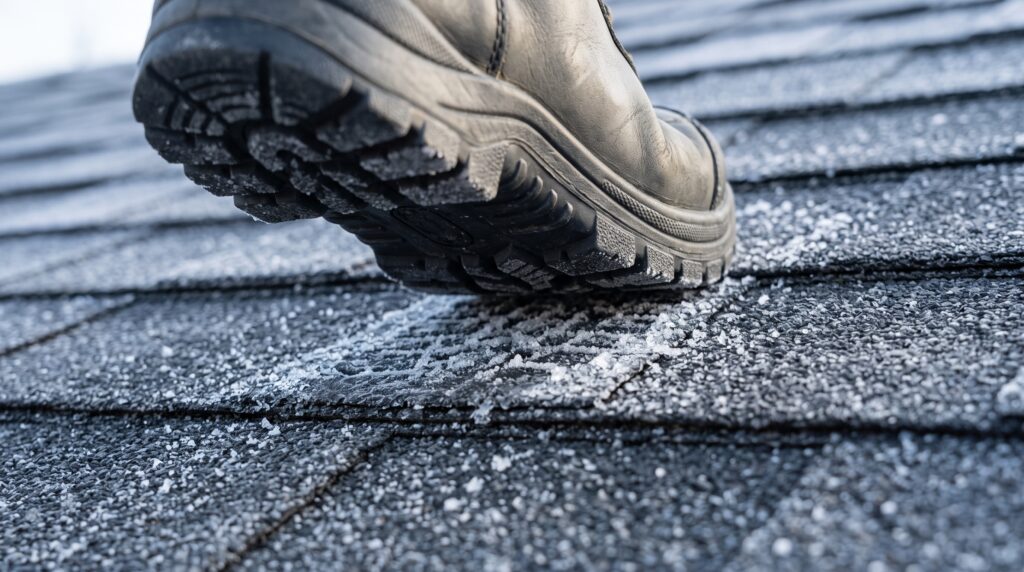
Worn soles are one of the most overlooked safety hazards on a roof. Once the tread on roofing shoes flattens or the rubber hardens from repeated sun and cold exposure, grip drops sharply even on a dry surface.
- Visible smoothing or cracking across the sole
- Rubber that feels stiff or brittle in cold weather
- Stitching separating near the toe or heel
- Reduced traction noticeable on familiar roof surfaces
- Interior wear causing foot fatigue or discomfort
Replacing footwear before a season change, rather than after a slip, is a simple habit that prevents most avoidable falls.
Tips for Maintaining Roofing Shoes Through Winnipeg Seasons
Granules from asphalt shingles work their way into tread grooves over a shift, and left unchecked, they reduce grip the same way worn rubber does. Brushing soles clean at the end of each day keeps roofing shoes performing the way they were designed to.
A few other habits extend the life of a pair through a full Manitoba season. Drying footwear away from direct heat prevents rubber from cracking or losing flexibility overnight. Storing shoes indoors during deep cold snaps, rather than leaving them in a truck bed, keeps the soles supple instead of brittle by morning. Crews working daily through peak season often rotate two pairs so each gets a full day to dry out between uses, and checking laces, insoles, and stitching on a regular basis catches small problems before they turn into a slip hazard mid job.
Things To Know About Roofing Shoes
A few extra details are worth keeping in mind before buying or recommending a pair.
- Steel toe boots are not ideal for most roofing tasks since the rigid toe box reduces the flexibility needed on slopes.
- CSA approved footwear standards exist for general construction safety, though most roofers choose softer soles for the roof itself and switch boots for ground work and material handling.
- Breaking in new footwear on flat ground before a roof job lowers the chance of blisters affecting balance later.
- Photos from a recent project in the roofing project gallery show crews wearing appropriate footwear across different pitch and weather conditions.
- For broader guidance on footwear standards and fall prevention, the Canadian Centre for Occupational Health and Safety publishes detailed workplace safety resources that apply beyond roofing specifically.
Footwear is only one part of working safely on a roof, and it works best alongside experienced hands and the right materials. If you have any questions about roofing, need a repair assessed, or are interested in a full installation anywhere across the city, contact our team or call +1 204-997-2697 and we will walk you through the next steps.
Frequently Asked Questions About Roofing Shoes
Do roofing shoes need steel toes?
No, most roofing shoes skip steel toes because the added stiffness reduces the flexibility needed for safe footing on slopes. Softer, flexible toe boxes allow better feel for the shingle surface underfoot.
Can regular sneakers work for roof walking?
Not safely. Standard sneakers lack the sole grip and durability that roofing shoes are built with, which makes slips far more likely on shingles, especially when they are wet or frosted.
How often should roofing shoes be replaced?
Most crews replace roofing shoes once tread wear becomes visible or at the start of a new season, whichever comes first. Waiting until a sole feels smooth is already too late.
Are insulated roofing shoes necessary in Winnipeg?
Yes, insulated roofing shoes help maintain comfort and grip during Winnipeg’s colder inspection and repair months. Cold feet also affect balance, which makes insulation a safety feature as much as a comfort one.
What sole type grips wet shingles best?
Soft rubber soles grip wet or icy shingles better than hard composite soles, which tend to slide on damp surfaces. A softer compound flexes and conforms to granule texture instead of skating across it.