

Residential roofing installation works by building a layered roof system from the deck up. The old roofing is removed, the deck is repaired, ice and water protection and underlayment are applied, flashing is fitted, the roofing material is fastened in overlapping courses, and ventilation and ridge caps finish the system.
Every layer has a specific job, and the roof only performs as designed when each one goes on in the right order. In Winnipeg, where snow sits on roofs for months and freeze-thaw cycles test every seam, the quality of the installation matters as much as the material you choose.
What Is Residential Roofing Installation?
Residential roofing installation is the process of putting a complete new roof system on a house, townhouse, duplex, or similar home. It covers far more than laying shingles. A finished residential roof includes the structural deck, waterproofing membranes, underlayment, metal flashing, the visible roofing material, and the vents that let the attic breathe.
Most homes in Manitoba have sloped roofs, which shed rain and melting snow by gravity. That slope is what allows overlapping materials like asphalt shingles or metal panels to keep water out. Low-slope sections over porches, additions, or garages work differently and usually need a continuous membrane instead of shingles.
How Does Residential Roofing Installation Work, Step by Step?
A typical residential roofing installation follows the same core sequence, though details change based on the roof’s shape, slope, and material.
1. Roof Inspection and Measurement
The roofer checks the existing roof, attic, and deck for soft spots, rot, leaks, and ventilation problems. Measurements determine how much material is needed and help spot complicated areas like valleys, dormers, skylights, and chimneys.
2. Tear-Off of the Old Roof
Old shingles, underlayment, and worn flashing are stripped down to the deck. Removing everything lets the crew see hidden water damage that would otherwise stay buried under a new roof.
3. Deck Repair and Preparation
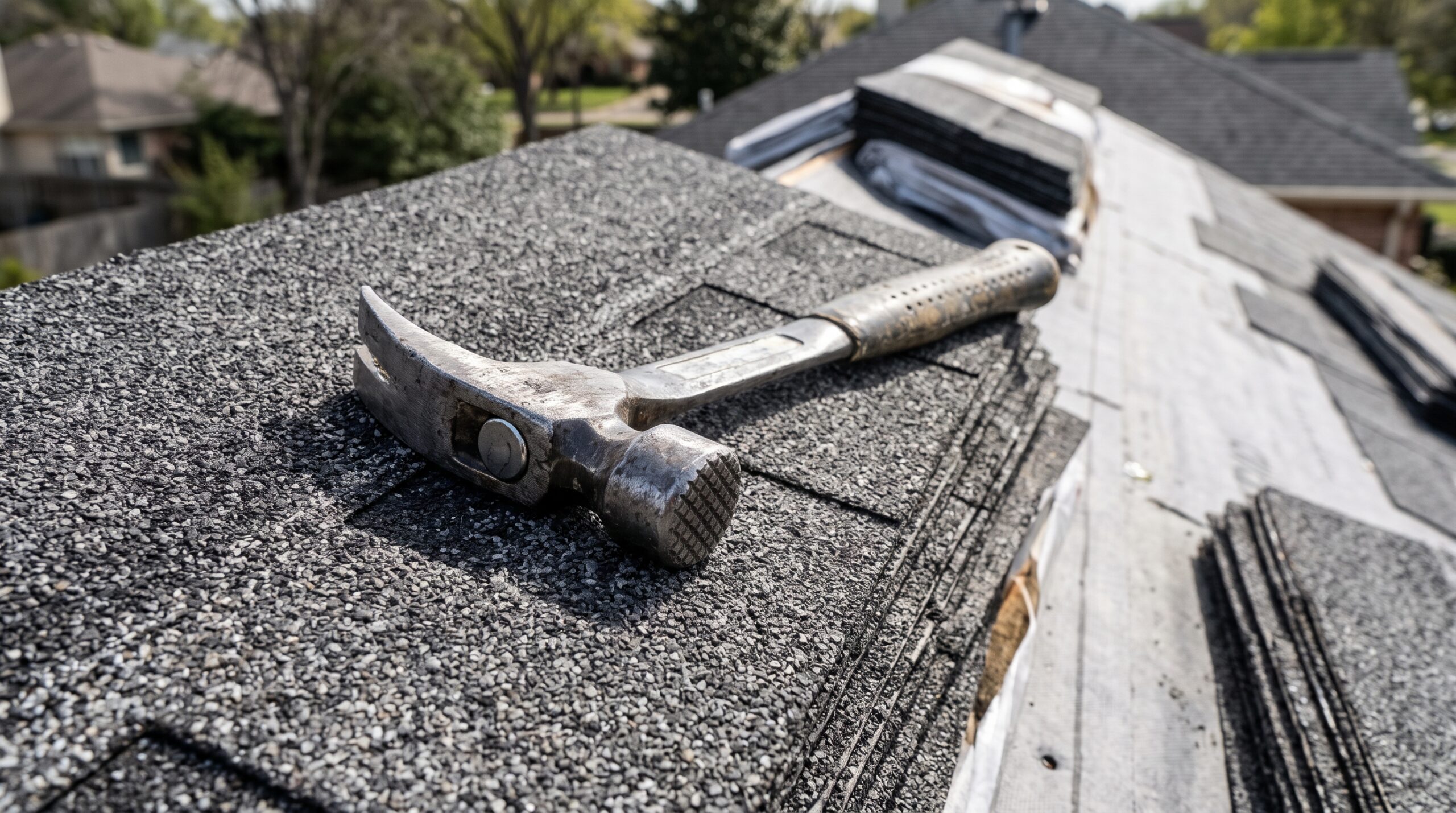
Damaged or delaminated plywood or OSB sheathing is cut out and replaced. Protruding nails are removed or reset so the new layers lie flat. A solid, dry deck is the foundation everything else depends on, and skipping repairs here often causes problems that show up years later.
4. Drip Edge and Ice and Water Shield
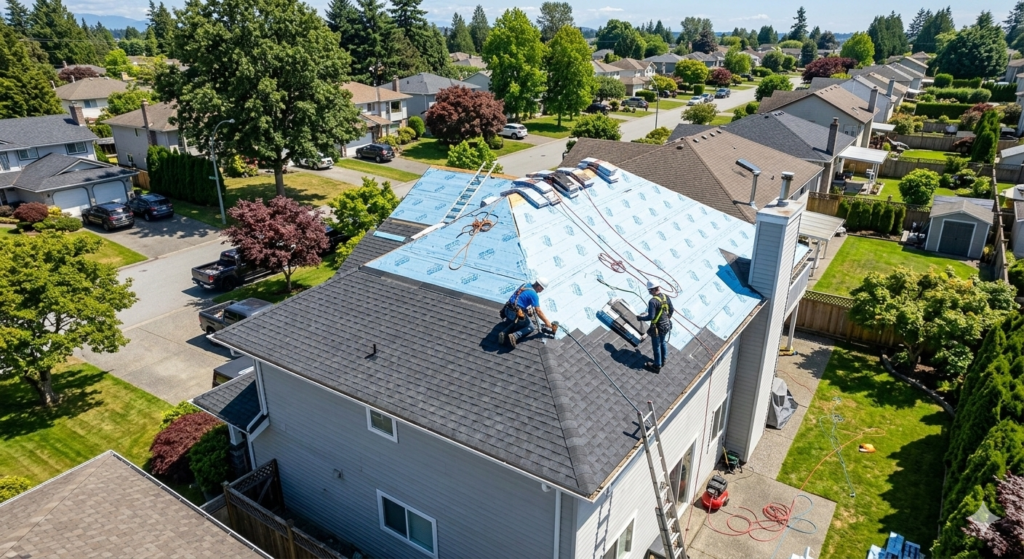
Metal drip edge is installed along the eaves to guide water into the gutters and away from the fascia. A self-adhering ice and water shield membrane is then applied along the eaves, in valleys, and around penetrations. It seals around nails and protects the areas most likely to leak when ice dams back water up under shingles.
5. Underlayment Across the Deck
The rest of the deck is covered with synthetic or felt underlayment, a secondary barrier that sheds any water getting past the shingles.
6. Flashing Around Walls, Chimneys, and Vents
Step flashing, counter flashing, and pipe boots are installed wherever the roof meets a wall or something passes through it. Poorly installed roof edge and wall flashing is one of the most common sources of leaks, especially when it is rushed or reused from the old roof.
7. Roofing Material Installation
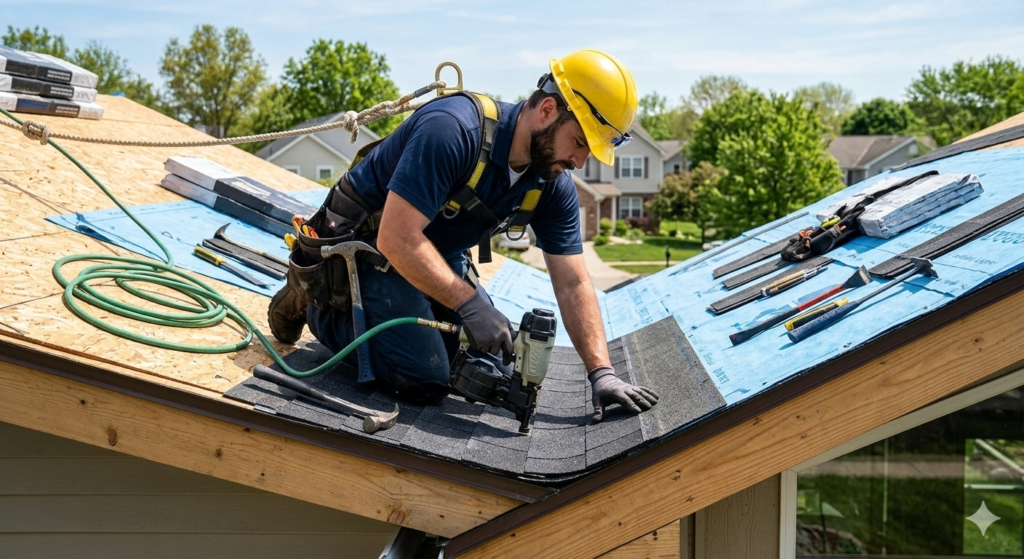
Starter strips go along the eaves, and the roofing material is installed in overlapping rows working up toward the ridge. Correct nail placement, exposure, and overlap determine how well shingles resist wind and water.
8. Ventilation, Ridge Cap, and Final Inspection
Ridge vents or roof vents are installed to work with soffit intake vents, and ridge cap shingles seal the peak. The crew then cleans the site, sweeps for loose nails, and checks every detail before the job is closed out.
Why Installation Quality Matters So Much in Winnipeg
Manitoba’s climate exposes small installation mistakes faster than milder regions do.
Ice Dams and Freeze-Thaw Cycles
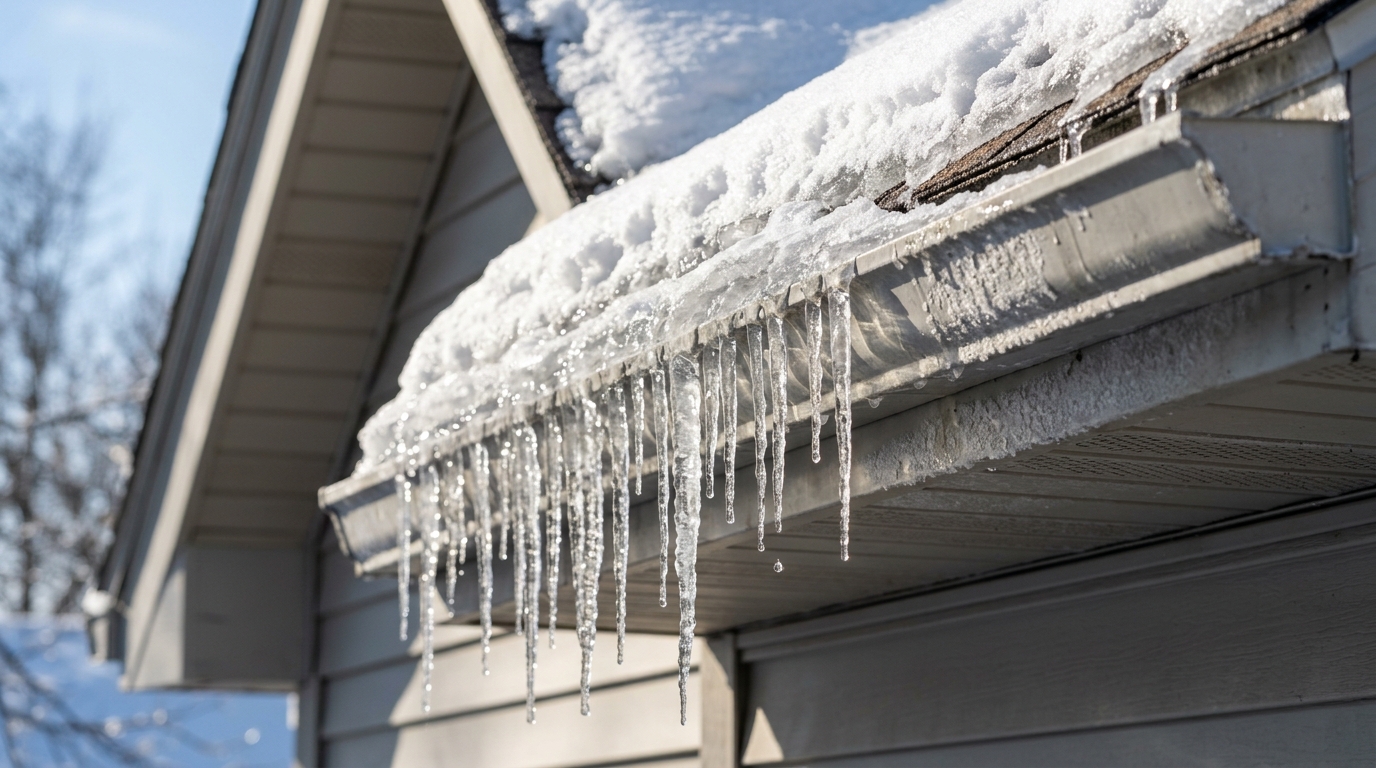
When heat escapes into the attic, it warms the roof deck and melts snow from below. That water runs down to the colder eaves and refreezes, forming an ice dam. Water trapped behind the dam can work its way under shingles, which is why eave protection and proper sealing are so important on Winnipeg homes.
Wind Exposure
Open prairie terrain means strong gusts can catch shingle edges. Shingles that are under-nailed, nailed too high, or installed in cold weather before their sealant strips have bonded are far more likely to lift or blow off.
Attic Moisture and Ventilation
A roof and attic work as one system. According to Natural Resources Canada’s guidance on roofs and attics, air leaks through chimneys, vents, plumbing pipes, and electrical boxes in the attic can cause substantial heat loss and a range of moisture problems. Balanced ventilation and good air sealing help keep the attic cold and dry, which reduces frost buildup, condensation, and ice dams.
Which Roofing Material Fits a Winnipeg Home?
The best material depends on your roof slope, budget, the look you want, and how long you plan to stay in the home. Here is how the common options compare for residential use in a cold climate.
| Roofing Material | Relative Lifespan | Cold Climate Performance | Best Suited For |
|---|---|---|---|
| Asphalt shingles | Moderate | Good when installed in suitable temperatures with proper eave protection | Most sloped homes and budget-conscious projects |
| Metal roofing | Long | Sheds snow well and resists wind when fastened correctly | Homeowners planning to stay long term |
| Cedar shakes | Moderate | Needs ventilation and maintenance to manage moisture | Homes where a natural wood look matters |
| Slate or concrete tile | Very long | Durable, but heavy and may need structural review | Homes built or reinforced to carry the weight |
| Membrane systems | Moderate to long | Designed for low-slope areas where shingles cannot shed water | Flat or low-slope sections, additions, and garages |
Asphalt shingles remain the most common choice for houses because they balance cost, appearance, and ease of repair. Metal is often worth considering when snow shedding and longevity are top priorities. You can browse completed work in the gallery of completed roofing projects to see how different roofs look on local homes.
Repair, Re-Roof, or Full Residential Roof Installation?
Not every roof problem calls for a full installation. The right choice depends on the roof’s age, the extent of the damage, and the condition of the deck underneath.
| Sign on Your Roof | What It Often Means | Likely Next Step |
|---|---|---|
| A few missing or lifted shingles after a storm | Localized wind damage | Spot repair if the rest of the roof is sound |
| Curling, cracking, or brittle shingles across the roof | Shingles near the end of their service life | Full replacement |
| Heavy granule loss in gutters | Worn shingle surface | Inspection to judge remaining life |
| Water stains on ceilings or attic sheathing | Active leak, often at flashing or eaves | Repair the source, then assess the deck |
| Sagging or soft spots on the roof | Deck damage or rot | Tear-off and deck repair before new roofing |
| Repeated ice dams every winter | Heat loss, poor ventilation, or weak eave protection | Address attic airflow along with roofing |
If your shingles are worn across the whole roof, a complete shingle roof replacement is usually more cost-effective over time than repeated patching. Layering new shingles over old ones can hide deck problems and add weight, so a full tear-off is generally the more reliable approach.
How Long Does a Residential Roof Installation Take?
Many single-family asphalt shingle roofs can be completed in a few days, though larger, steeper, or more complex roofs take longer. Deck repairs, multiple layers of old roofing, and weather delays can all extend the schedule.
Timing in the year matters too. Asphalt shingles rely on warmth from the sun to activate their sealant strips, so installation in Winnipeg is generally planned for the warmer months. Work done in cold conditions may need extra steps, such as hand-sealing, to help shingles hold down until they bond.
How to Prepare for Your Roofing Installation
- Move vehicles away from the driveway and work area.
- Take fragile items off walls, since hammering can cause vibration.
- Clear patio furniture, planters, and grills away from the house.
- Ask how debris, disposal, and nail cleanup will be handled.
When comparing contractors, ask for a written scope of work that lists tear-off, deck repair, ice and water shield coverage, underlayment, flashing, and ventilation. Confirm insurance, ask about workmanship coverage, and make sure the company serves your neighbourhood. You can check the communities served across Winnipeg and nearby areas before booking an assessment.
Things To Know
- The visible shingles are only one layer. Leaks usually start at flashing, valleys, and eaves.
- A full tear-off is the only way to confirm the deck is solid before new roofing goes on.
- Ice and water shield at the eaves is a key defence against ice dam leaks in Manitoba.
- Attic ventilation and air sealing affect roof lifespan as much as the roofing material does.
- Reused flashing and pipe boots can undermine an otherwise new roof.
- Quotes that leave out deck repair, flashing, or ventilation are not true apples-to-apples comparisons.
- Warm-season installation helps asphalt shingles seal properly against wind.
Getting a Residential Roofing Installation Right the First Time
A residential roofing installation is only as strong as its weakest layer. The deck, membranes, flashing, roofing material, and ventilation all have to work together, especially under Winnipeg’s snow loads, wind, and freeze-thaw cycles. Choosing a suitable material matters, but careful installation and a well-ventilated attic are what decide how long the roof lasts.
If you have questions about your roof, need help judging whether repair or replacement makes more sense, or want to talk through installation options, contact Zega Roofing to discuss your home.
Frequently Asked Questions
What are the three types of roofing?
The three main types of residential roofing are asphalt shingles, metal roofing, and low-slope membrane systems. Asphalt shingles are the most common on sloped homes, metal offers a longer service life and sheds snow well, and membranes are used on flat or low-slope sections where shingles cannot drain water properly.
What is the process of installing a roof?
Installing a roof involves inspection, tear-off, deck repair, ice and water shield, underlayment, flashing, roofing material, and ventilation. Each layer builds on the one beneath it, so skipping or rushing a step can lead to leaks even when the top layer looks perfect.
What is a residential roof?
A residential roof is a roof system built for a home, such as a house, townhouse, or duplex. Most residential roofs are sloped to shed rain and snow, and they are designed to balance weather protection, appearance, and long-term durability.
What type of roof is best in the Philippines?
Metal roofing is the most widely used choice in the Philippines because it handles heavy rain, intense heat, and strong typhoon winds well. Clay or concrete tiles are also used for their heat resistance. The same rule applies in every climate, which is to match the material and installation method to local weather conditions.
Which type of roofing is best?
The best roofing depends on your climate, roof slope, budget, and how long you plan to own the home. For most Winnipeg houses, asphalt shingles offer a strong balance of cost and performance, while metal roofing suits homeowners who want maximum longevity and better snow shedding.