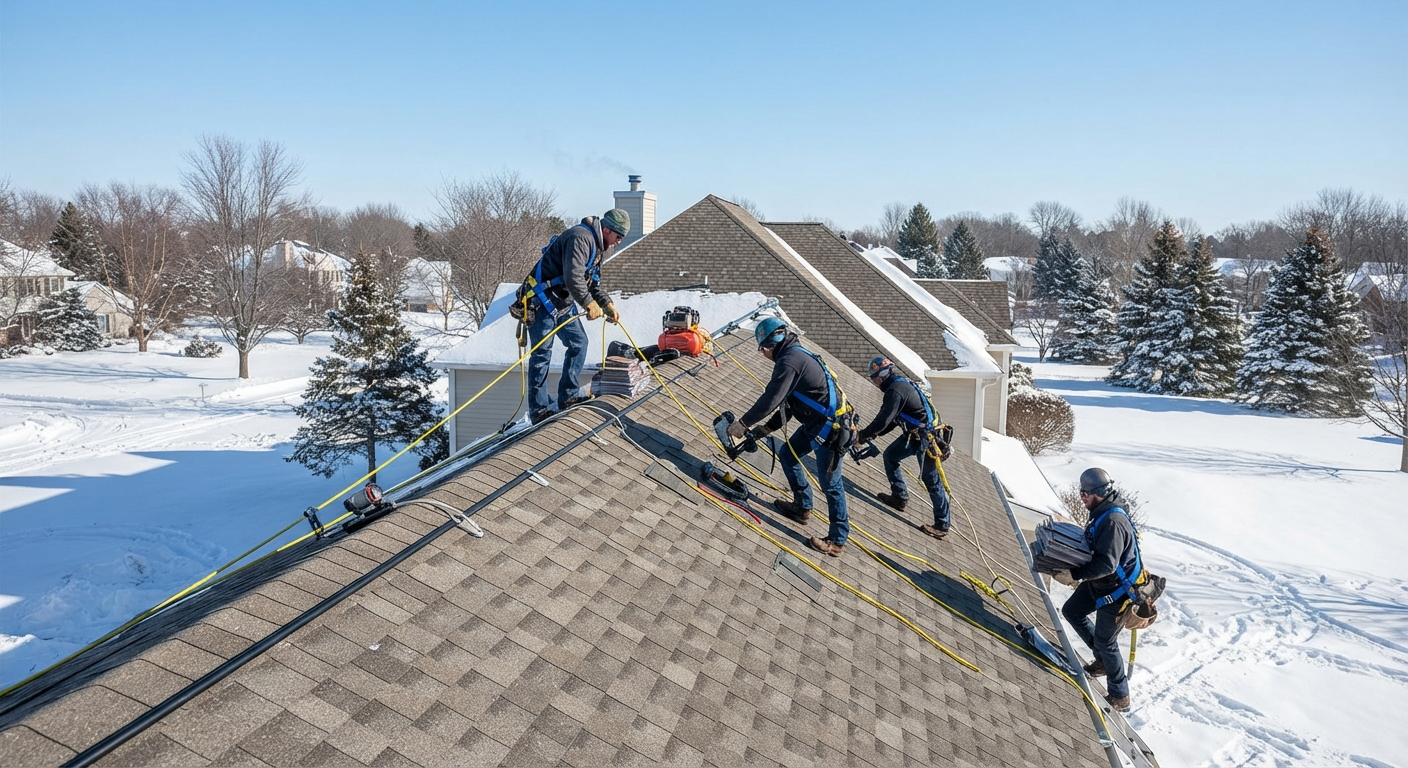
A roof harness is used safely by clipping it to a secure anchor point, adjusting the straps snugly around the shoulders and thighs, and keeping the lifeline short enough to prevent a long fall.
It works together with a lanyard and rope grab so the wearer stays connected to the structure at all times. Every homeowner or contractor working above ground level in Winnipeg needs this kind of fall protection, especially during icy months when a single misstep can turn into a serious accident.
How Do You Attach a Roof Harness to a Roof?
Attaching this fall-arrest gear correctly is the difference between a system that catches a fall and one that fails at the worst possible moment. The process always starts with a fixed anchor point rated to hold several thousand pounds, followed by connecting the lanyard to that anchor before any work begins on the slope.
Steps for Proper Attachment
- Install the anchor first. Screw an anchor point into a rafter or truss, never into sheathing alone.
- Put the harness on correctly. Straps should sit flat, not twisted, with the D-ring centered between the shoulder blades.
- Connect the lanyard. Clip the self-locking snap hook to the anchor, then to the D-ring.
- Check the rope grab. This device slides freely along the lifeline but locks instantly under sudden force.
- Test the fit. Tug on every strap once more before stepping onto the roof surface.
The system only performs as designed when the anchor, lanyard, and rope grab are matched to the worker’s weight and the roof pitch. Skipping the anchor inspection is one of the most common mistakes people make, since they assume any screw point will hold under real weight.
A practical example helps illustrate this: a worker on a moderately steep asphalt shingle roof should keep the lanyard length short enough that a fall stops within a couple of feet, not several. A longer line feels more comfortable to move around in, but it also means a longer drop and a harder jolt when the rope grab finally catches.
What Are the Types of Fall-Protection Harnesses?
There are three widely recognized categories of fall-protection roof harnesses, and each one suits a different kind of work at height. Knowing which category applies to roofing work helps a homeowner or crew choose the right gear instead of guessing.
| Harness Type | Primary Use | Roofing Suitability |
| Full-Body Harness | Fall arrest for sloped or high-risk roofs | Best choice for residential and steep roofs |
| Positioning Harness | Keeps hands free while leaning back on a stable surface | Rarely used on sloped roofing jobs |
| Suspension Harness | Supports a worker who is lowered or hangs mid-task | Used for specialty access, not standard roofing |
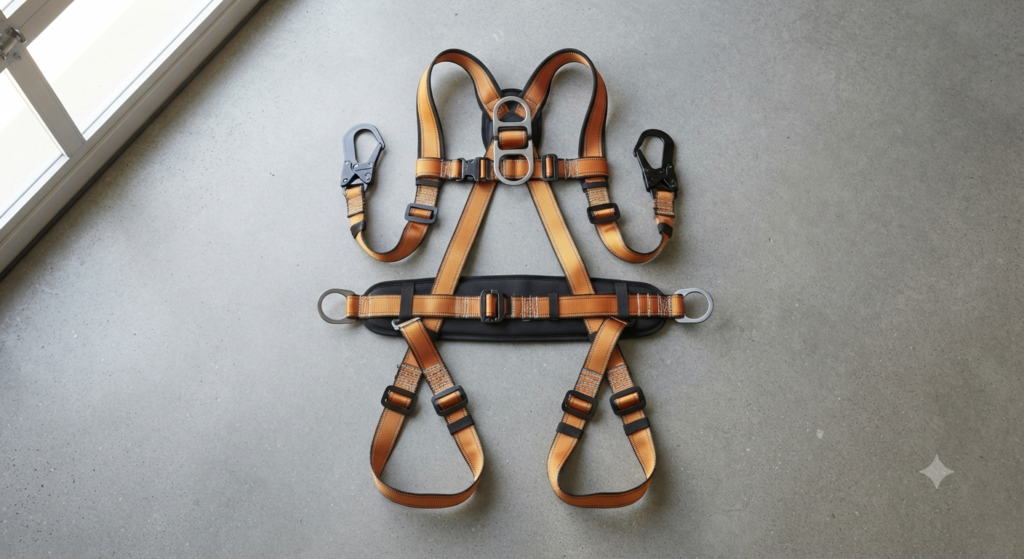
A full-body design spreads impact force across the thighs, chest, and shoulders, which is why it is the standard choice for anyone working on a pitched surface. The other two styles serve construction and industrial tasks where the worker is not climbing a slope, so neither is built for the sudden jolt a roof fall can produce.
Which Roof Harness Is Best for Winnipeg Homes?
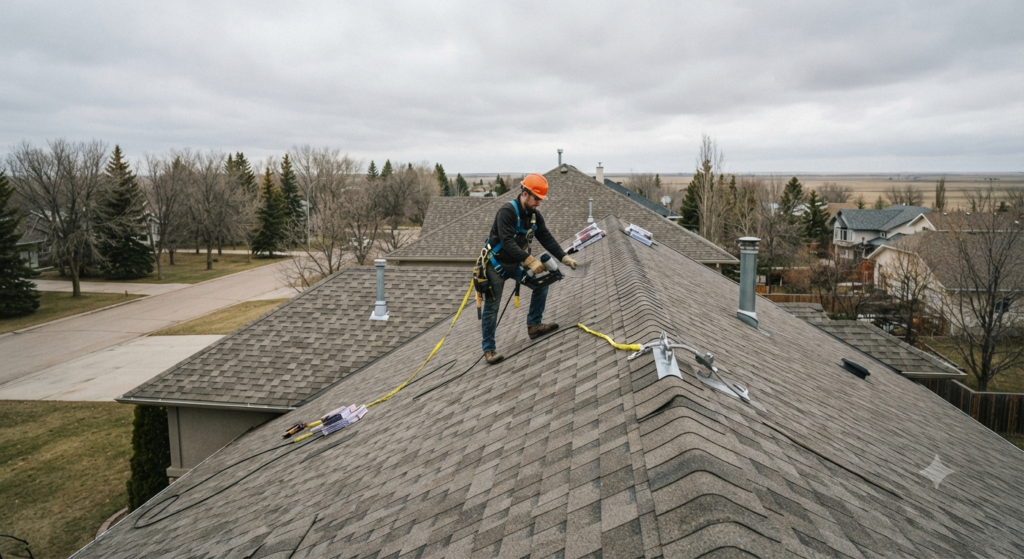
The best roof harness for a Winnipeg property is a full-body design paired with a shock-absorbing lanyard, because local roofs face steep pitches, ice buildup, and sudden temperature swings that increase slip risk. This combination distributes the force of a fall evenly and slows the stop, which lowers the chance of spinal or rib injury.
Why This Combination Works Best
Freeze-thaw cycles leave a thin layer of ice on shingles well into spring, and that ice does not always look obvious from the ground. A full-body harness keeps a worker upright and supported even if a fall happens sideways rather than straight down, which is common on icy slopes. Roofs prone to ice damming along the eaves are especially risky, since melting snow refreezes overnight and creates a slick surface right where a worker needs the most stable footing. Improving drainage with a roofing ice shield reduces that buildup, though it does not remove the need for proper fall protection during any climb.
How to Choose the Right Fit of Roof Harness
Sizing matters more than most buyers expect. A harness that is too loose lets the body slide partway through the straps during a fall, while one that is too tight restricts movement and causes fatigue within an hour.
| Selection Factor | What to Check | Why It Matters |
| Weight Rating | Confirm capacity exceeds worker plus tools | Prevents anchor or strap failure |
| Strap Adjustment | Five-point or four-point adjusters | Allows a snug, twist-free fit |
| Material Condition | No fraying, cracking, or sun damage | Worn fibers lose most of their strength |
| D-Ring Placement | Centered between shoulder blades | Keeps the body upright during arrest |
Choosing the correct harness is not a one-time decision. Reassessing fit and condition before every season keeps the gear reliable once Winnipeg weather shifts from mild to icy in a matter of days.
What Is the Purpose of a Roof Harness?
Its purpose is to stop a fall before a worker hits the ground, redistributing sudden force across the body instead of concentrating it on the head or spine. Beyond that core safety function, it also gives workers the confidence to move along a steep slope without hesitating, which lowers the chance of a rushed, careless step.
Homeowners tackling gutter cleaning or minor repairs often skip this gear, assuming a short climb does not need it. Even a fall from a single-story roof can cause a broken bone or worse, so proper fall protection applies regardless of roof height, not just to full re-roofing crews working several stories up.
Consider a homeowner clearing autumn leaves from a gutter on a bungalow. The roof edge is only a few metres off the ground, yet a fall onto concrete or a paved driveway at that height still causes real injuries every year. A basic anchor and harness setup takes only a few minutes to rig and removes that risk almost entirely.
How Long Does a Roofing Harness Last?
A roofing harness typically lasts three to five years with regular use, though extreme cold, UV exposure, and any impact from an actual fall can shorten that lifespan significantly. Manufacturers stamp a manufacture date inside the label, and most recommend retiring the unit five years from that date even if it looks undamaged on the outside.
Cold Manitoba winters are harder on webbing than most owners realize. Nylon and polyester fibers stiffen in freezing temperatures and can develop microscopic cracks that stay invisible during a quick glance but weaken the strap under real stress.
A harness involved in any fall, no matter how minor, should be retired right away rather than reused. The internal fibers absorb shock in ways that are not always visible from the outside, so a unit that has already caught someone once cannot be trusted to do it again.
Things to Know About Fall-Protection Safety
- Inspect webbing, stitching, and hardware before every use, not just once a season.
- Store the harness indoors, away from direct sunlight, chemicals, and damp basements.
- Replace any unit that shows fraying, burns, discoloration, or a rusted D-ring.
- Match the anchor point to a structural member, never to shingles, vents, or gutters.
- Pair the harness with a properly rated lanyard and rope grab sized for the roof pitch involved.
Homeowners planning a DIY project should weigh whether the job truly calls for climbing at all. For anything beyond a simple visual check, residential roof installations handled by trained crews remove the guesswork and much of the risk. A quick walk-through with our roofing team can also help clarify whether a repair is safe to attempt alone.
Final Word on Roof Harness Safety
A roof harness only protects a worker when it fits correctly, connects to a solid anchor, and gets replaced before age or exposure weakens the fibers inside. Winnipeg’s ice, wind, and freeze-thaw swings make this gear essential rather than optional, whether the job is a quick gutter check or a full re-roof. Zega Roofing trains every crew member on proper harness use, anchor selection, and seasonal inspection so that fall protection is never an afterthought on a job site.
Homeowners who are unsure whether a project is safe to handle themselves can review the areas we serve to see if a local crew covers their neighborhood, or browse ideal roofing options that pair well with a properly maintained fall-protection setup. For a professional inspection or quote, contact our team directly.
Frequently Asked Questions
How do you attach a harness to a roof?
Clip the lanyard to a rated anchor secured into a rafter, then connect it to the D-ring on the harness before stepping onto the slope.
What are the three types of harnesses?
Full-body, positioning, and suspension harnesses; full-body is the standard choice for roofing work.
What is the best roof harness?
A full-body harness with a shock-absorbing lanyard, since it handles steep pitches and icy conditions best.
What is the purpose of a roof harness?
It stops a fall before impact by spreading the force across the body instead of the head or spine.
How long does a roof harness last?
Most last three to five years, but any harness involved in a fall should be retired right away.