
Roofing anchors are fixed metal attachment points fastened into a roof’s structural framing so a worker’s safety harness has something solid to clip onto.
Winnipeg properties need them because steep, snow-shedding rooflines, seasonal ice buildup and open prairie wind gusts turn ordinary roof work into a genuine fall hazard for most of the year.
A single anchor point, installed correctly near the ridge or beside a chimney, holds a fall arrest line strong enough to stop a worker before they ever reach the edge.
Homeowners planning repairs, inspections or snow removal, and contractors bidding commercial jobs, both lean on this kind of anchor hardware to keep crews upright and paperwork clean for insurers. The sections below cover what these fixtures are, which style suits a given roof, and when Manitoba’s seasons make installation easiest.
Why Winnipeg Roofs Need Roofing Anchors
Manitoba winters bring freeze-thaw cycles that coat shingles in a thin, almost invisible layer of ice well into April. Pair that with Winnipeg’s open wind corridor and a roof pitch steeper than six in twelve, and a worker without a secured line is one gust away from a serious fall.
A dedicated anchor point solves this by giving a harness a fixed, load-tested spot to clip onto rather than relying on a rope tied around a vent pipe or chimney cap, neither of which is built to hold a person’s weight.
Beyond worker safety, these fixtures are increasingly a liability expectation. Many insurance providers and municipal inspectors look for documented fall protection on any roof steeper than a walkable slope, and a property without it can slow down repair quotes or complicate a claim after an incident.
Installing the hardware once, during a repair or a full residential roof installation, avoids the cost of renting scaffolding every single time the roof needs attention again.
Winnipeg’s climate also means these fixtures see heavier use than in milder cities. Snow removal alone can mean three or four trips up a residential roof each winter, and every one of those trips is safer with a permanent point already in place.
What a Roof Anchor Is and How It Works
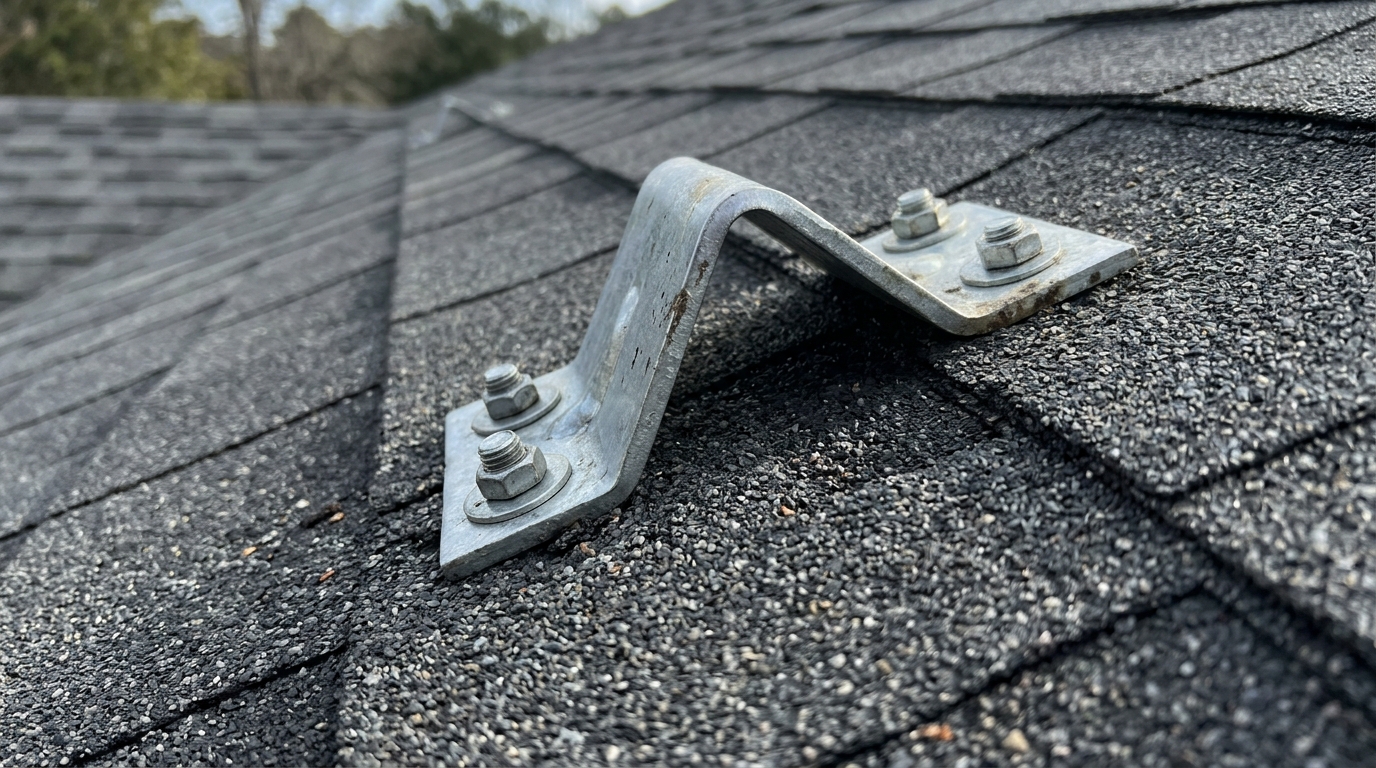
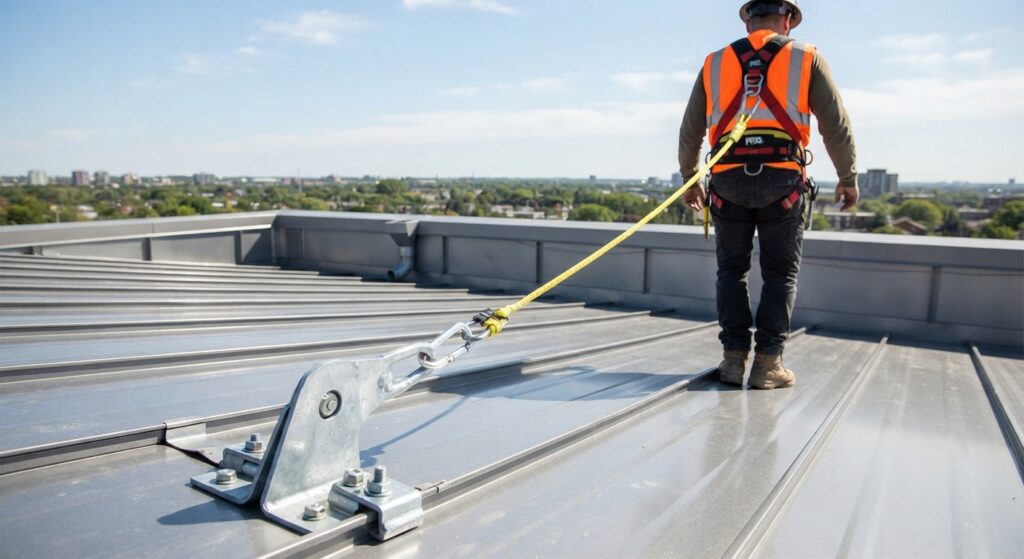
A roof anchor is a small metal bracket or plate, usually stainless steel or galvanized, fastened through the deck into a rafter or truss with heavy lag bolts. Once it sits in place, it is sealed with flashing and roofing cement so water cannot find its way through the new penetration. A carabiner or rope grab clips onto the anchor’s D-ring, and from there a worker’s harness stays tethered for the full length of the job.
Not every anchor point looks or performs the same way. The right pick depends on roof material, pitch, and how often the fixture will actually see use.
Installing this hardware is not usually a do-it-yourself project. Finding the right rafter or truss location, drilling without weakening the structure, and sealing the penetration correctly all take training most homeowners simply do not have.
A crew that gets this wrong can leave a weak attachment point that fails under real load, or a poorly sealed hole that leaks for years before anyone notices. Hiring a roofing contractor to locate framing with a stud finder or attic inspection, then fasten and flash the hardware to manufacturer specifications, is the safer route for almost every property.
Common Types of Roof Anchor Hardware
- Permanent anchors – bolted through the deck into framing and left in place year round, ideal for homes that need regular snow clearing or maintenance visits
- Temporary strap anchors – wrapped around a ridge beam or truss for a single job, then removed once the work is finished
- Chimney or pipe anchors – clamp onto an existing structural element rather than requiring a brand new penetration
- Anchor plates for metal roofing – sit under the ribs of a metal panel so the fastener line matches the seams and stays watertight
Choosing between a permanent and a temporary setup usually comes down to how often the roof sees foot traffic. A rental property with yearly gutter cleaning rarely needs a permanent fixture, while a steep-pitched family home with regular winter snow removal benefits from one that stays put all season.
Which Roof Anchors Are Best for Different Roof Types
The best choice changes depending on whether a roof is steep-sloped, low-slope or flat, and what material covers it. A shingle roof, a metal roof and a flat membrane roof each call for a different anchoring approach, and mixing them up can weaken the seal or reduce the hardware’s holding strength.
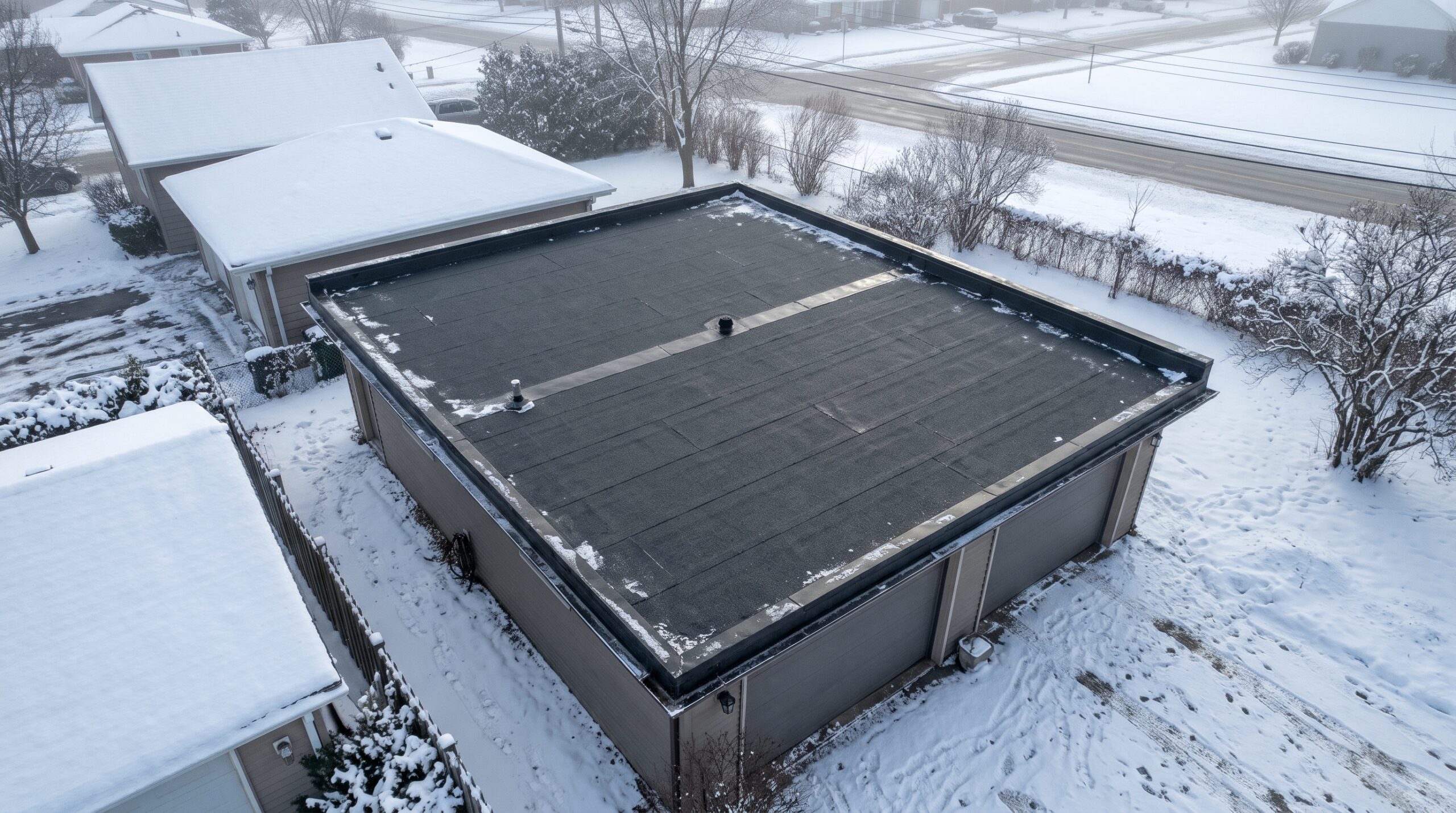
For steep asphalt shingle roofs, a permanent bolted anchor set into a rafter is generally the strongest and most weatherproof option. For low-slope or flat commercial roofs, a counterweighted fixture that does not penetrate the membrane at all is often preferred, since every penetration on a flat roof is a potential leak point.
Metal roofs need hardware designed specifically for standing seam or ribbed panels, so the fastener never sits inside a water channel.
| Roof Type | Recommended Anchor Style | Why It Works |
|---|---|---|
| Steep asphalt shingle | Permanent bolted anchor | Highest holding strength for repeated seasonal use |
| Flat or low-slope membrane | Non-penetrating counterweight anchor | Avoids new leak points on the membrane |
| Standing seam metal | Clamp-style panel anchor | Matches panel seams without piercing the surface |
| Older or fragile deck | Temporary strap anchor | No permanent penetration needed for a one-time job |
Our crews weigh these factors during every inspection, and a shingle roof replacement is often the most practical moment to add a permanent roof anchor, since the deck is already exposed and sealing it in is far simpler than retrofitting the hardware later.
Wind load is another factor that often gets overlooked outside Manitoba. Winnipeg sits in an open corridor with few natural windbreaks, so gusts that would barely register in a sheltered city can put real lateral stress on anything bolted to a roof.
Hardware rated for a milder climate may not hold up the same way here, which is one more reason a locally experienced crew matters more than the cheapest listed option.
When Roof Anchors Should Go In
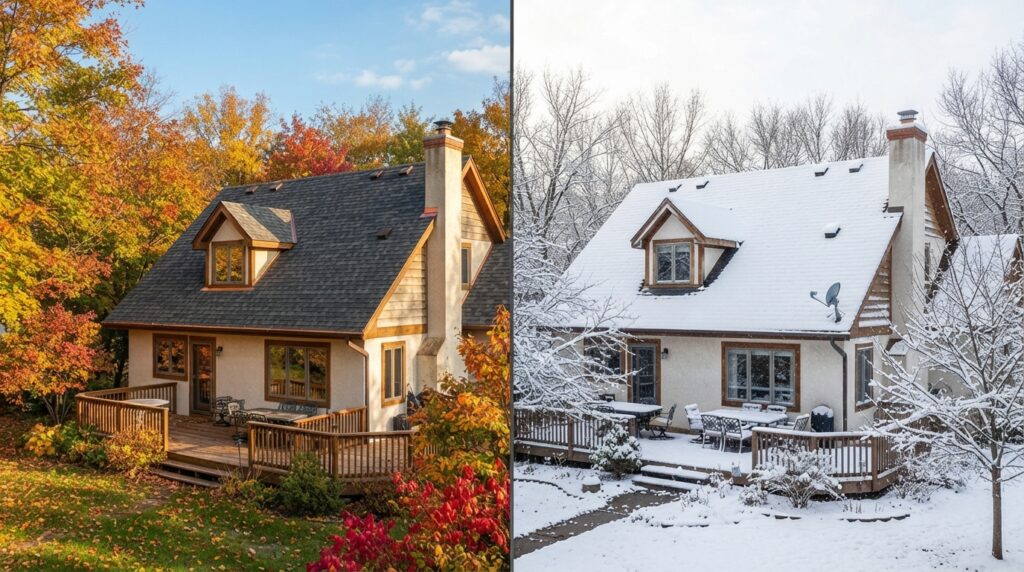
Timing matters almost as much as the hardware itself. Installing an anchor point in late spring or early fall, when the deck is dry and temperatures sit above freezing, gives the sealant around the penetration time to cure fully before the first frost.
Hardware installed in the dead of winter, when crews sometimes have no choice but to work on an icy surface, carries a higher risk of an incomplete seal.
Homeowners planning a snow removal season should have the anchor point installed well before the first major snowfall, since adding one mid-winter usually means extra scaffolding and a slower, colder job.
Commercial property managers often schedule this work alongside a fall maintenance inspection, bundling it with gutter checks and flashing repairs so crews are only on the roof once a year.
| Season | Anchor Installation Suitability | Reason |
|---|---|---|
| Spring | Excellent | Dry deck, mild temperatures, sealant cures fully |
| Summer | Excellent | Consistent weather, easiest crew access |
| Fall | Good | Still workable before freezing, ideal before snow season |
| Winter | Limited | Ice and cold slow curing and raise fall risk during install |
Spring and early fall remain the easiest windows for this kind of work across Winnipeg, mostly because crews are not fighting ice on the deck itself while trying to drill and seal a new penetration.
Things to Know About Roof Anchor Installation
- A single anchor point is not a complete fall protection system on its own. It needs to be paired with a rated harness, a lanyard or rope grab, and regular inspection of the hardware itself.
- Hardware should be rated to hold well beyond a single worker’s body weight, since fall arrest forces can spike far higher than static weight during a sudden stop.
- Every penetration point needs proper flashing and sealant, or the fixture can become a leak source rather than a safety feature.
- Anchors degrade over time from UV exposure, freeze-thaw cycling and rust, so an annual visual check is worth the few minutes it takes.
- A property’s anchor hardware should be documented, including install date and load rating, for insurance and future contractor reference.
- Removing an old fixture that is no longer needed should always include proper patching of the roofing material underneath, not just unscrewing the hardware.
- Multiple anchor points spaced around a roof give a crew more flexibility to work different sections without constantly repositioning a single line.
- A pre-season walkthrough before the first snowfall is a good habit, since it catches loose hardware or cracked sealant while repairs are still simple.
For a closer look at how this hardware fits into a full roof system, browse our completed roofing projects to see anchor and repair work across Winnipeg homes, or learn more about our Winnipeg roofing company and the areas we serve.
Final Word on Roofing Anchors
Roofing anchors are one of those small details that rarely cross a homeowner’s mind until a repair crew is standing on the ridge in February. Getting the hardware installed at the right time, matched to the right roof type, turns a dangerous climb into a routine, well-secured job every single season.
Zega Roofing has installed and inspected anchor systems across Winnipeg’s residential and commercial properties for years, always matching the style to the roof material and the local weather pattern rather than using a one-size-fits-all approach.
If you have any questions about roofing anchors, fall protection, or are interested in a roof inspection near Winnipeg, contact us today and our team will walk you through the right option for your property.
For general fall protection standards referenced across the industry, the Canadian Centre for Occupational Health and Safety publishes helpful guidance on rooftop fall arrest systems.
Frequently Asked Questions About Roof Anchors
Do all roofs need roofing anchors?
Not every roof is legally required to have one, but any roof steeper than a walkable slope benefits from roofing anchors for routine maintenance and snow clearing safety.
Can a roof anchor cause roof leaks?
A properly installed and flashed anchor should not leak, though a poorly sealed penetration is one of the more common causes of small roof leaks over time.
How many roofing anchors does a typical home need?
Most residential roofs use two to four anchor points placed near the ridge, chimney or valleys, depending on the roof’s size and layout.
Are temporary anchors as safe as permanent ones?
Temporary strap anchors are safe for a single job when installed correctly, but they are rated for shorter-term use and are not meant to stay exposed year round.
Who should install roofing anchors on a home?
A licensed, insured roofing contractor familiar with local building and fall protection standards should install the hardware to guarantee the fastening and seal meet code.