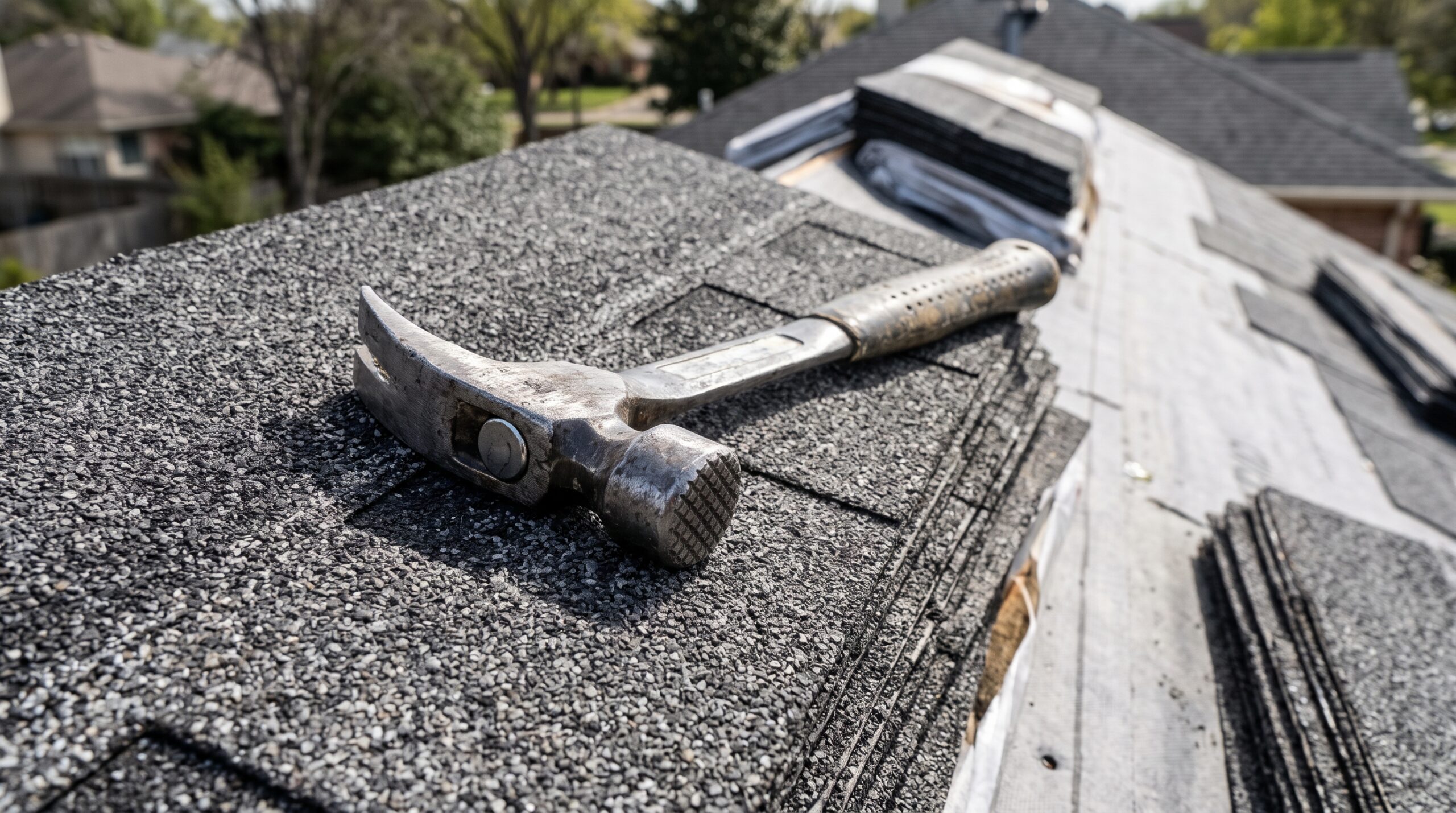
A roofing hammer is a specialized tool built to drive nails into shingles, underlayment, and roof decking with enough force and precision to withstand wind, snow load, and temperature swings.
Choosing the correct roofing hammer directly affects how long a roof lasts, since poorly set nails loosen faster during Winnipeg’s freeze-thaw cycles. The right tool, paired with the right technique, keeps shingles locked in place through blizzards, spring thaws, and everything in between.
Why the Right Roofing Hammer Matters for Winnipeg Roofs
Winnipeg roofs face a demanding mix of heavy snow accumulation, strong prairie winds, and dramatic temperature shifts between seasons. A roofing hammer that drives nails at the correct depth and angle prevents shingles from lifting during windstorms or cracking when ice forms underneath them.
When nails are mismatched to the job, they can be driven too deep, puncturing the shingle, or too shallow, leaving the shingle loose. Both mistakes shorten a roof’s lifespan and increase the chance of leaks during spring melt.
This is why contractors pay close attention to the type of roofing hammer used on every job, not just the brand of shingle installed.
For homeowners planning a repair or a full shingle roof replacement, understanding how ait works helps set realistic expectations for the quality and durability of the finished roof.
Types of Roofing Hammers Explained
Not every hammer belongs on a roof. Roofing professionals rely on tools designed specifically for shingle work, and each type serves a slightly different purpose depending on the roofing material and the stage of the project.
Common Roofing Hammer Types
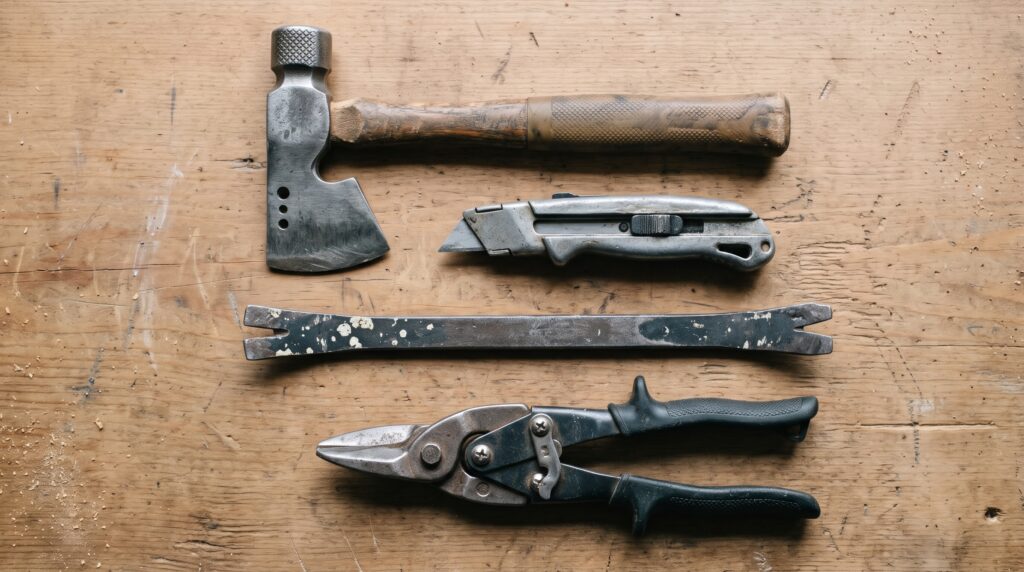
- Shingle hatchet: A hybrid tool with a hammer head on one side and a hatchet blade on the other, used for cutting shingles to size and driving nails in one motion.
- Straight claw hammer: A general-purpose option sometimes used for roofing work, though it lacks the specialized features of a dedicated roofing hammer.
- Framing hammer: A heavier hammer with a longer handle, offering more driving power for thicker roofing materials and decking.
- Magnetic nail-set hammer: Designed with a magnetized head or nail holder that lets roofers position nails one-handed before striking, improving accuracy on steep slopes.
Each roofing hammer type balances weight, grip, and striking surface differently. A heavier head drives nails faster but tires the arm sooner, while a lighter roofing hammer offers more control for detail work around flashing and vents.
Table 1: Roofing Hammer Types Compared
| Roofing Hammer Type | Best Use | Weight Range |
| Shingle hatchet | Cutting and nailing shingles | 400 to 600 grams |
| Straight claw hammer | General repairs, light nailing | 350 to 500 grams |
| Framing hammer | Decking, thicker materials | 600 to 800 grams |
| Magnetic nail-set hammer | Steep roofs, one-handed nailing | 400 to 550 grams |
Which Roofing Hammer Is Best for Winnipeg’s Climate?
The best roofing hammer for Winnipeg properties is one with a textured or magnetic head that maintains grip even when hands are cold or gloved, paired with a weight that allows controlled, consistent strikes.
Winnipeg winters bring sub-zero temperatures that make bare-hand roofing work nearly impossible, so a roofing hammer with an insulated or rubberized grip reduces slippage and strain during cold-weather repairs.
For asphalt shingles, which remain the most common roofing material in Winnipeg neighborhoods, a mid-weight shingle hatchet offers the right balance of cutting ability and nailing precision. Heavier framing hammers suit new construction or full deck replacements, where thicker plywood and larger nails demand more driving force.
Table 2: Roofing Hammer Selection by Project Type
| Project Type | Recommended Roofing Hammer | Why It Works |
| Shingle repair or patch | Shingle hatchet | Cuts and nails in one tool |
| New roof installation | Framing hammer | Handles decking and thicker fasteners |
| Steep-slope roofing | Magnetic nail-set hammer | Allows one-handed positioning |
| Minor touch-ups | Straight claw hammer | Lightweight and easy to control |
Choosing the correct roofing hammer for the season also matters. It used in July behaves differently in January, since cold metal becomes brittle and grips stiffen. Winnipeg roofing crews often swap to tools with reinforced fiberglass handles during winter months to reduce the risk of the handle cracking on impact.
Homeowners browsing our roofing project gallery can see examples of completed installations where precise nailing, achieved with the right roofing hammer and technique, kept shingles secure through multiple Manitoba winters.
How to Choose and Use a Roofing Hammer Safely
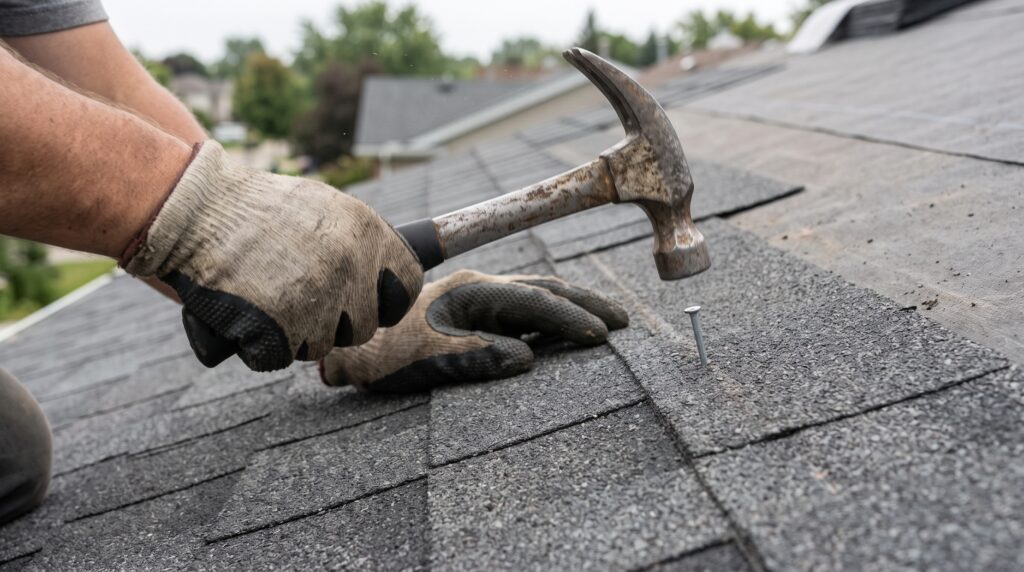
Selecting a roofing hammer is only half the job. Using it correctly prevents injury, wasted materials, and roof damage that can lead to costly repairs down the line.
Practical Tips for Using a Roofing Hammer
- Hold it near the end of the handle for better leverage and less wrist fatigue.
- Strike nails at a slight angle rather than straight down to prevent shingle tearing on windy days.
- Check the nail depth after every few strikes; an overdriven nail with a roofing hammer weakens the shingle’s seal.
- Wear gloves with grip texture, since cold Winnipeg mornings make tool handles slippery.
- Inspect it head regularly for chips or looseness, which can cause the tool to slip mid-swing.
A practical example from the field: a roofer working on a steep Charleswood bungalow in late October found that switching from a standard claw hammer to a magnetic nail-set roofing hammer cut nailing time nearly in half, since gloves no longer interfered with holding individual nails. Small adjustments like this often make the biggest difference in cold-weather roofing work.
For larger projects involving decking or structural repair, pairing proper tool choice with professional guidance through residential roof installations ensures every nail is placed to code and built to handle Manitoba’s weather extremes.
Things To Know
- It is different from a standard framing hammer; the textured or waffle-pattern head on many roofing hammers grips nail heads more securely.
- Nail depth matters as much as nail placement. If driven too hard, it can crack shingle granules, exposing the asphalt layer underneath to UV damage.
- Winnipeg’s freeze-thaw cycle puts extra stress on nail fasteners, so roofs nailed with inconsistent force often show loose shingles within two to three years.
- Professional roofers typically carry more than one type on a single job site, switching tools depending on the task at hand.
- Regular tool maintenance, including cleaning resin buildup off the head, extends the lifespan of any of it by preventing rust and slippage.
Homeowners interested in long-term roof performance can also review guidance from the Canadian Standards Association on roofing material and fastening standards used across Canadian climates.
For questions about ice damming or winter moisture protection, our page on roof ice and water shield covers how fastening quality connects to long-term roof protection.
Frequently Asked Questions
What is a roofing hammer used for?
It drives and sets nails into shingles, underlayment, and decking with controlled force. It often includes a textured head for grip and, in hatchet-style versions, a built-in blade for trimming shingles during installation.
Is a roofing hammer different from a regular hammer?
Yes, it is purpose-built with features like a waffle-textured head, lighter weight, or a magnetic nail holder. Standard hammers lack these roofing-specific design elements, making precise shingle work harder to achieve.
How heavy should a roofing hammer be?
Most roofing hammers weigh between 400 and 800 grams, depending on the task. Lighter tools suit detail work, while heavier ones handle decking and thicker fasteners.
Can one roofing hammer handle every roofing job?
Not reliably, since different tasks call for different roofing hammer features. Many professional roofers carry two or three types to match shingle work, decking, and repair needs.
Does cold weather affect how a roofing hammer performs?
Yes, cold temperatures stiffen grips and make metal components more brittle. Winnipeg roofers often switch to insulated-handle roofing hammers during winter months to maintain control and reduce breakage.
Final Takeaway
Picking the right roofing hammer is a small decision that carries long-term consequences for how well a roof holds up against Manitoba’s wind, snow, and temperature swings. Matching the tool to the project, and using it with proper technique, protects shingles, prevents premature wear, and keeps roofs performing for years.
If you have questions about the techniques or materials, or want a professional assessment of your roof’s condition, contact Zega Roofing today for an honest, no-pressure consultation with our licensed Winnipeg roofing team.