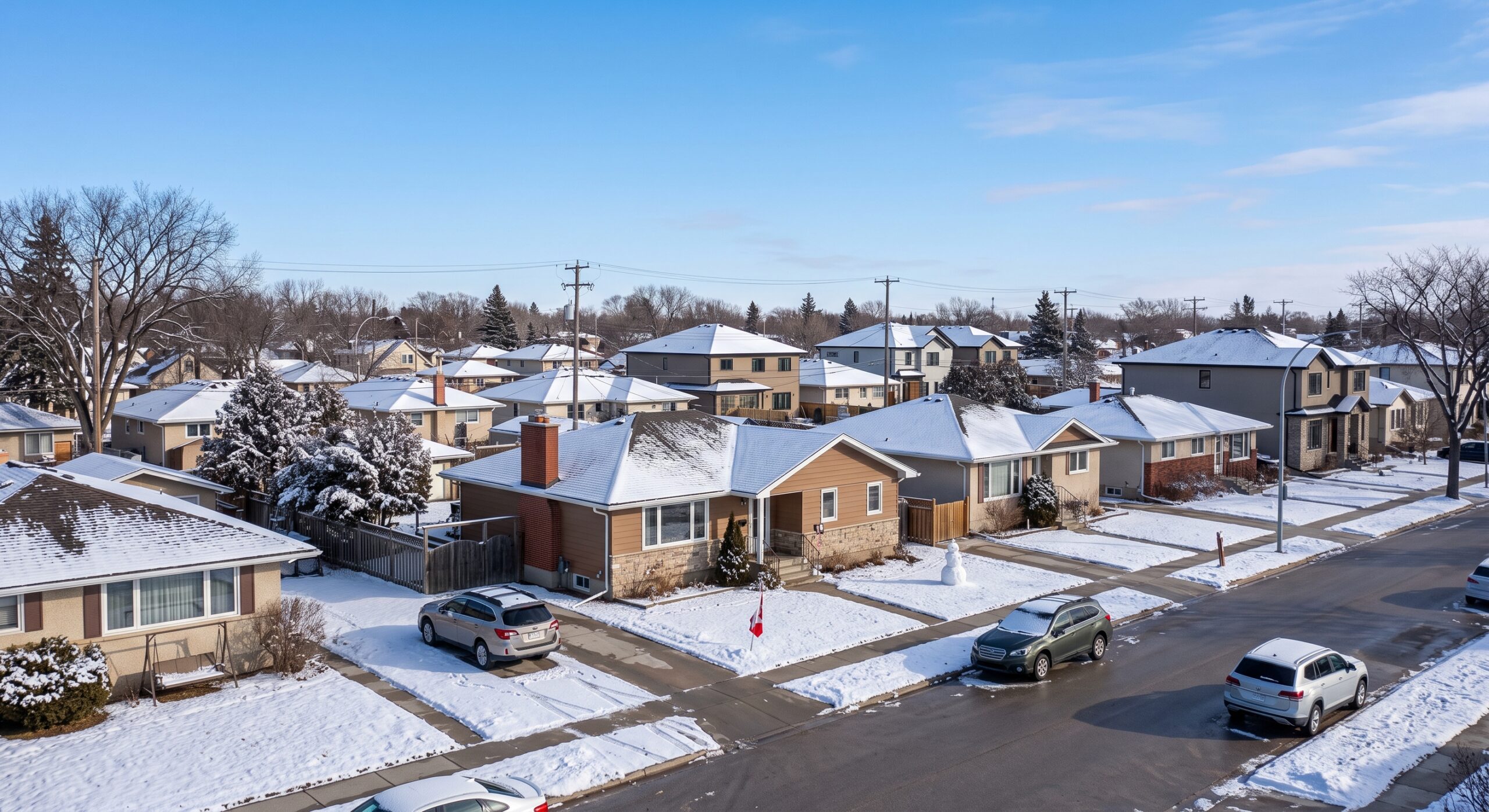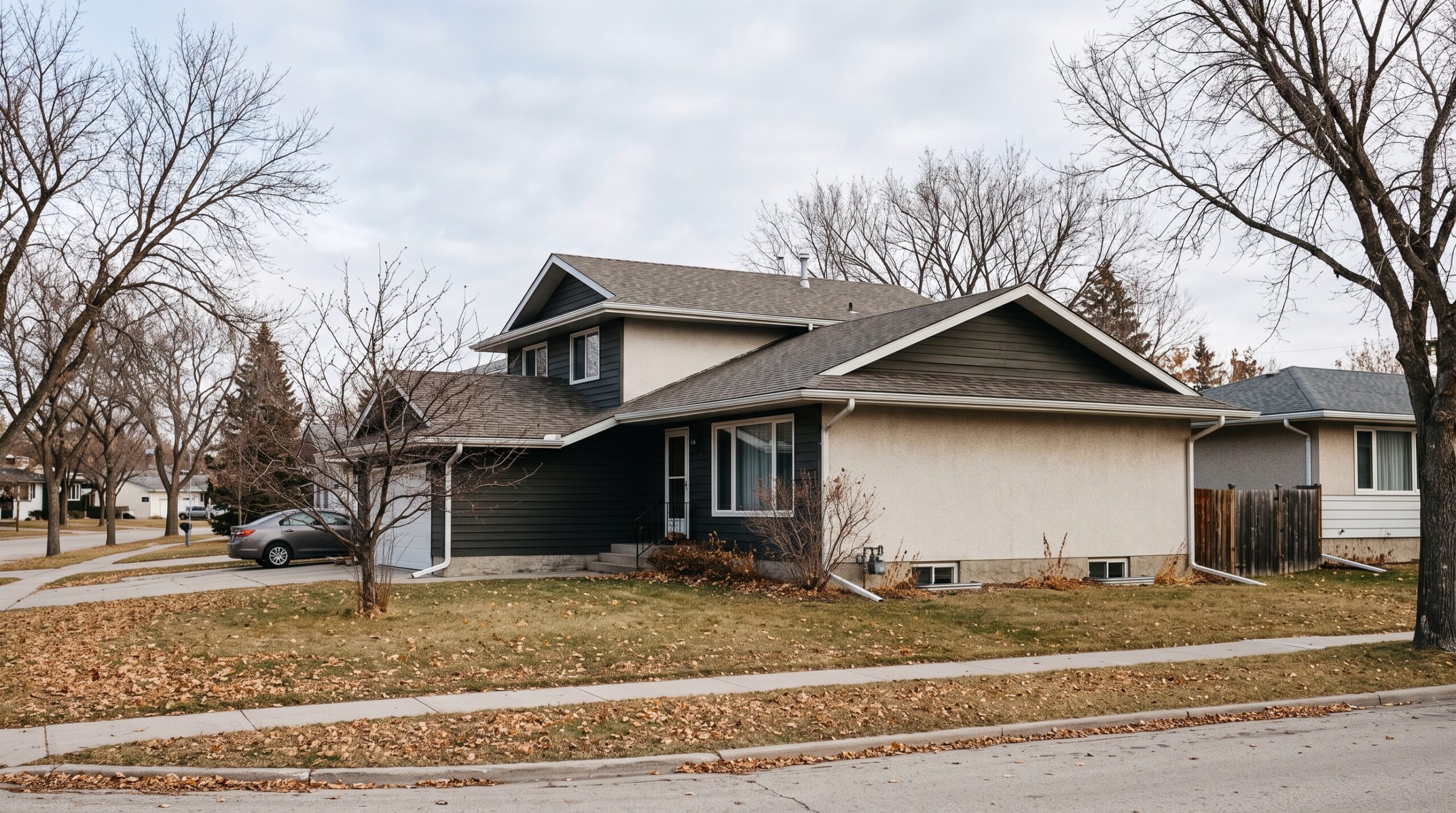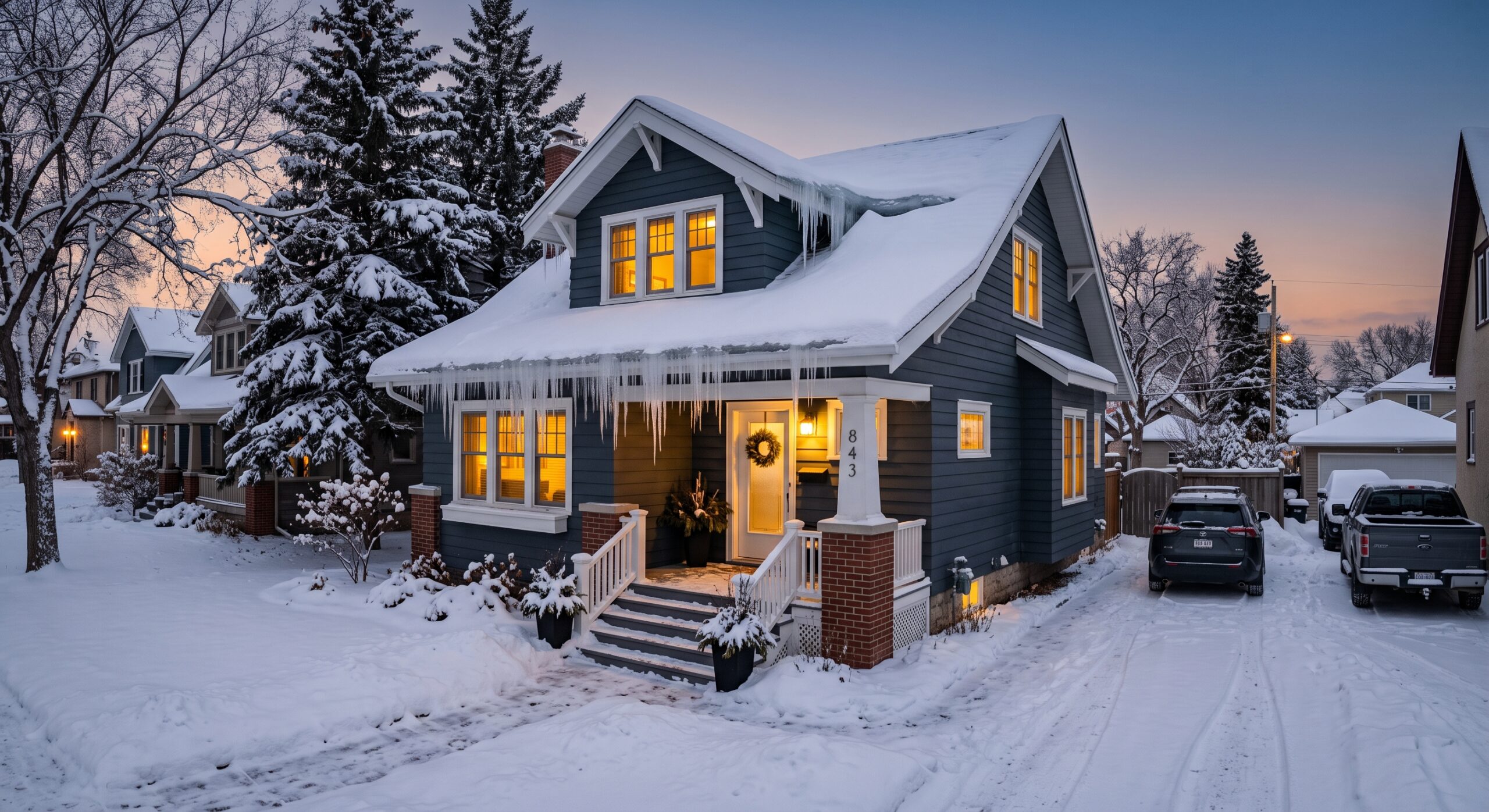
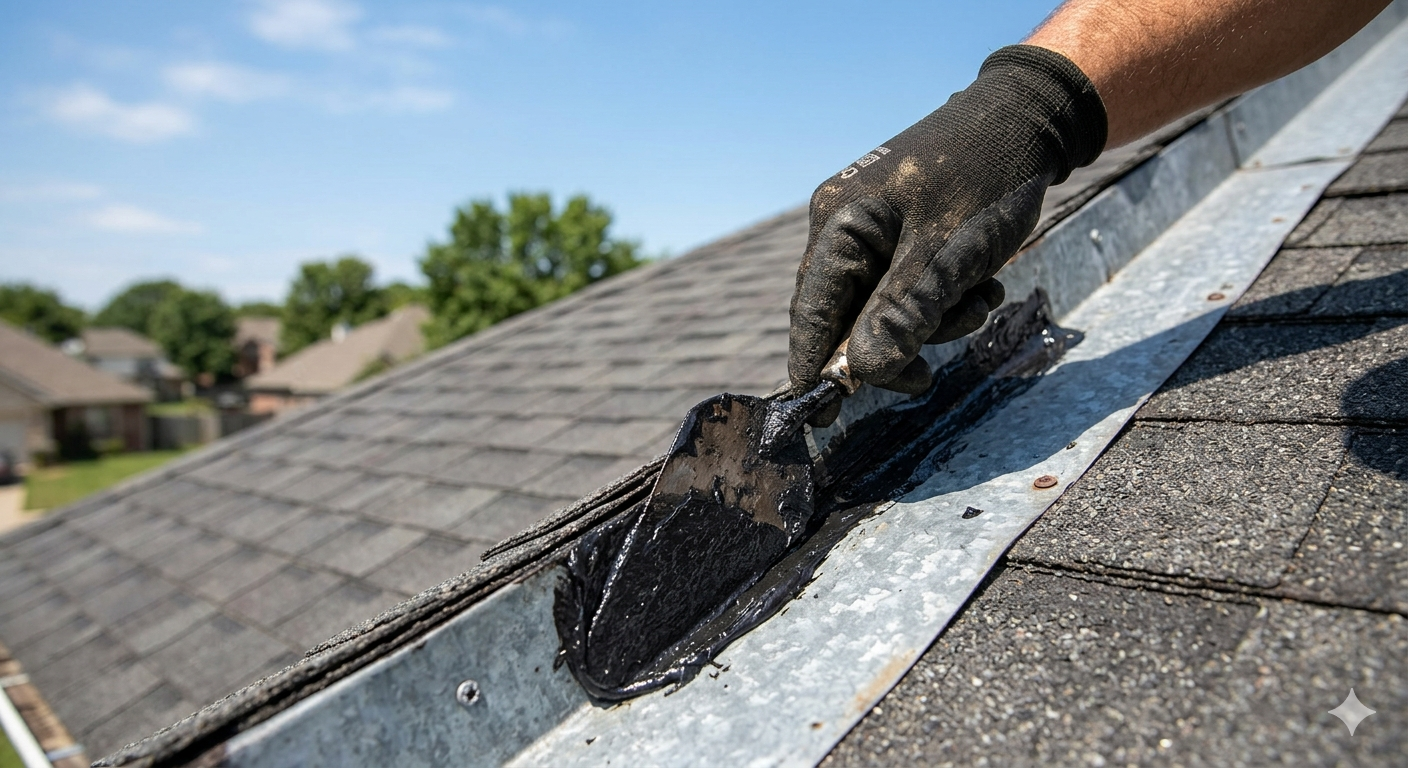
Roofing cement is a thick, adhesive sealant used to patch leaks, bond flashing, and seal gaps on residential and commercial roofs across Canada. It works by forming a waterproof barrier between roofing materials, making it one of the most practical and accessible repair solutions available for Winnipeg homeowners dealing with weather-related damage.
If you have ever noticed a small drip during a heavy rainstorm or spotted a cracked shingle after a harsh Manitoba winter, roofing cement is often the first product that goes to work. It bonds to asphalt, metal, wood, and masonry surfaces, and it holds up under freezing temperatures, heavy snow loads, and summer heat. Whether you are patching a corner of flat roofing, sealing around a vent pipe, or repairing lifted flashing, it is the go-to product for keeping water out. This article breaks down everything you need to know, from how it works and where to apply it, to when a DIY fix is enough and when calling a professional is the smarter move.
How Does Roofing Cement Actually Work?
Roofing cement works because of its bitumen-based composition. Bitumen, which is a refined form of asphalt, is naturally water-resistant and flexible enough to expand and contract with temperature changes without cracking apart. When applied to a surface, it fills in voids, gaps, and cracks, then cures into a semi-rigid, waterproof seal that keeps moisture from penetrating through the roofing system.
Most formulations include a blend of asphalt, mineral fibres, and solvents. The mineral fibres add structural reinforcement, which gives the product the ability to bridge small gaps rather than simply coating a surface. The solvents allow the cement to remain workable at room temperature before they evaporate during the curing process, after which the product becomes firm and durable.
One of the reasons this product is so widely trusted in Canadian climates is that it maintains adhesion even after repeated freeze-thaw cycles. Winnipeg winters are notorious for rapid temperature swings, and roofing materials expand and contract significantly between seasons. A quality sealant accommodates that movement without losing its bond, which is why it is commonly used around chimneys, flashing, skylights, and roof edges where structural movement tends to stress the roof system the most.
It is also worth knowing that it is not the same as roofing caulk or roof coating. Caulk is thinner and used primarily for sealing narrow gaps around penetrations. Roof coating is a liquid-applied membrane product designed for full-surface waterproofing. This product sits between those two options in terms of consistency and application scope. It is thick enough to fill and patch but fluid enough to be applied with a trowel, putty knife, or caulking gun, depending on the formulation.
Where Is Roofing Cement Used on a Roof?
Understanding where this sealant is applied helps homeowners make better decisions about maintenance and minor repairs. It is not a one-size-fits-all product used across an entire roof surface, but rather a targeted solution for specific problem areas.
Around Flashing and Chimneys
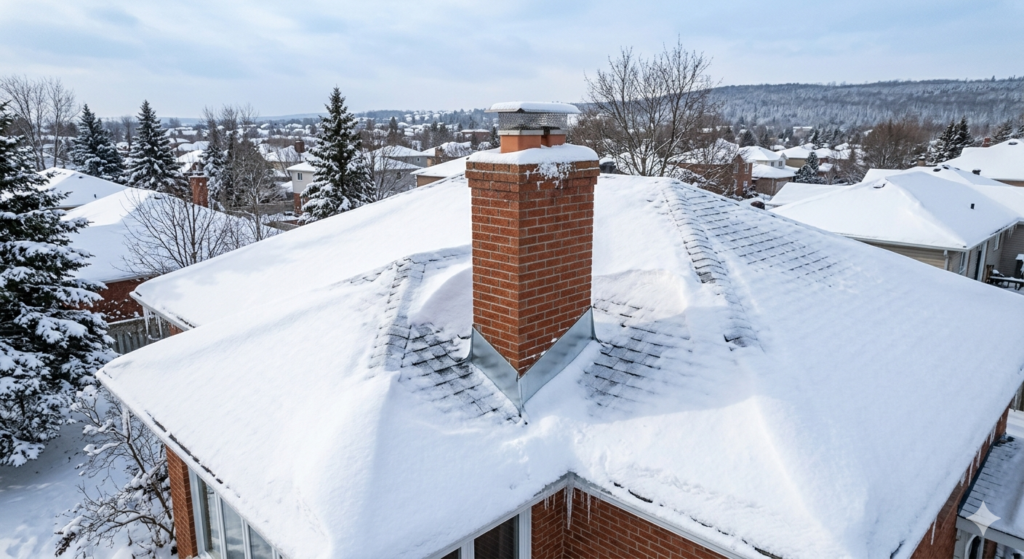
Flashing is the thin metal material installed at roof junctions, including where the roof meets a chimney, a dormer, or a vertical wall. Over time, the sealant holding flashing in place deteriorates, especially after years of UV exposure and Canadian winters. Applying this sealant along the edges of flashing re-establishes the waterproof connection and prevents water from travelling behind the metal and into the roof deck. This is one of the most common applications for this sealant in residential maintenance work across Winnipeg.
Around Vent Pipes and Penetrations
Every pipe, exhaust vent, or electrical penetration that passes through a roof creates a potential entry point for water. The rubber or metal boots surrounding these pipes can crack, lift, or separate from the roofing material over time. A layer of sealant applied around the base of the boot seals those gaps effectively and buys the homeowner additional years of watertight performance before a full replacement is needed.
On Shingle Repairs
Cracked, curled, or lifted shingles are a common issue in Winnipeg, where temperature extremes cause asphalt shingles to become brittle over time. It can be applied underneath a curling shingle to re-adhere it to the roof deck, or spread over a cracked shingle to seal the damaged area and prevent water infiltration until a more comprehensive repair is scheduled.
On Flat and Low-Slope Roofs
Flat roofing systems, which are common in commercial buildings and some residential additions in Winnipeg, rely heavily on this product for patch repairs. When a seam lifts or a blister develops in a built-up roof membrane, this material is used to re-bond and seal the affected area. This application requires a bit more experience to execute properly, as proper surface preparation is critical to achieving a durable bond on flat surfaces.
How to Apply It Correctly
Applying it properly makes the difference between a repair that lasts a full season and one that fails within a few months. The steps below represent the standard approach used for most residential patch and seal applications.
Step 1: Clean and Dry the Surface
This sealant will not bond to a dirty or wet surface. Clear the repair area of debris, loose granules, old sealant, and standing water before starting. In Winnipeg’s unpredictable spring and fall weather, this sometimes means waiting a full day after rainfall before proceeding.
Step 2: Stir and Prepare the Product
For canned products, stir thoroughly before use to ensure the mineral fibres are evenly distributed. If using a cartridge-style product, cut the nozzle to match the size of the gap being filled.
Step 3: Apply with a Trowel or Putty Knife
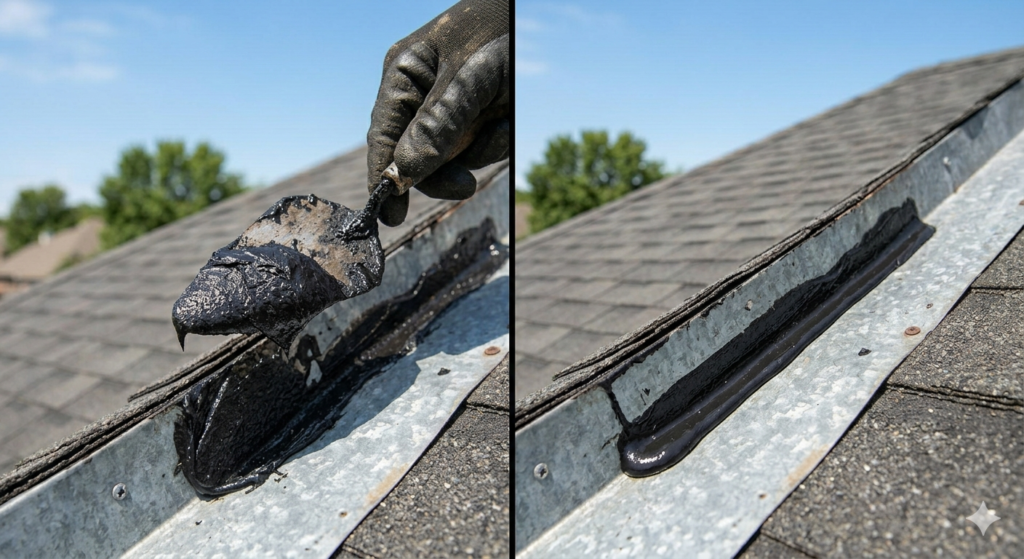
Spread the cement evenly across the repair zone using a trowel, extending at least 2 to 3 inches beyond the damaged area on all sides. For flashing and penetrations, press the product firmly into the joint for full contact. Avoid layers thicker than a quarter inch at a time, as overly thick applications can crack as they cure.
Step 4: Feather the Edges and Cure
Use the edge of the trowel to smooth and feather the cement so there are no abrupt ridges that could catch water and lift the patch. Most products require 24 to 48 hours to cure fully under normal conditions. Avoid foot traffic on the repaired area and keep the forecast in mind before starting work.
What Are the Different Types of Roofing Cement?
Not all products are formulated the same way, and choosing the right type for a specific application matters.
| Type | Best Application | Key Feature |
|---|---|---|
| Asphalt-Based Roofing Cement | Shingle repairs, flashing, penetrations | All-purpose, excellent adhesion |
| Fibered Roofing Cement | Large patch areas, flat roofs | Reinforced with fibres for bridging gaps |
| Plastic Roofing Cement | Cold-weather applications | Remains workable at lower temperatures |
| Wet-Surface Roofing Cement | Emergency repairs during rain | Bonds to damp or wet surfaces |
The asphalt-based type is the most widely available and the most commonly used for general residential repairs. Fibered cement adds structural reinforcement for larger patch applications where the product needs to span a gap rather than simply coat a surface. Plastic cement is formulated to stay flexible and workable in cold temperatures, which makes it a practical option for fall and early spring repairs in Winnipeg. Wet-surface cement is a specialized product intended for emergency applications when waiting for a dry surface is not practical.
Things To Know About This Sealant
Before reaching for a can and a trowel, there are several practical things every homeowner should understand about working with this product.
- It is not a permanent solution for major damage. It is a repair and maintenance product, not a substitute for professional installation. If your roof has sustained significant storm damage or reached the end of its service life, the product will only delay a larger repair.
- Surface preparation is the most important step. A clean, dry, debris-free surface is the foundation of a good bond. Skipping preparation is the most common reason repair jobs fail prematurely.
- Temperature affects performance. Most products should be applied when temperatures are above 10 degrees Celsius. Cold-weather formulations extend the usable range, but applying in freezing conditions will compromise adhesion.
- This sealant has a shelf life. Once opened, the product begins drying out. Reseal containers tightly after every use and store them away from direct sunlight.
- Compatibility matters. The asphalt-based formula works well on asphalt shingles, built-up roofing, and metal flashing. It may not suit all synthetic or specialty materials, so verify before applying.
- Never use it to cover structural damage. If roof deck boards have rotted, rafters are compromised, or flashing has completely separated from its anchor points, the sealant alone cannot address those structural issues.
When Should You Call a Professional Instead of Using Roofing Cement?
This sealant is a capable product for minor maintenance work, but there are situations where attempting a DIY repair can make things worse or simply delay a more serious problem. Knowing where that line is can save you money and frustration in the long run.
If the leak you are dealing with keeps returning after you have already used this product, that is a strong signal that the underlying cause has not been addressed. Recurring leaks often point to compromised flashing, a deteriorated underlayment, or damage that extends below the visible surface of the shingles. In those cases, a proper inspection by a qualified roofer is the correct next step.
If your roof is older and showing widespread signs of granule loss, cracking, or curling across multiple sections, the sealant may help one spot while three others develop problems. At that stage, a full roof assessment will give you a more accurate picture of what needs to happen and at what cost.
If you are not comfortable working at height, do not have the proper safety equipment, or are dealing with a steep-pitch roof, it is always better to leave the work to a licensed contractor. Working safely on a roof requires more than just a can of cement and a ladder.
Zega Roofing is a trusted roofing company in Winnipeg with over 25 years of experience helping homeowners and commercial property owners across Manitoba. Whether you need a professional inspection, a targeted repair, or a full residential roof installation, the team at Zega Roofing brings certified expertise and honest workmanship to every job. For pricing and service inquiries, contact Zega Roofing directly at +1 204-997-2697.
Roofing Cement vs. Other Repair Methods: Which One Is Right for Your Roof?
It helps to see this repair option in context alongside other common repair approaches so you can make a more informed decision about which solution fits your situation.
| Repair Method | Best For | Durability | Skill Level Needed |
|---|---|---|---|
| Roofing Cement | Flashing, penetrations, shingle cracks | 2 to 5 years (patch) | Beginner to Intermediate |
| Shingle Replacement | Missing or severely damaged shingles | 20 to 30 years | Intermediate |
| Full Roof Replacement | Aged or extensively damaged roofs | 25 to 50 years | Professional |
| Spray Foam Insulation | Flat roofs, thermal improvement | 15 to 20 years | Professional |
This repair material earns its place in this comparison because of its accessibility, affordability, and speed of application. For a small crack or a lifted flashing corner, it is genuinely the most practical solution. For anything involving missing shingles, compromised structural elements, or a roof system that has aged past its expected lifespan, the longer-lasting solutions in the table above become far more cost-effective over time.
If you are weighing your options and want expert advice on which path makes the most sense for your specific roof condition, exploring resources on shingle roof replacement and roofing installation in Winnipeg can give you a clearer picture of what each service involves and what to expect.
Frequently Asked Questions About Roofing Cement
What is roofing cement used for?
Roofing cement is primarily used to seal leaks, bond flashing, patch cracked or lifted shingles, and waterproof roof penetrations like vent pipes and chimneys.
It fills gaps and forms a waterproof barrier between roofing components. Homeowners commonly use it for spot repairs after winter storms or before a professional inspection can be scheduled. Its versatility across asphalt, metal, and masonry surfaces makes it a staple in roofing maintenance across Canada.
Which is the best cement for a roof?
The best option depends on the application, but the asphalt-based fibered formula is considered the most reliable all-purpose option for Canadian climates.
For cold-weather repairs, a plastic formula designed for low temperatures performs significantly better than standard products. For emergency repairs during wet conditions, a wet-surface formula is the appropriate choice. In all cases, selecting a product that is rated for the temperature range and surface type specific to your repair will produce the best results.
Will roof cement stop leaks?
Yes, roofing cement can stop leaks effectively when the source is a small crack, a lifted shingle, separated flashing, or a gap around a roof penetration.
It forms a waterproof bond that blocks moisture from passing through the repaired area. That said, it will not stop leaks caused by structural damage, a failed underlayment, or widespread deterioration across a large roof section. If the same spot leaks again after a cement repair, a professional inspection is the appropriate next step.
What cement do you use for roof tiles?
For roof tiles, a roofing cement formulated for masonry or a compatible mortar-based product should be used, as the standard asphalt-based formula may not bond properly to clay or concrete tile surfaces.
Concrete and clay tiles require a product that accommodates their specific surface texture and thermal movement characteristics. In some cases, a flexible sealant designed for tile applications is the correct choice. If you are unsure which product is appropriate for your tile roof type, consult with a roofing professional before proceeding to avoid causing further damage.
What are the disadvantages of roofing cement?
The main disadvantages of roofing cement include its limited lifespan as a patch material, its sensitivity to application conditions, and its potential to mask underlying damage that requires professional attention.
Patch repairs typically last two to five years under normal Canadian weather conditions before they begin to crack or lose adhesion. It must be applied to clean, dry surfaces to bond properly, which limits its use during rainy periods unless a wet-surface formulation is used. It is also important to note that sealant applied over a problem that requires structural repair may temporarily hide the issue while allowing further deterioration to occur underneath, which can lead to more expensive repairs down the line.
Need help with your roof in Winnipeg? Contact Zega Roofing for a free inspection and honest estimate. Call +1 204-997-2697.