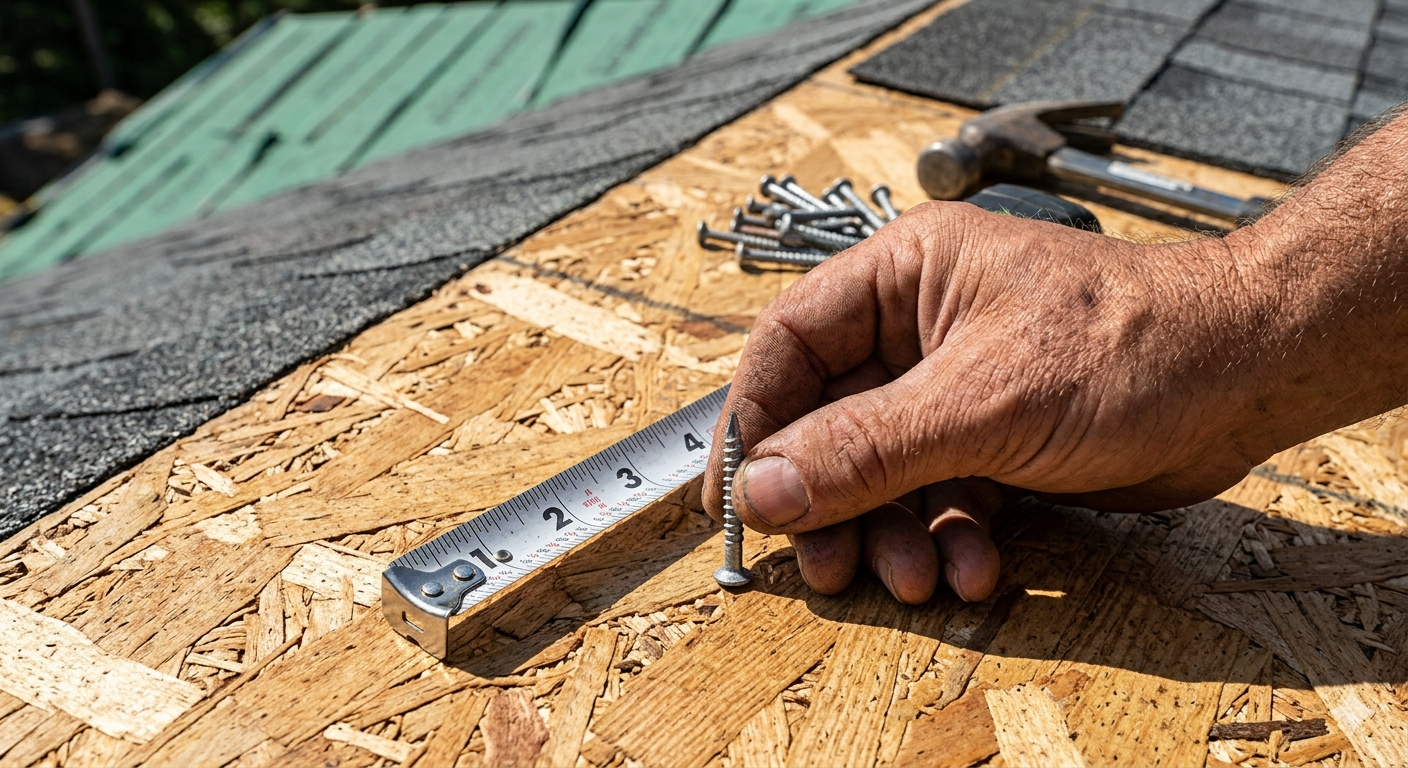
Roofing nails are one of the most important fasteners used in every roof installation and repair project across Canada.
Choosing the correct roofing nails determines how well your shingles stay in place, how long your roof lasts, and how your home handles heavy snow, ice, and wind throughout the year.
This post covers the different types of roofing nails, the materials they come in, what sizes work best for specific jobs, and how to pick the right option for your property.
You will also learn about proper nail placement, how many nails per shingle you need, and common mistakes homeowners make when selecting fasteners.
Whether you are planning a full roof installation in Winnipeg or a simple shingle repair, knowing which roofing nails to use can save you time, money, and future headaches.
Why Roofing Nails Matter More Than You Think
Most homeowners focus on shingles, underlayment, and flashing when thinking about a new roof. But the truth is, roofing nails are the backbone of any roofing system. They hold every layer of material firmly against the deck, and if they fail, the entire roof is at risk.
In Canadian climates, especially in cities like Winnipeg where winters are long and temperatures drop well below freezing, roofing nails face extreme stress. Ice expansion, freeze-thaw cycles, and strong prairie winds can loosen fasteners over time if the wrong type is used.
A single improperly placed or corroded nail can lead to a lifted shingle, which then exposes the underlayment and deck to moisture damage.
Think of roofing nails as the anchor points of your roof. Every shingle depends on them to stay flat and sealed. When those anchor points weaken or corrode, the entire roofing system becomes vulnerable. That is why professional roofers pay close attention to the type, length, material, and placement pattern of every nail they drive into a roof deck.
Beyond just holding shingles down, roofing nails also secure underlayment, drip edge, flashing, and ridge caps. Each of these components requires a specific nail size and type for proper installation. Using the wrong nail in any of these areas can void manufacturer warranties and reduce the overall lifespan of your roof.
Types of Roofing Nails and Their Uses
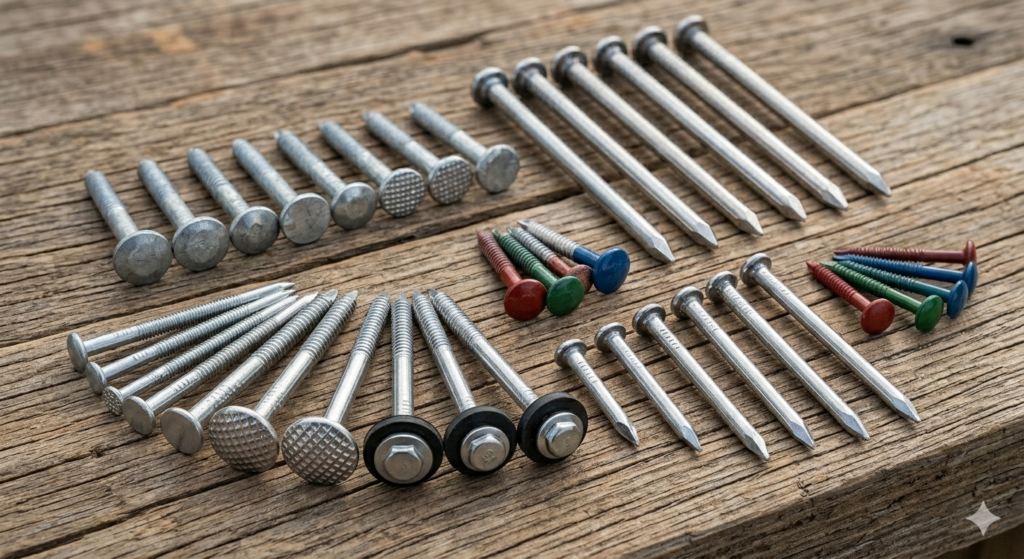
Not all roofing nails are the same. They come in different shapes, sizes, and materials, each designed for a specific application. Knowing the differences helps you pick the right fastener for your project.
Smooth Shank Roofing Nails
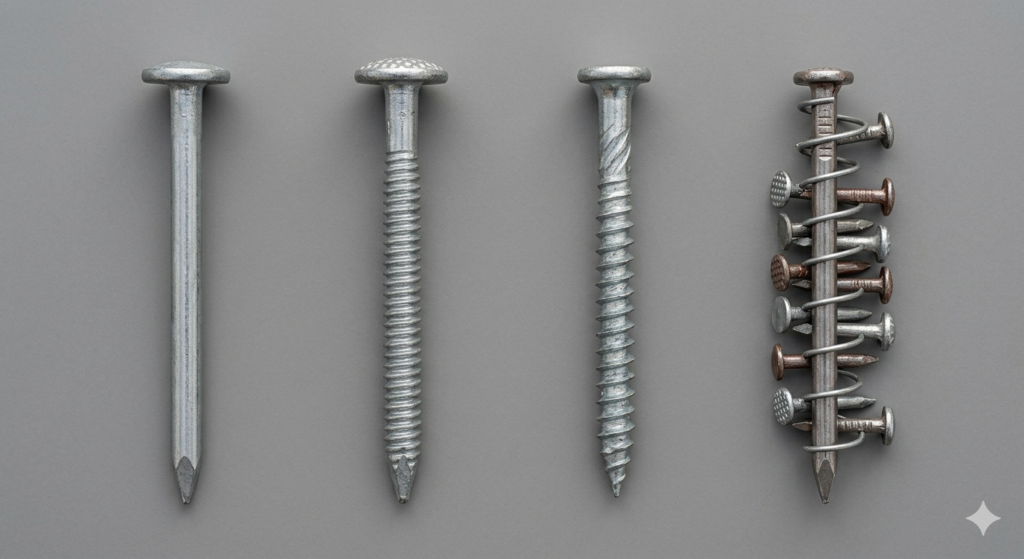
Smooth shank roofing nails are the most commonly used type for standard asphalt shingle installations. They have a flat, wide head and a straight, smooth shaft that slides easily into the roof deck. These nails work well in moderate climates and on roofs that do not face extreme wind uplift.
Ring Shank Roofing Nails
Ring shank roofing nails have small ridges or rings along the shaft. These rings grip the wood tighter than smooth shank versions, making them much harder to pull out. If you live in an area prone to high winds or severe storms, ring shank nails provide superior holding power. Many building codes in Canadian provinces now recommend ring shank roofing nails for wind-prone regions.
Screw Shank Roofing Nails
Screw shank roofing nails feature a twisted shaft that turns as it enters the wood, similar to a screw. This design gives them excellent pull-out resistance. They are often used for cedar shakes, tile roofs, and areas where extra fastening strength is needed. While they cost slightly more, the added durability makes them a smart investment for long-term performance.
Coil Roofing Nails
Coil roofing nails are designed for use with pneumatic nail guns. They come connected in a coil strip, allowing roofers to load them into the gun for fast, consistent installation. Professional roofing crews almost always use coil roofing nails because they dramatically speed up the installation process without sacrificing accuracy.
Roofing Nail Materials: Which One Holds Up Best?
The material of your roofing nails plays a huge role in how long they last and how well they resist corrosion. Here is a comparison of the most common materials used in Canadian roofing projects.
| Material | Corrosion Resistance | Best Use | Lifespan |
| Galvanized Steel | Good | Asphalt shingles, general use | 20-30 years |
| Stainless Steel | Excellent | Coastal areas, high-moisture zones | 50+ years |
| Copper | Excellent | Slate, tile, and premium roofs | 50+ years |
| Aluminum | Moderate | Lightweight applications, metal roofs | 15-25 years |
| Electro-Galvanized | Fair | Interior or temporary projects | 10-15 years |
Galvanized steel roofing nails are the industry standard for most residential projects in Winnipeg and across Manitoba. They offer a solid balance between cost, durability, and rust resistance. The zinc coating on hot-dipped galvanized nails protects against moisture for decades, which makes them ideal for Canadian weather.
Stainless steel roofing nails are the premium choice when maximum corrosion resistance is needed. They cost more upfront, but they will not rust even after decades of exposure to rain, snow, and humidity. For homeowners investing in a high-end roofing system, stainless steel nails ensure the fasteners last as long as the shingles themselves.
Copper nails are primarily used with slate and tile roofs. They naturally resist corrosion and develop a green patina over time that actually protects the metal further. Aluminum nails work well with metal roofing panels but can corrode when in contact with certain treated wood products, so compatibility is something to verify before use.
For pricing details on roofing nails and professional installation, contact Zega Roofing directly at +1 204-997-2697 for a free estimate tailored to your specific project needs.
How to Choose the Right Size of Roofing Nails
Selecting the correct length and gauge of roofing nails is critical. A nail that is too short will not penetrate the deck properly, leading to loose shingles. A nail that is too long can poke through the underside of the deck, creating potential leak points in the attic.
The general rule is that roofing nails should penetrate at least 3/4 inch into the roof deck, or completely through if the deck is less than 3/4 inch thick. For standard asphalt shingle installation over a single layer, 1-1/4 inch roofing nails work well. If you are installing shingles over an existing layer (overlay), you will need longer nails, typically 1-3/4 inch or 2 inches, to ensure proper penetration through both layers.
| Roofing Application | Recommended Nail Length | Recommended Gauge |
| Single layer asphalt shingles | 1-1/4 inch | 11 or 12 gauge |
| Overlay (two layers) | 1-3/4 to 2 inch | 11 or 12 gauge |
| Cedar shakes | 1-3/4 to 2 inch | 12 or 13 gauge |
| Tile or slate | 1-1/2 to 2 inch | 10 or 11 gauge |
| Underlayment attachment | 1 inch cap nails | 12 gauge |
| Flashing and drip edge | 1-1/4 inch | 12 gauge |
The gauge refers to the thickness of the nail shaft. Lower gauge numbers mean thicker nails. For most shingle roofing nails, 11 or 12 gauge provides the right balance of strength and ease of driving. Thicker gauges are reserved for heavier materials like tile and slate where extra holding strength is needed.
If you are unsure about which size to choose for your project, professional roofers from companies like Zega Roofing can assess your roof deck thickness and recommend the appropriate nail length during a free roofing inspection.
Proper Nail Placement on Shingles
Even the best roofing nails will fail if they are placed in the wrong spot. Nail placement is just as important as nail selection. Each shingle has a designated nailing zone, which is a strip running across the shingle where nails should be driven.
For standard three-tab shingles, four roofing nails per shingle are typically required. The nails should be placed just below the adhesive strip, approximately 1 inch above each cutout. In high-wind zones, six nails per shingle are recommended to meet building code requirements. Architectural or laminate shingles usually require four to six nails placed along the manufacturer’s specified nailing line.
Nails should be driven straight, flush with the shingle surface. An overdriven nail breaks through the shingle mat and loses its holding power. An underdriven nail leaves the head sticking up, which prevents the next shingle from sealing properly. Both mistakes can lead to leaks and wind damage, even if you selected the correct roofing nails for the job.
Professional roofers use pneumatic nail guns calibrated to the correct depth, ensuring every nail sits perfectly flush. If you are doing a small repair yourself, a roofing hammer with a gauge stop can help you achieve consistent depth.
Things To Know About Roofing Nails
Before you buy or approve roofing nails for your project, here are some key facts every Canadian homeowner should keep in mind.
Roofing nails are not interchangeable with common nails or finishing nails. They are specifically designed with wider heads to grip shingle material without tearing through. Using standard construction nails on a roof is a code violation in most Canadian provinces and will likely void your shingle warranty.
Galvanized roofing nails should be hot-dipped, not electro-galvanized. Hot-dipped galvanized nails have a thicker zinc coating that resists corrosion far better than the thin coating applied through electro-galvanizing. Many budget nail packs at hardware stores are electro-galvanized, so always check the packaging.
Building codes in Manitoba and most Canadian provinces specify minimum nail requirements for roofing. These codes cover nail length, head diameter, shank type, and spacing.
Working with a licensed roofing contractor ensures your project meets all local requirements. If you need a professional assessment, the team at Zega Roofing serves Winnipeg and surrounding areas with expert installation and consultation.
Roofing nails can rust from the inside out if moisture gets trapped under the shingle layer. Proper ventilation in your attic helps prevent condensation from forming on the underside of the deck, which protects both the wood and the nail shanks from premature corrosion.
Temperature matters during installation. In cold weather, shingles become brittle and nails can crack the material if driven too hard. Professional roofers adjust their nail gun pressure based on ambient temperature to avoid damaging shingles during winter installations.
Common Mistakes When Selecting Roofing Nails
Homeowners and even some inexperienced contractors make avoidable errors when it comes to roofing nails. Here are the most frequent ones.
Using nails that are too short is one of the top mistakes. When nails do not fully penetrate the roof deck, shingles can lift during the first strong windstorm. This is especially common during overlay projects where the installer forgets to account for the added thickness of the existing layer.
Another common error is choosing the wrong material. Electro-galvanized nails used in high-moisture environments will begin to rust within a few years, compromising the entire roof. In coastal or heavily wooded areas where moisture levels are high, upgrading to hot-dipped galvanized or stainless steel roofing nails is worth the extra cost.
Overdriving and underdriving nails is a problem that comes down to equipment and technique. Overdriven nails punch through the shingle and lose grip. Underdriven nails leave a bump that prevents proper shingle sealing. Both scenarios allow water to enter the roofing system.
Mixing nail types on the same roof can also cause issues. Different metals in contact with each other can create galvanic corrosion, where one metal corrodes the other. For example, using aluminum nails with galvanized steel flashing can accelerate corrosion at the contact points. Sticking to one material type for all fasteners on a single roof is the safest approach.
Skipping nails in high-wind zones is another preventable mistake. Building codes specify six nails per shingle in designated high-wind areas, and cutting that number to four to save time or material puts the entire roof at risk during storms.
About Zega Roofing
Zega Roofing is a trusted Canadian roofing company with 25 years of experience helping property owners across Winnipeg and surrounding communities.
From minor repairs to complete shingle roof replacements, the team provides dependable solutions for both residential and commercial clients. Zega Roofing is fully licensed, insured, and committed to using top-grade materials suited for Manitoba’s harsh climate.
Whether you need help choosing the right roofing nails for your project or a full roof overhaul, call Zega Roofing at +1 204-997-2697 for a free inspection and honest estimate.
Picking the Best Roofing Nails for Canadian Roofs
Choosing the right roofing nails is not something to overlook or treat as a minor detail. Every nail on your roof contributes to the structural integrity and weather resistance of the entire system.
For most residential projects in Winnipeg and across Manitoba, hot-dipped galvanized smooth shank or ring shank roofing nails in 1-1/4 inch length remain the go-to choice.
Homeowners in wind-prone areas should consider ring shank roofing nails for added holding power, while those investing in premium materials like slate or cedar may benefit from stainless steel or copper options.
Always verify that your roofing nails meet local building codes, match the shingle manufacturer’s specifications, and are installed at the correct depth and spacing. When in doubt, working with a professional roofing contractor takes the guesswork out of the equation and ensures your roof performs as it should for decades to come.
Frequently Asked Questions About Roofing Nails
What is a roofing nail used for?
A roofing nail is used to fasten shingles, underlayment, flashing, and other roofing materials to the roof deck. These specialized fasteners feature wide, flat heads that distribute pressure across a larger area, preventing the nail from tearing through the shingle material. They are essential for keeping every layer of a roofing system securely attached to the structure.
What nails are best for roofing?
Hot-dipped galvanized steel roofing nails with a ring shank are considered the best option for most Canadian roofing projects. The galvanized coating resists rust and corrosion in wet and snowy conditions, while the ring shank provides superior holding power against wind uplift. For premium roofing materials, stainless steel or copper nails offer even longer-lasting performance.
What is the most common roofing nail?
The most common roofing nail is a 1-1/4 inch, 11-gauge, hot-dipped galvanized smooth shank nail. This size and material combination works well for single-layer asphalt shingle installations, which represent the majority of residential roofing projects across Canada. It provides reliable penetration into standard roof decking and resists corrosion for the lifespan of most shingle products.
What are standard roofing nails?
Standard roofing nails are 11 or 12 gauge nails with a large flat head, typically 3/8 inch in diameter, and a length of 1-1/4 inch. They are designed specifically for fastening asphalt shingles and roofing felt to wooden decks. Standard roofing nails meet building code requirements for most single-layer shingle applications in Canadian provinces.
Are roofing nails strong?
Yes, roofing nails are strong enough to withstand wind uplift, thermal expansion, and the weight of snow and ice loads on Canadian roofs. Their strength comes from the combination of gauge thickness, shank design, and head size. Ring shank and screw shank roofing nails offer the highest pull-out resistance, making them suitable for high-wind zones and heavy-duty roofing applications.