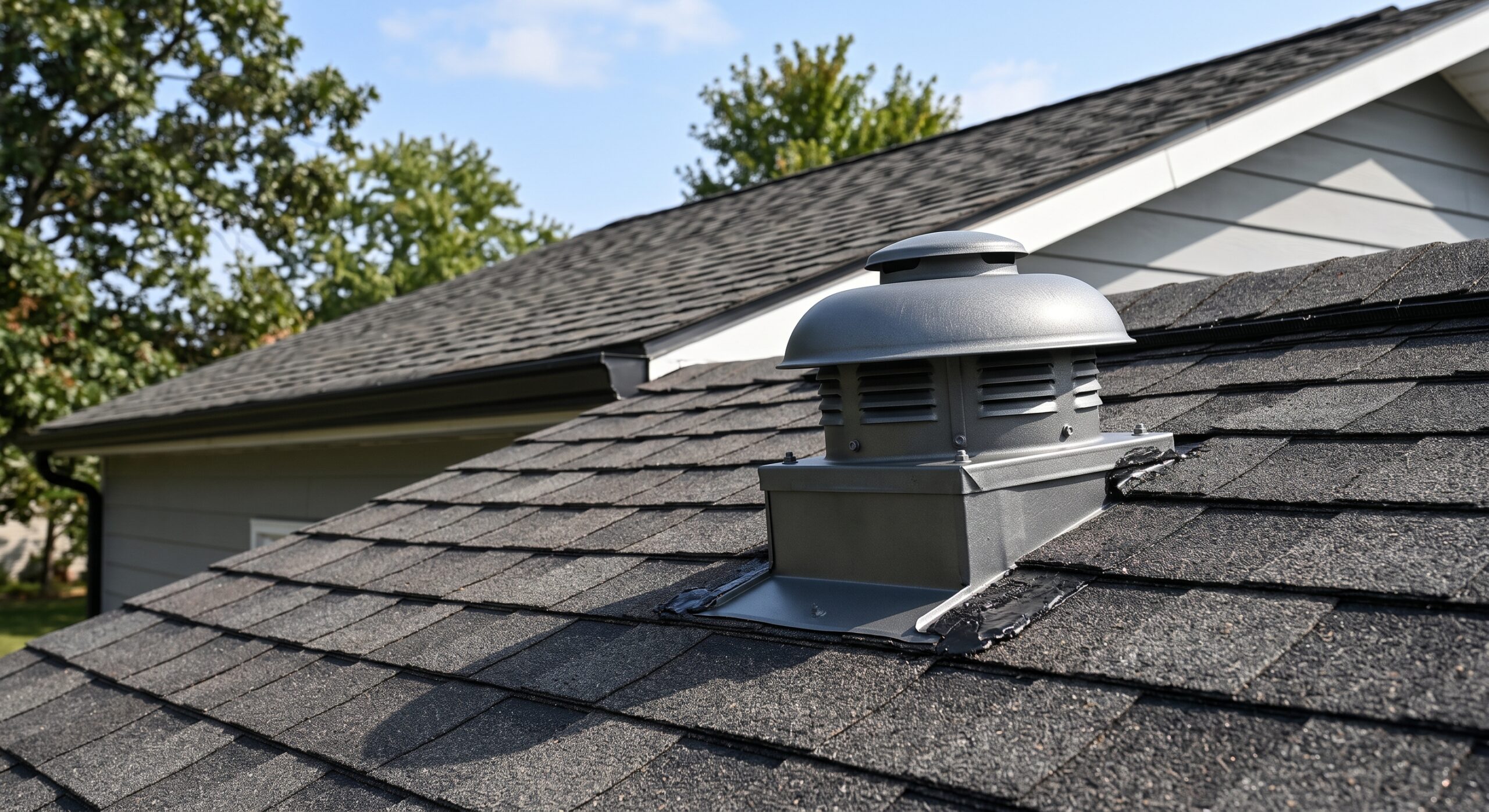
If you’ve ever glanced up at a roofline and noticed small metal or plastic covers poking through the shingles, you were probably looking at a roofing vent cap. These small components play a surprisingly big role in keeping a home’s attic and roof system healthy, yet most homeowners never think about them until something goes wrong.
What Is a Roofing Vent Cap?
A roofing vent cap is a protective covering installed over a roof vent pipe or opening. Its main job is to let air, moisture, and gases escape from the attic or plumbing system while keeping rain, snow, debris, and pests from getting in. Without this simple piece of equipment, an open vent pipe would be an open invitation for water intrusion and unwanted critters.
Most homes have several vent penetrations through the roof deck, including plumbing stacks, attic exhaust vents, and bathroom or kitchen exhaust fans. Each of these typically needs its own cap to stay properly sealed and functional.
Why a Roofing Vent Cap Matters
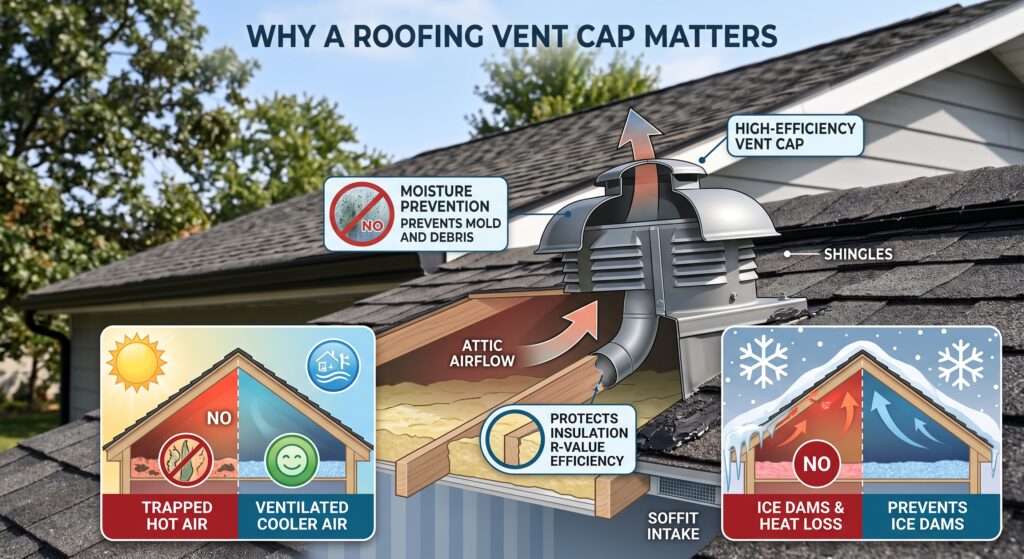
Proper attic ventilation depends on air being able to move freely in and out of the roof system. A well-fitted cap allows that airflow while blocking moisture from pooling around the opening.
Left unprotected, a vent pipe can let rainwater drip directly into the attic, leading to mold, rotted decking, and even stained ceilings inside the home. A quality cap also helps prevent squirrels, birds, and insects from nesting inside the ductwork, which can create blockages and odor problems over time.
Common Types of Roofing Vent Caps
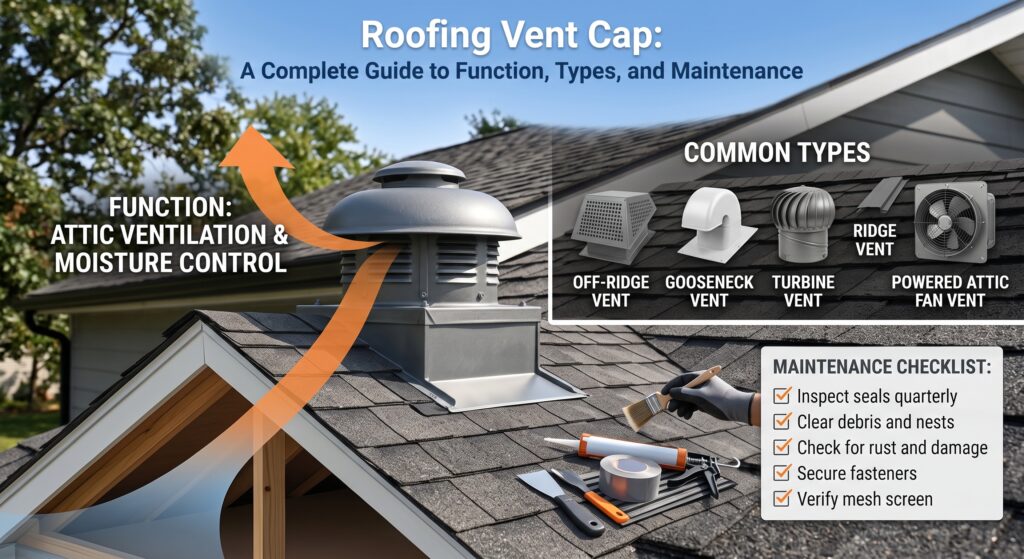
Not every roofing vent cap looks the same, and the right style depends on the type of vent it’s covering:
- Pipe boot caps – Cover plumbing stack vents and are usually made of rubber-collared metal or plastic.
- Turtle vent caps – Low-profile domes used for general attic ventilation.
- Turbine caps – Wind-powered spinning vents that actively pull air out of the attic.
- Powered exhaust caps – Motorized versions for kitchen or bathroom exhaust systems.
Choosing the correct style matters, since an ill-fitting cap can restrict airflow or fail to keep moisture out entirely.
Signs Your Vent Cap Needs Attention
Homeowners often don’t notice a failing vent cap until interior damage shows up. Watch for these warning signs:
- Visible rust, cracking, or warping around the base
- Loose or missing screws where the cap meets the roof
- Water stains on the ceiling near a vent pipe
- Unusual noises coming from the attic, which can indicate animal activity
- Higher-than-normal attic temperatures or humidity
Catching these issues early can save homeowners from far more expensive repairs down the line.
Installing or Replacing a Roofing Vent Cap
Replacing a damaged cap isn’t always a simple swap. It usually involves removing surrounding shingles, resealing the flashing, and making sure the new cap matches the vent pipe diameter exactly. Because this work involves cutting into the roofing material and sealing around a penetration point, even a small mistake can lead to leaks. This is one of those jobs where hiring an experienced roofing contractor pays off, since proper flashing and sealant application are critical to a long-lasting repair.
Maintenance Tips to Extend the Life of a Vent Cap
A little routine care goes a long way:
- Inspect vent caps at least once or twice a year, ideally during spring and fall roof checks.
- Clear away leaves, branches, and debris that collect around the base.
- Reseal the flashing if caulking appears cracked or worn.
- Replace plastic caps that have become brittle from UV exposure.
- Check that mesh screens (if present) aren’t clogged, which can restrict airflow.
According to the guidance published by the International Association of Certified Home Inspectors, proper attic ventilation and moisture control are essential to preventing structural damage and mold growth in residential roofing systems.
Final Thoughts
A roofing vent cap might be one of the smallest parts of a roofing system, but its impact on attic health, moisture control, and pest prevention is significant. Regular inspection and timely replacement can prevent costly interior damage and keep a home’s ventilation system working the way it should.
If you’ve noticed damage, rust, or leaks around a vent pipe on your roof, don’t wait until it turns into a bigger problem. Contact Zega Roofing today for a professional inspection and expert installation or replacement of your roofing vent cap — our team is ready to help keep your roof sealed, ventilated, and protected year-round.
Frequently Asked Questions
1. How long does a vent cap typically last?
Most last between 10 and 20 years, depending on the material. Metal caps tend to outlast plastic ones, which can become brittle from prolonged sun exposure.
2. Can I replace a damaged vent cap myself?
It’s possible for a confident DIYer, but working on a roof carries safety risks, and improper flashing or sealing can lead to leaks. Many homeowners prefer to have a professional handle the job to ensure it’s sealed correctly the first time.
3. Do all roof vents need a cap?
Yes. Any open pipe or vent penetration through the roof deck should be capped to prevent water intrusion, pest entry, and heat loss.
4. What material is best for a vent cap?
Galvanized steel, aluminum, and copper are popular choices because they resist rust and hold up well against weather. Plastic caps are more affordable but generally have a shorter lifespan.
5. How do I know if my cap is causing poor attic ventilation?
Signs include a noticeably hot or humid attic, condensation on the underside of the roof deck, or higher energy bills from the HVAC system working overtime. A blocked or damaged cap can restrict the airflow the attic needs to stay balanced.