Commercial roofing repairs address issues like leaks, punctures, and drainage problems that affect flat and low-slope roofs on business properties. These repairs protect your building’s interior, inventory, and operations from water damage and structural decline. Without timely attention, minor roofing problems can escalate into expensive emergencies that disrupt your business and compromise safety. Winnipeg’s harsh winters and unpredictable weather make regular maintenance and prompt commercial roofing repairs essential for any commercial property owner. The good news is that most damage can be prevented with proper inspections and proactive care. Zega Roofing provides professional roof repair services to keep your commercial property protected year-round.
What Are Commercial Roofing Repairs?
Commercial roofing repairs involve fixing damage, wear, and performance issues on roofs installed on business properties, warehouses, retail spaces, and industrial buildings. Unlike residential roofs that typically feature sloped designs with shingles, commercial roofs often use flat or low-slope systems with materials like TPO, EPDM, modified bitumen, or built-up roofing.
These roofing systems face unique challenges. They support heavy HVAC equipment, handle significant foot traffic during maintenance, and must manage water drainage across large surface areas. Commercial roofing repairs can range from patching small punctures to replacing entire sections of membrane material.
The key difference between commercial and residential repairs lies in scale and complexity. Commercial properties often require specialized equipment and expertise that general contractors may lack. Zega Roofing brings the technical knowledge and experience needed for proper commercial roofing repairs that last.
Common Types of Commercial Roof Damage
| Damage Type | Causes | Warning Signs |
| Membrane Punctures | Foot traffic, dropped tools, debris | Visible holes, localized leaks |
| Seam Failures | Age, thermal movement, poor installation | Gaps between membrane sheets, water pooling |
| Flashing Damage | Weather exposure, improper sealing | Leaks near edges, walls, or penetrations |
| Ponding Water | Clogged drains, improper slope | Standing water after 48 hours |
| Blistering | Trapped moisture, heat | Bubbles in membrane surface |
| Shrinkage | Material age, UV exposure | Pulling at edges and seams |
Understanding these damage types helps property owners identify problems early. Most issues start small but grow worse without attention. Regular inspections catch these problems before they require extensive commercial roofing repairs.
Why Timely Commercial Roofing Repairs Matter
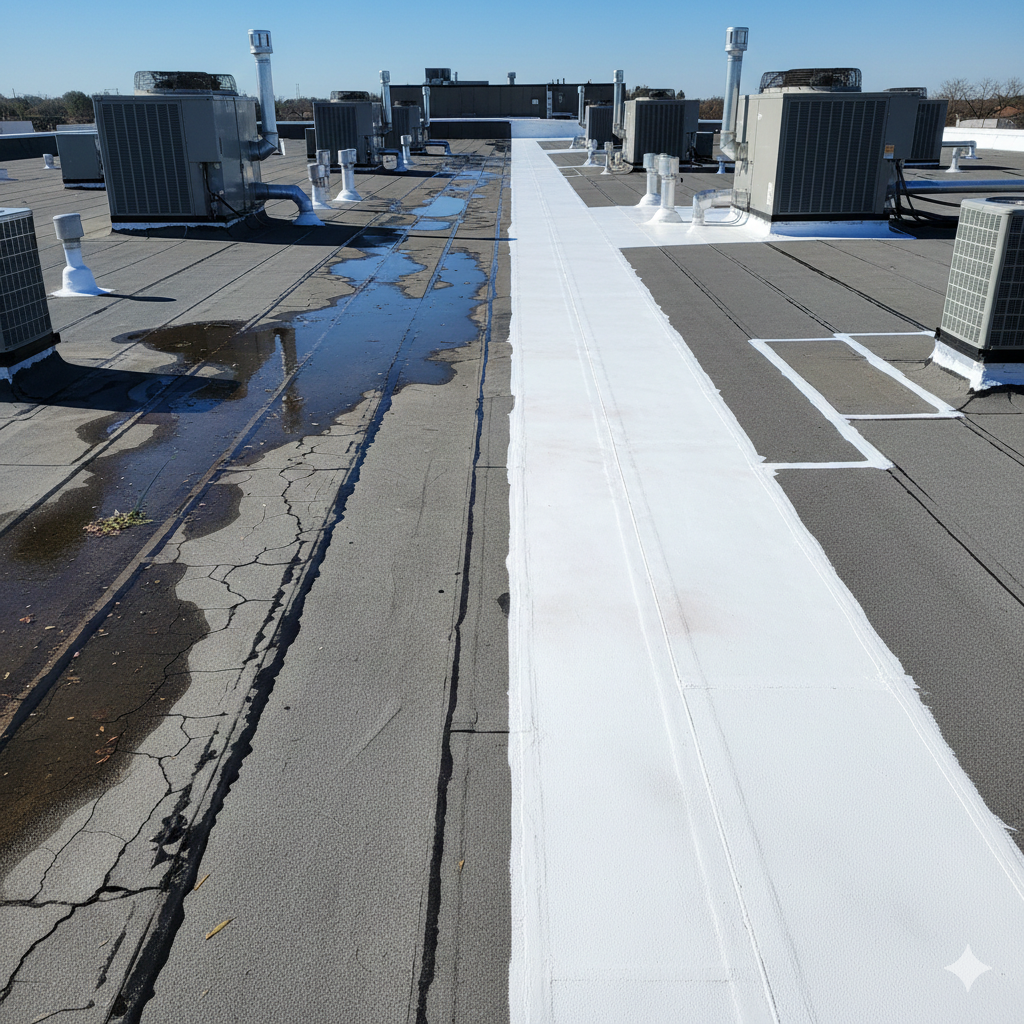
Delaying repairs costs more money in the long run. A small leak that costs a few hundred dollars to fix can become a multi-thousand dollar problem within months. Water infiltration damages insulation, rots decking, promotes mold growth, and can even compromise structural steel.
Beyond repair costs, roof damage affects business operations. Leaks force you to move inventory, equipment, and employees. Insurance claims increase your premiums. Tenants may withhold rent or terminate leases early.
Timely commercial roofing repairs also extend your roof’s lifespan. A well-maintained commercial roof can last 20 to 30 years, while a neglected one may fail in half that time. For properties in areas we serve throughout Winnipeg, proactive maintenance is especially important given our extreme temperature swings.
How Commercial Roofing Repairs Are Performed
Professional commercial roofing repairs follow a systematic process:
Inspection and Assessment
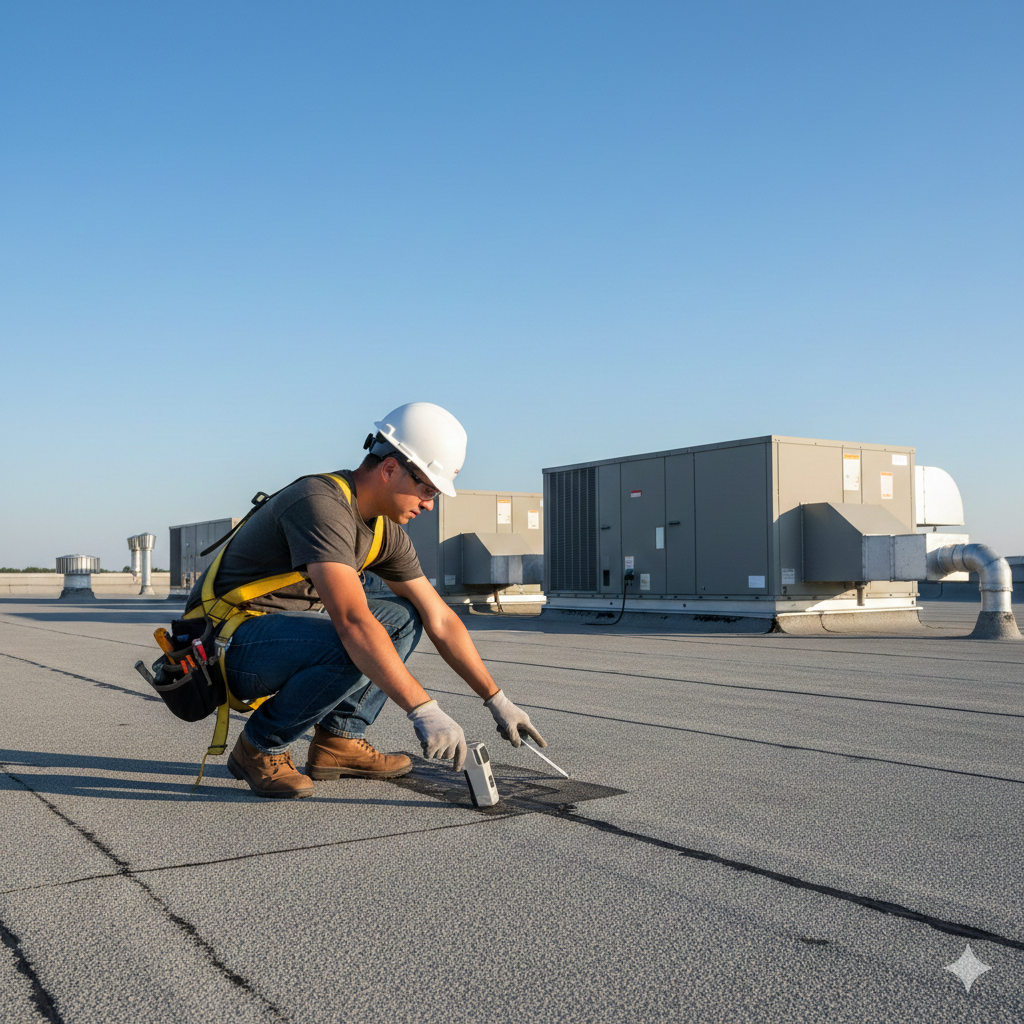
Technicians examine the entire roof surface, checking for visible damage, testing seams, inspecting flashings, and evaluating drainage systems. Infrared scanning can detect moisture trapped beneath the membrane that invisible to the eye.
Preparation
The repair area must be clean and dry. Technicians remove debris, cut away damaged material, and prepare surfaces for bonding. Weather conditions matter significantly for commercial roofing repairs since most materials require temperatures above 40 degrees Fahrenheit.
Repair Execution
The specific repair method depends on the damage type and roofing material. Punctures typically require patching with compatible membrane material and adhesive. Seam repairs involve cleaning, priming, and resealing with appropriate tape or liquid sealant. Flashing repairs may require removing and reinstalling metal components with new sealant.
Quality Check
After repairs, technicians test their work. Flood testing involves temporarily damming an area and adding water to verify no leaks exist. Documentation and photography create records for warranty purposes.
Signs Your Commercial Roof Needs Repairs
Business owners should watch for these indicators:
Interior water stains or drips signal active leaks. Even small stains suggest water is penetrating your roofing system. Higher energy bills can indicate insulation damage from moisture infiltration, forcing HVAC systems to work harder.
Visible damage during routine maintenance warrants professional inspection. Cracks, tears, bubbles, and separated seams all require attention. Drainage problems like standing water or clogged drains stress roofing materials and accelerate wear.
Age alone can signal repair needs. Roofs over 15 years old typically require more frequent maintenance and commercial roofing repairs. If your building has changed use or added equipment, additional penetrations and loads may have stressed the existing system.
Commercial Roofing Materials: Repair Considerations
| Material | Average Lifespan | Repair Complexity | Best For |
| TPO | 15-20 years | Moderate | Energy efficiency |
| EPDM | 20-25 years | Low | Budget-conscious projects |
| Modified Bitumen | 15-20 years | Moderate | Heavy foot traffic |
| Built-Up Roofing | 20-30 years | High | Long-term performance |
| Metal | 30-50 years | Low to Moderate | Durability |
| PVC | 20-25 years | Moderate | Chemical resistance |
Each material requires specific repair techniques. TPO and PVC use heat welding, while EPDM typically requires adhesive or tape. Modified bitumen can be torch-applied or cold-adhered. Using incompatible materials or methods causes repair failures.
Professional contractors understand these differences. Learning more about roofing materials helps property owners make informed decisions about repairs and eventual replacement.
Preventing Commercial Roof Damage
Prevention beats repair every time. Scheduled inspections twice yearly, plus after major storms, catch problems early. Spring inspections address winter damage while fall inspections prepare your roof for harsh weather ahead.
Keep drainage systems clear. Clogged drains cause ponding water, which stresses membranes and accelerates deterioration. Trim nearby trees to prevent debris accumulation and reduce physical damage from branches.
Control roof access. Unauthorized foot traffic damages membranes and increases puncture risk. Install walkway pads in high-traffic areas and establish clear paths to HVAC equipment. Train maintenance personnel on proper roof access procedures.
Address minor issues immediately. Small problems become big problems. A repair that costs hundreds today prevents one that costs thousands next year.
Choosing the Right Contractor for Commercial Roofing Repairs
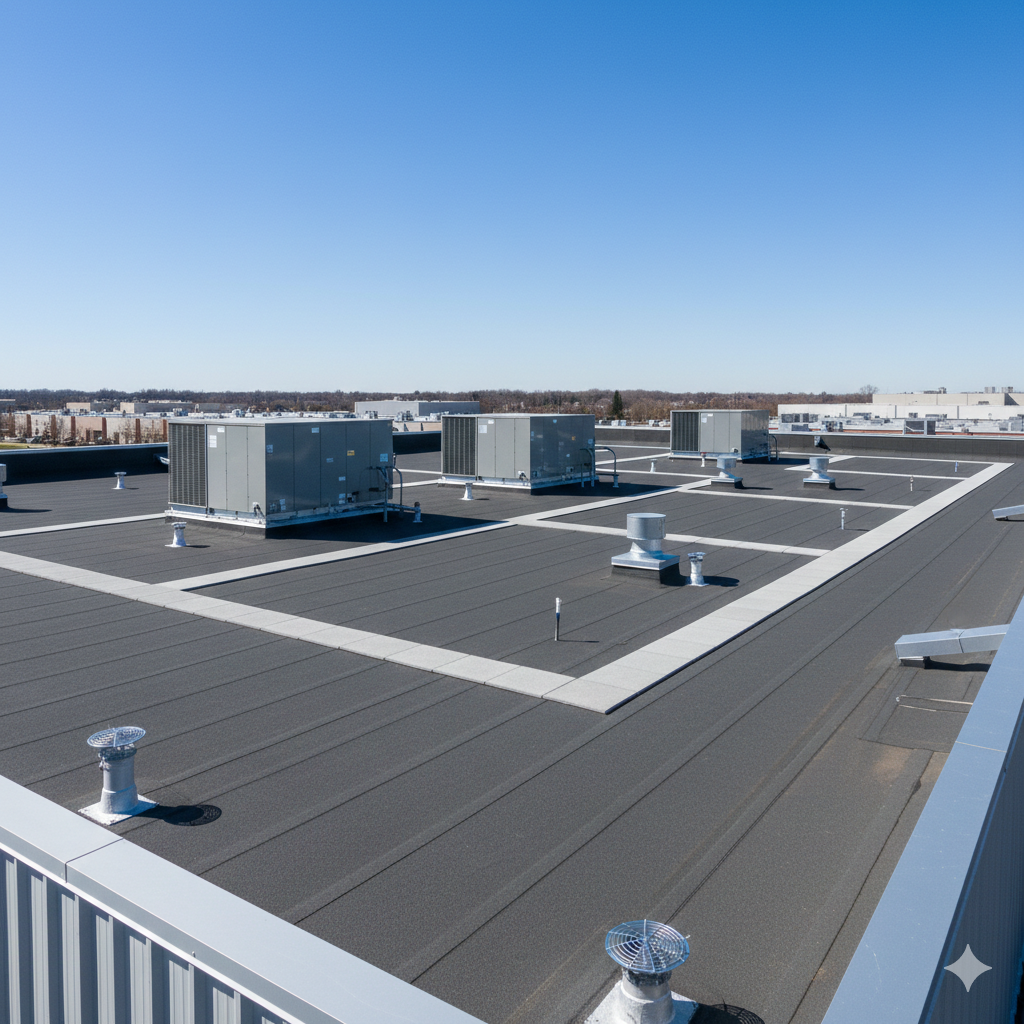
Not all roofing contractors handle commercial work equally well. Commercial roofing repairs require specialized knowledge, equipment, and insurance coverage that residential contractors may lack.
Verify licensing and insurance. Contractors should carry general liability insurance and workers compensation coverage adequate for commercial projects. Ask for certificates naming your business as additionally insured.
Check experience with your specific roofing material. A contractor excellent with shingle roofs may struggle with TPO membrane repairs. Request references from similar commercial projects.
Get detailed written estimates. Vague quotes lead to disputes. Professional estimates specify materials, methods, timeline, and warranty terms. Understanding the difference between patch repairs and complete restorations helps you compare quotes fairly.
Zega Roofing provides commercial clients with the expertise and quality materials their buildings deserve. Our team handles commercial roofing repairs throughout Winnipeg with the same commitment to excellence we bring to every project.
Cost Factors for Commercial Roofing Repairs
Several factors influence repair costs. Damage extent is the primary driver. A single puncture repair costs far less than addressing widespread membrane failure. Roof accessibility matters too. Multi-story buildings or roofs with limited access points require more equipment and time.
Material costs vary by roofing type. Specialty materials or matching older systems can increase expenses. Emergency repairs outside normal business hours carry premium charges.
For accurate pricing on your specific situation, contact Zega Roofing for a professional assessment. We provide honest evaluations and fair pricing without pressure tactics. Our team explains your options clearly so you can make informed decisions about your commercial roofing repairs.
Commercial Roofing Repairs vs. Replacement
Sometimes repairs make sense. Other times, replacement proves more economical. Generally, if repair costs exceed 30 percent of replacement cost, or if your roof has experienced multiple failures, replacement deserves consideration.
Roof age factors into this decision. A 10-year-old roof with isolated damage is a good repair candidate. A 25-year-old roof with recurring problems may be approaching end of life regardless of repairs.
Energy efficiency matters too. Older roofing systems lack modern insulation and reflective properties. Replacement with current materials can reduce heating and cooling costs significantly. Learning about options like spray foam insulation can improve your building’s overall performance.
Professional assessment helps clarify your best path forward. Honest contractors explain when repairs make sense and when replacement offers better value.
Final Thoughts on Commercial Roofing Repairs
Commercial roofing repairs protect your investment and keep your business running smoothly. Winnipeg’s weather puts significant stress on commercial roofs, making proactive maintenance and timely repairs essential. From small puncture repairs to major membrane restoration, addressing problems quickly saves money and prevents disruptions.
Working with experienced professionals ensures your commercial roofing repairs are done correctly the first time. Quality materials, proper techniques, and thorough workmanship extend your roof’s service life and provide reliable protection for years to come.
Zega Roofing serves commercial property owners throughout Winnipeg with expert craftsmanship and honest service. Whether you need emergency leak repair or scheduled maintenance, our team delivers solutions that last. Contact us today for a free inspection and learn how we can help protect your commercial property.
Frequently Asked Questions
What is the most common roof repair?
Leak repairs are the most common commercial roofing repairs. Leaks typically develop at seams, flashings, and penetrations where water can infiltrate. These areas experience the most stress from thermal expansion and are most vulnerable to installation defects. Regular inspection and prompt seam maintenance prevent most leak issues.
How to maintain a commercial roof?
Schedule inspections twice yearly and after major storms. Keep drains clear of debris, trim overhanging branches, and address minor damage immediately. Establish roof access protocols to minimize foot traffic damage. Document all maintenance and repairs for warranty purposes.
What is the lifespan of a commercial roof?
Most commercial roofs last 15 to 30 years depending on material and maintenance. TPO and modified bitumen typically last 15 to 20 years. EPDM and PVC can reach 25 years. Built-up roofing and metal systems often exceed 25 to 30 years with proper care. Climate conditions and maintenance quality significantly affect actual lifespan.
What are commercial roofing materials?
Common commercial roofing materials include TPO, EPDM, PVC, modified bitumen, built-up roofing, and metal. Each material suits different applications. TPO offers energy efficiency, EPDM provides cost-effectiveness, PVC resists chemicals, and metal delivers longevity. Material selection depends on building use, budget, and local climate conditions.
What is proper roof maintenance?
Proper roof maintenance includes regular inspections, drainage system cleaning, prompt repairs, and documentation. Inspect your roof at least twice yearly, clear debris from drains monthly during leaf season, repair damage within days of discovery, and keep records of all work performed. Professional annual inspections supplement your own observations.