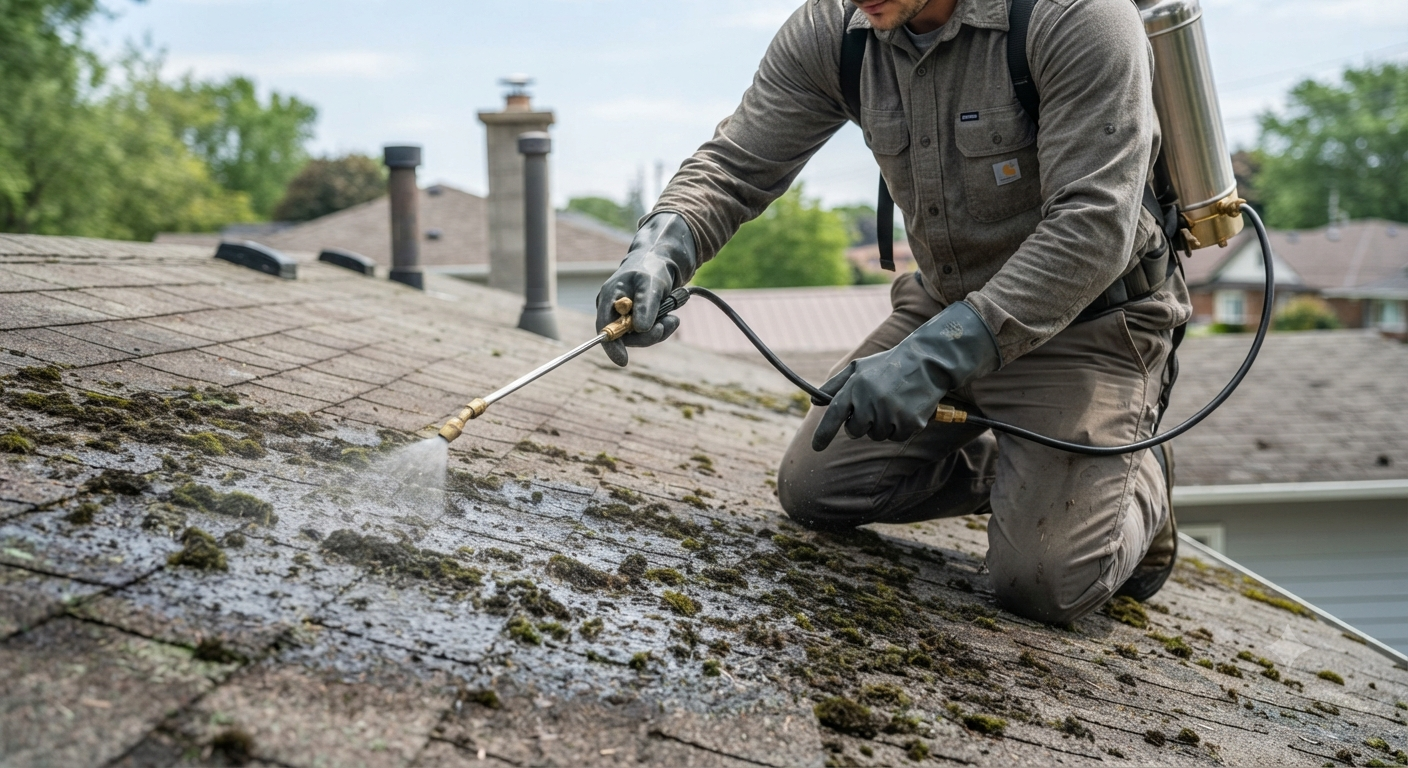
Roof moss removal is the process of safely cleaning and treating your roof to eliminate moss growth before it causes moisture damage, shingle decay, or structural problems.
At first glance, moss on a roof might seem like a minor cosmetic issue, but the reality is that moss causes slow and compounding structural damage that becomes far more expensive to ignore than to treat. Roof moss removal is not just about making your home look presentable; it is about protecting the integrity of the materials underneath.
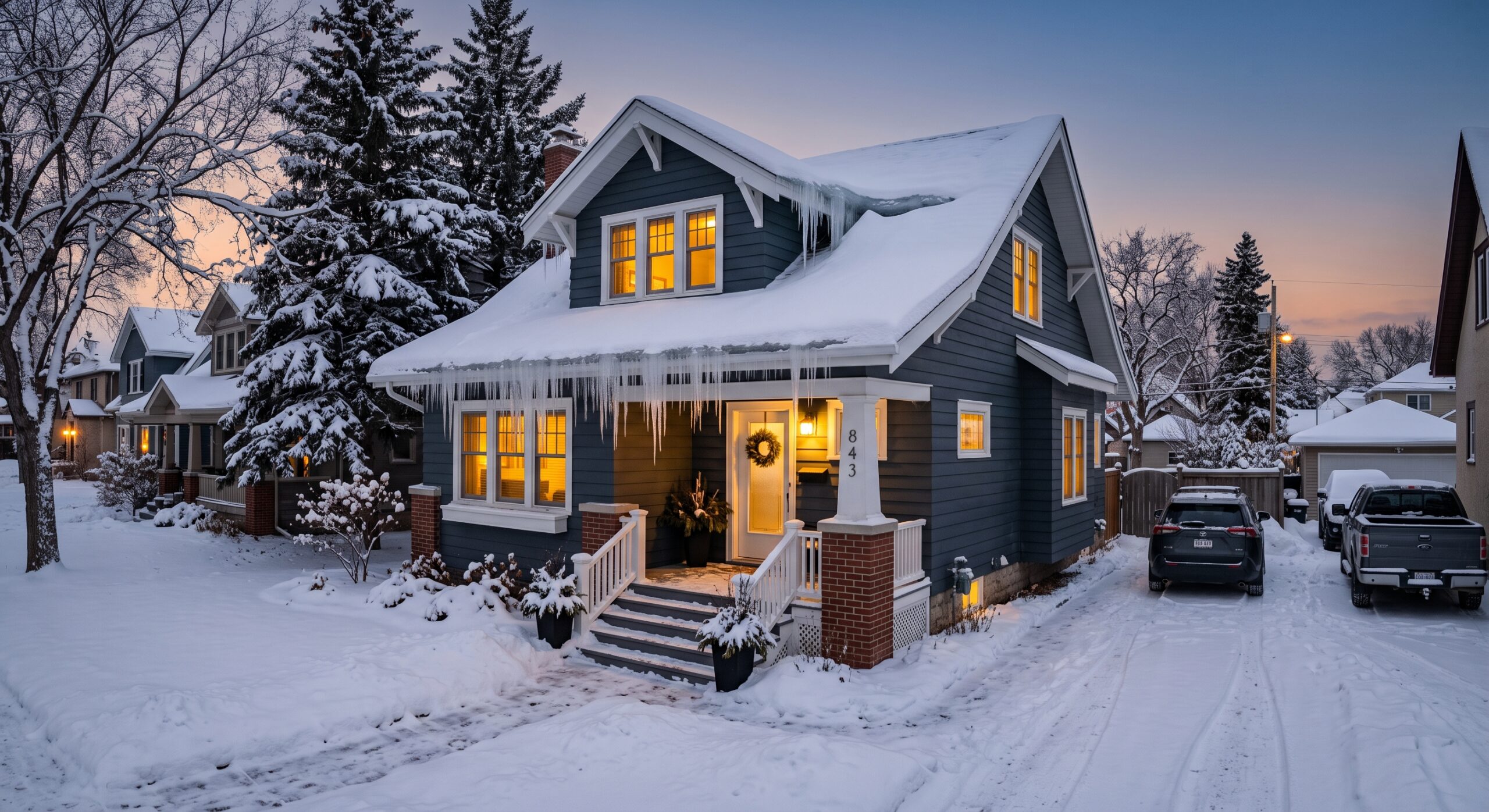
Moss is a non-vascular plant that thrives in damp, shaded environments. When it establishes itself on a roof, it holds moisture against the surface of the shingles constantly. Over time, this persistent moisture works its way underneath the shingles, softening the material and creating pathways for water to penetrate the roof deck. In colder climates like Winnipeg, that trapped moisture freezes and expands during winter, a process known as freeze-thaw cycling, which physically lifts and cracks shingles from the inside out.
How Roof Moss Removal Is Done Correctly
Understanding how roof moss removal is actually carried out helps you set realistic expectations and avoid techniques that could cause more damage than the moss itself. There are several approaches depending on how severe the growth is and what type of roofing material you have.
Step One: Dry Brushing and Manual Scraping
The first step in most roof moss removal projects is physical removal of the bulk of the moss. This is done using a stiff-bristled brush or a soft scraper, working from the ridge down toward the eaves to avoid lifting shingles. You never want to brush upward, as that motion catches under the edges and can tear or loosen shingle tabs. This step removes the visible surface layer but does not kill the roots embedded in the shingle granules.
Step Two: Applying a Moss-Killing Treatment
Once the bulk of the moss is manually removed, a treatment solution is applied to kill whatever remains and prevent regrowth. Common options include zinc-based sprays, potassium soap solutions, and oxygen bleach diluted in water. These treatments work by disrupting the cell structure of the moss and making the surface inhospitable for future growth. The solution is applied generously and left to work, often for several hours or even overnight, before rinsing.
Step Three: Rinsing and Inspection
After the treatment has had time to work, the roof is rinsed with a low-pressure water flow to wash away dead moss and residue. High-pressure washing is something you want to avoid entirely during roof moss removal because the force strips away shingle granules, which are the protective layer that shields the asphalt underneath from UV exposure. Once rinsing is complete, the roof is inspected for any damaged or displaced shingles that may need attention.
Step Four: Preventive Measures
A thorough roof moss removal job does not stop at cleaning. Zinc or copper strips installed along the ridge of the roof are one of the most effective long-term prevention methods available. When it rains, water flows over these metal strips and carries microscopic particles down the slope, creating a surface that inhibits future moss and algae growth for several years. Trimming back overhanging tree branches to increase sunlight exposure on the roof also dramatically reduces the conditions that moss needs to survive.
Which Roof Moss Removal Method Works Best
Not every situation calls for the same approach, and choosing the wrong method can either leave moss behind or damage your shingles in the process. The table below outlines the most common roof moss removal methods alongside their effectiveness, effort level, and best use cases.
| Method | Effectiveness | Risk to Shingles | Best For |
| Manual brushing | Removes surface moss | Low if done correctly | Light to moderate growth |
| Oxygen bleach spray | Kills moss and algae | Very low | All roof types, mild cases |
| Zinc or copper strips | Long-term prevention | None | Post-cleaning prevention |
| High-pressure washing | Removes moss quickly | Very high | Not recommended |
| Professional treatment | Full removal and prevention | Managed by experts | Severe or widespread growth |
Manual brushing paired with a chemical treatment is generally the most effective combination for standard residential roofs. For roofs with heavy moss coverage that has been growing for years, professional roof moss removal is the more reliable path because trained roofers can assess whether any underlying shingle damage has already occurred and address it in the same visit. Contact Zega Roofing to schedule a roof inspection and discuss the most appropriate solution for your roof.
Things To Know Before Starting Roof Moss Removal
Before you get on the roof or purchase any treatment products, there are several practical points worth understanding that can save you time, money, and potential injury.
Safety comes first. Roofs with moss are wet and slippery, especially in the morning or after rain. Falls from residential rooftops cause serious injuries every year, and the risk increases significantly on pitched or two-storey roofs. Non-slip footwear, a safety harness, and a sturdy ladder are non-negotiable.
Not all roof materials respond the same way. Cedar shakes, clay tiles, and metal roofs each have different sensitivities to cleaning solutions and physical scrubbing. What works safely on asphalt shingles may not be appropriate for another material. Before treating, make sure the product you are using is compatible with your specific roofing surface.
Timing matters for treatment to work. Applying a moss killer on a windy day or right before rain will reduce its effectiveness dramatically. The solution needs time to penetrate and kill the moss before being washed away by rainfall.
Surrounding plants need protection. Moss treatment runoff, particularly bleach-based solutions, can harm grass, garden beds, and shrubs near the base of your home. Wetting the surrounding vegetation before and after treatment and covering sensitive plants with plastic sheeting reduces the risk of damage.
Moss often returns without prevention. Roof moss removal without a follow-up preventive measure is a short-term fix. Without addressing shading, moisture retention, or adding zinc strips, moss can re-establish itself within a single growing season.
How Roof Moss Removal Differs for Canadian Climates
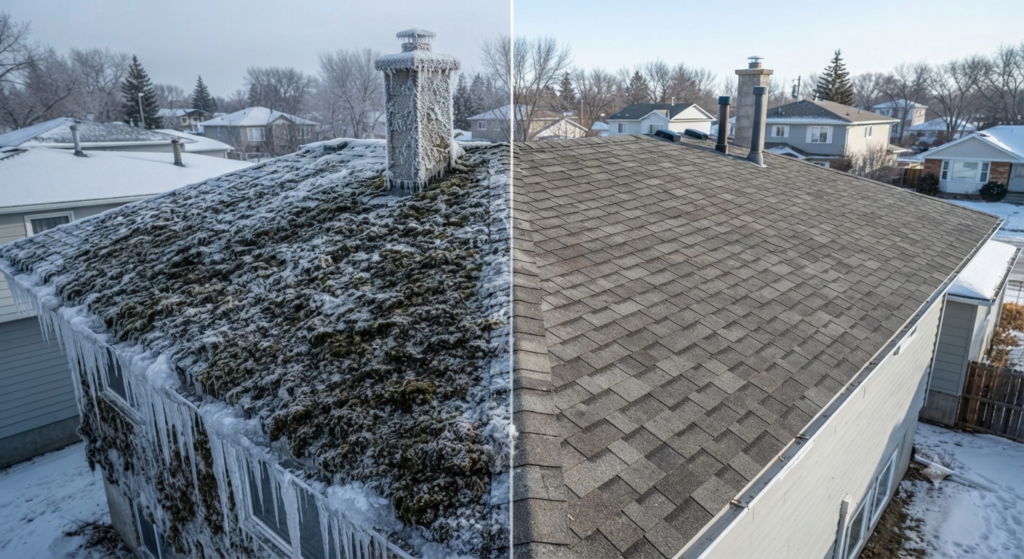
Winnipeg and the surrounding Manitoba region present unique roofing challenges that directly affect how and when roof moss removal should be approached. The combination of humid summers, heavy snowfall, and dramatic freeze-thaw cycles creates conditions where moss can take hold faster and cause more damage than in milder climates.
The moisture that moss traps against shingles is particularly dangerous here because it does not simply evaporate during the cold months. It freezes, expands, and contracts repeatedly from late autumn through early spring. Each cycle weakens the bond between shingles and the roof deck, loosening nails and creating micro-gaps that allow water infiltration. This is why proactive roof moss removal before the cold season begins is especially important for Manitoba homeowners.
The table below compares roof moss behaviour in a Canadian climate versus a milder one:
| Climate Factor | Mild Climate | Canadian Climate (Winnipeg) |
| Moss growth rate | Moderate year-round | Fast during summer humidity |
| Winter freeze damage | Minimal | Significant due to freeze-thaw |
| Best removal window | Any dry season | Late summer to early fall |
| Regrowth risk | Moderate | High without prevention |
| Roof lifespan impact | Gradual | Accelerated without treatment |
For homeowners who have already scheduled a shingle roof replacement or are planning a residential roof installation, addressing any moss present before or during the project ensures the new surface starts clean and stays protected longer.
When Is the Best Time of Year for Roof Moss Removal
The timing of roof moss removal can significantly affect how well the treatment works and how long the results last. In Canadian climates, late summer through early fall is the most effective window, typically from August through October. During this period, moss is still biologically active, which means it absorbs treatment solutions more readily. The weather is also warm enough to allow the treatment to dry and penetrate before the first frost arrives.
Treating in the spring is the second-best option, particularly after snowmelt when moss begins actively growing again and the moisture conditions are visible. Winter treatment is generally not recommended because frozen moss does not absorb chemical solutions effectively, and working on an icy roof dramatically increases the risk of falls.
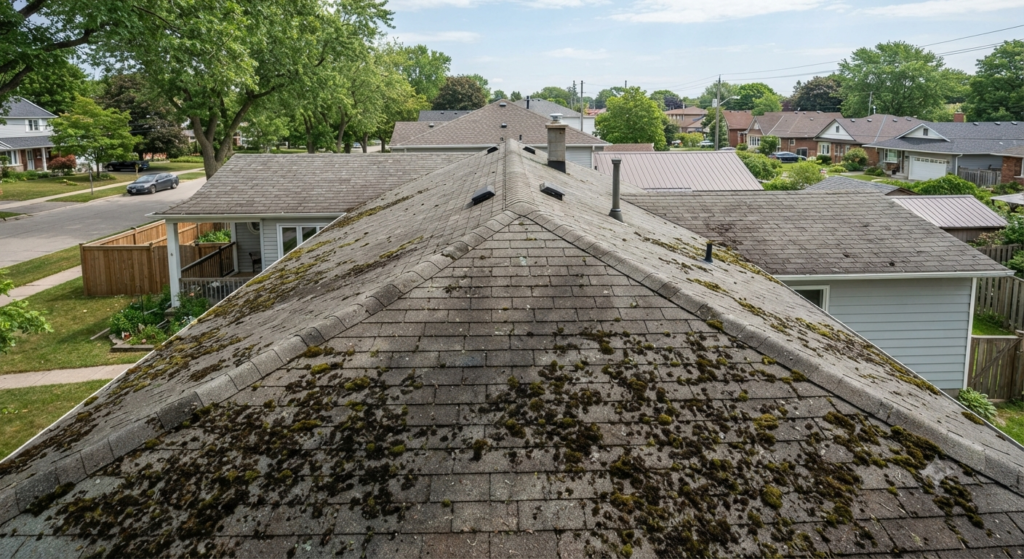
Summer is a good time to assess and plan even if you do not treat immediately, because the contrast between the dark moss patches and the dry shingles is most visible under bright sunlight, making it easier to gauge how much coverage you are dealing with. If you are uncertain whether the growth on your roof qualifies as light, moderate, or severe, a professional inspection before treatment season is a practical step. You can also read more about protecting your roof year-round through resources like roofing ice shield installation to understand how seasonal roof care connects.
Protecting Your Roof Starts With Roof Moss Removal
Roof moss removal is one of those maintenance tasks that homeowners tend to delay until the damage becomes obvious, but by that point, the repair bill is almost always larger than it needed to be. Catching moss early, treating it correctly, and following up with preventive measures is the most cost-effective way to extend the life of your roof and avoid the stress of emergency repairs during a Manitoba winter.
Whether you choose to handle light growth yourself or call in a professional for a thorough roof moss removal service, the most important thing is that you act before the moss acts on your shingles.
Call Zega Roofing first for a professional roof inspection. We’ll assess your roof’s condition and recommend the best solution for your property.
Frequently Asked Questions About Roof Moss Removal
What is the best way to remove moss from a roof?
The best way to handle roof moss removal is to combine manual brushing with a chemical treatment, working downward along the slope, followed by a low-pressure rinse and the installation of zinc or copper strips to prevent regrowth.
Manual scrubbing removes the bulk of the growth, while a treatment solution kills the roots embedded in the shingle surface. This two-step combination is effective for most residential roofs and avoids the shingle damage caused by high-pressure washing.
What kills moss off a roof?
Oxygen bleach solutions, potassium soap sprays, and zinc-based treatments are the most effective options for killing moss during roof moss removal, working by disrupting the cellular structure of the plant and making the surface inhospitable.
Each option has different dwell times and application methods, so it is important to follow the product instructions carefully and ensure the solution has enough time to work before any rain washes it away.
Is it a good idea to remove moss from a roof?
Yes, roof moss removal is absolutely worth doing because moss holds moisture against shingles constantly, which leads to shingle decay, freeze-thaw damage, and potential water infiltration into the roof deck and attic.
Leaving moss untreated accelerates the deterioration of your roofing materials and can shorten the lifespan of your roof by several years, making the cost of professional removal far smaller than the cost of premature replacement.
What kills moss on a roof naturally?
Diluted white vinegar, baking soda paste, and boiling water poured carefully over small patches are natural alternatives used in roof moss removal, though they are generally less potent than chemical treatments and work best on light or early-stage growth.
For larger infestations, natural methods often require multiple applications over several weeks before the moss dies completely. They are safer for surrounding vegetation but require more patience and repeated effort.
What time of year is best to remove moss from a roof?
Late summer to early fall is the ideal time for roof moss removal in Canadian climates because moss is biologically active and absorbs treatments more effectively, the weather is dry enough for the solution to penetrate, and the job can be completed before winter frost arrives.
Spring is the second-best option, while winter treatment is not recommended due to frozen moss and slippery working conditions.