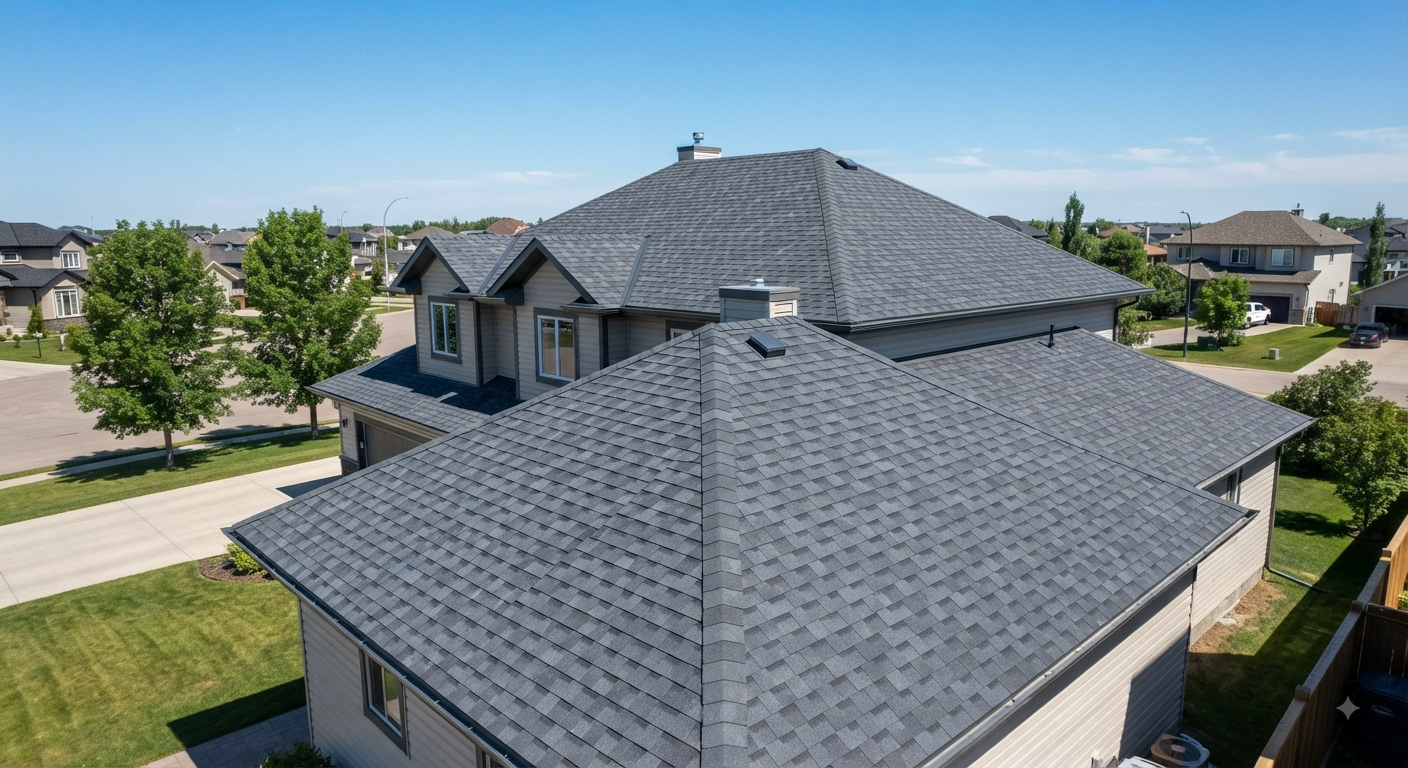
Roof underlayment is the waterproof barrier installed between the roof deck and the shingles above it, and it is what actually stops water from reaching your attic when shingles fail. Without this layer, even a small crack or a wind-lifted shingle can lead to leaks, rot, and costly interior damage within a single Winnipeg winter.
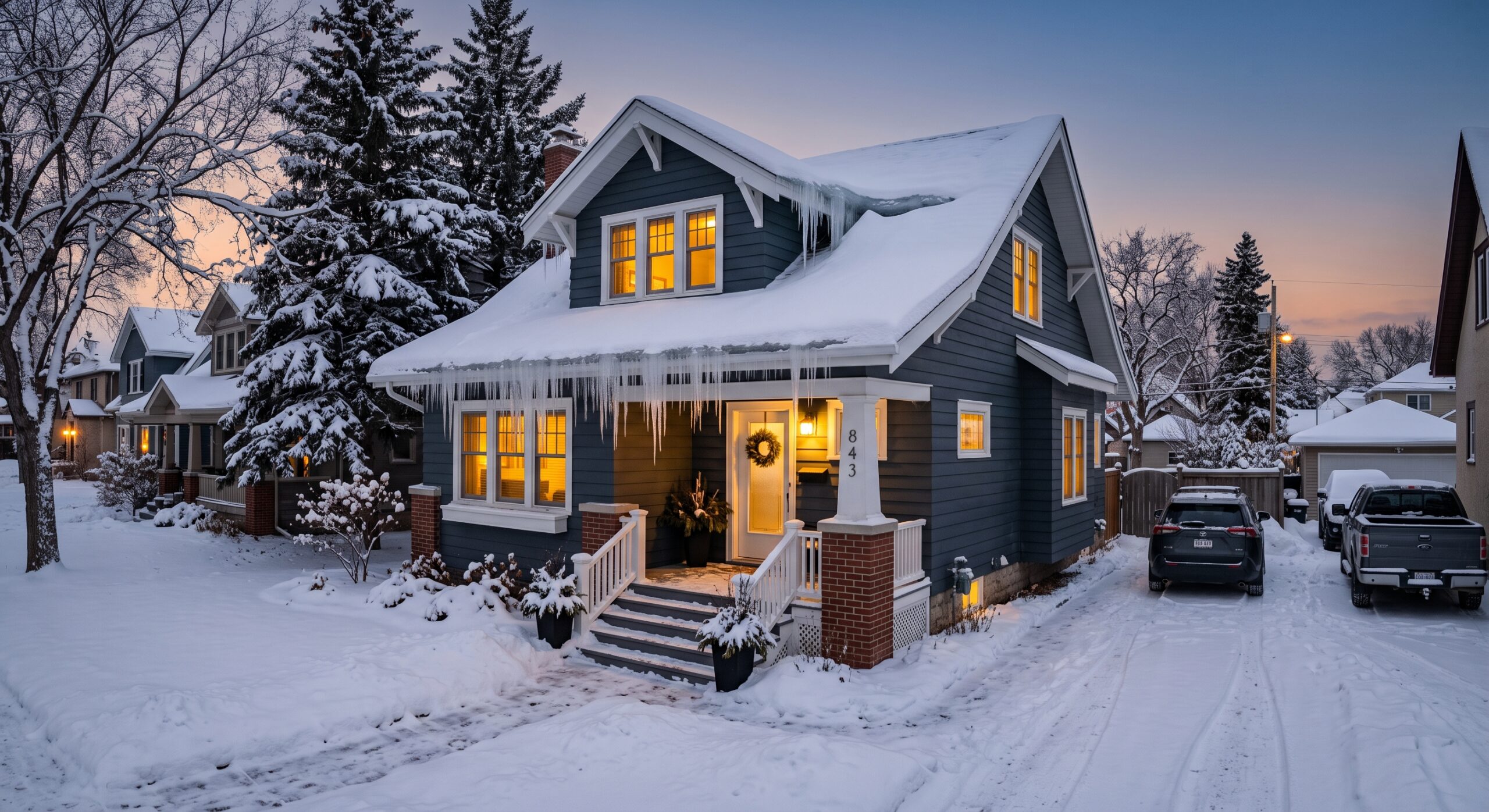
This hidden layer matters more than most homeowners realize, because it works quietly beneath the visible roofing material, absorbing the punishment of freeze-thaw cycles, ice damming, and wind-driven rain so the shingles above can do their job without letting moisture through.
In a city where temperatures swing from deep freezes to sudden thaws throughout the season, this barrier often determines whether a roof lasts fifteen years or thirty.
What Is Roof Underlayment and How Does It Work?
This layer is a secondary weatherproofing barrier fastened directly to the roof deck before shingles are installed. It acts as a backup shield, catching any moisture that manages to slip past the shingles due to wind uplift, ice buildup, or aging materials.
This barrier is not optional in any properly built roofing system. Building codes across Manitoba require it, and for good reason: it is the difference between a roof that fails quietly from the inside and one that holds up through decades of harsh weather.
The material also plays a role in fire resistance, wind resistance, and how well the deck sheds condensation from temperature swings inside the attic space.
Homeowners sometimes assume shingles alone keep a roof watertight, but shingles are designed to shed the majority of rain and snow, not stop every drop. Wind can lift edges, sun exposure can cause materials to curl over time, and ice can force water sideways under the surface.
That is exactly the scenario this hidden barrier is built to handle, which is why skipping it or choosing a low-grade option rarely pays off in a climate like Winnipeg’s.
How This Layer Protects a Roof
- Creates a continuous water-resistant barrier across the entire roof deck
- Prevents moisture penetration during ice damming along eaves and valleys
- Shields the wood deck from humidity that leads to rot and mold
- Adds a layer of fire resistance depending on the material used
- Buys extra protection time if shingles are blown off during a storm
- Helps the roof deck stay dry during the installation process itself, before shingles go on
Roof Underlayment Types for Winnipeg Roofs
Not all underlayment materials perform the same way, and choosing the right one depends on the roof’s slope, exposure, and how much snow tends to collect in certain areas. The table below breaks down the three most common types used on Winnipeg homes, along with how each one holds up once winter sets in.
| Underlayment Type | Best Used For | Winter Performance |
| Felt (Asphalt-Saturated) | Standard sloped roofs with moderate budgets | Adequate but can wrinkle during freeze-thaw cycles |
| Synthetic Underlayment | Most residential roofs, especially steep slopes | Strong tear resistance and stays flat in cold temperatures |
| Self-Adhered Membrane | Eaves, valleys, and ice-prone zones | Superior protection against ice damming and water backup |
Each option offers a different balance of durability, water resistance, and long-term cost, which is why most Winnipeg roofing systems actually combine more than one type across different sections of the same roof rather than relying on a single material for the whole surface.
Felt has been used for decades and remains a budget-friendly baseline, but it tends to absorb moisture and can wrinkle when temperatures swing rapidly, which happens often during a Manitoba spring or fall. Synthetic sheets solve much of that problem because they resist water absorption entirely and hold their shape even when nailed through repeatedly. Self-adhered membranes go a step further by bonding directly to the deck, sealing around nail penetrations so water cannot travel sideways once it gets underneath a shingle.
Which Roof Underlayment Option Is Best for Your Roof?
The right choice comes down to three questions: why the layer matters for your specific roof, how your roof’s shape and exposure affect performance, and which sections face the highest risk of water intrusion.
Why it matters: This layer is your roof’s last line of defense. A poor choice, or skipping it altogether, leaves the wood deck exposed the moment shingles are compromised, and that exposure is what leads to rot, mold, and expensive interior repairs that could have been avoided.
How to decide: Look at your roof’s slope, sun exposure, and whether specific areas like eaves or valleys collect snow and ice during the winter months. Steeper roofs with less snow retention can often perform well with a synthetic option across the main field, while low-slope areas and eaves usually need a self-adhered membrane for reliable ice protection.
Which option is best: For most Winnipeg homes, pairing synthetic underlayment across the main roof field with a self-adhered membrane along the eaves and valleys gives the strongest overall protection. This combination handles both general weather exposure and the ice damming that is common during Manitoba winters, giving the roof deck consistent coverage no matter which section takes the most punishment.
Signs Your Roof’s Protective Layer Needs Replacement
This layer sits hidden beneath shingles, so damage often goes unnoticed until a leak appears somewhere inside the home. Watching for these warning signs can help catch problems before they reach the attic space.
Common Warning Signs
- Water stains on ceilings or upper interior walls after rain or snowmelt
- Shingles that appear curled, buckled, or unevenly laid
- Visible daylight through the attic roof deck
- Musty odors or dampness in the attic space
- Granules collecting in gutters, signaling shingle and material wear
- Soft or spongy spots on the roof deck when walked on
If any of these signs show up, it usually means moisture has already reached this protective layer, and a professional inspection is the safest next step before the damage spreads further into the roof deck and framing. Catching the problem early, before winter arrives, often means the difference between a straightforward repair and a full roof deck replacement once rot has set in.
Homeowners dealing with recurring ice buildup along the roof edge may also want to look into our roofing edge flashing solutions, since flashing and underlayment work together to keep water from finding its way under the shingle line.
Installation Mistakes That Shorten Its Lifespan
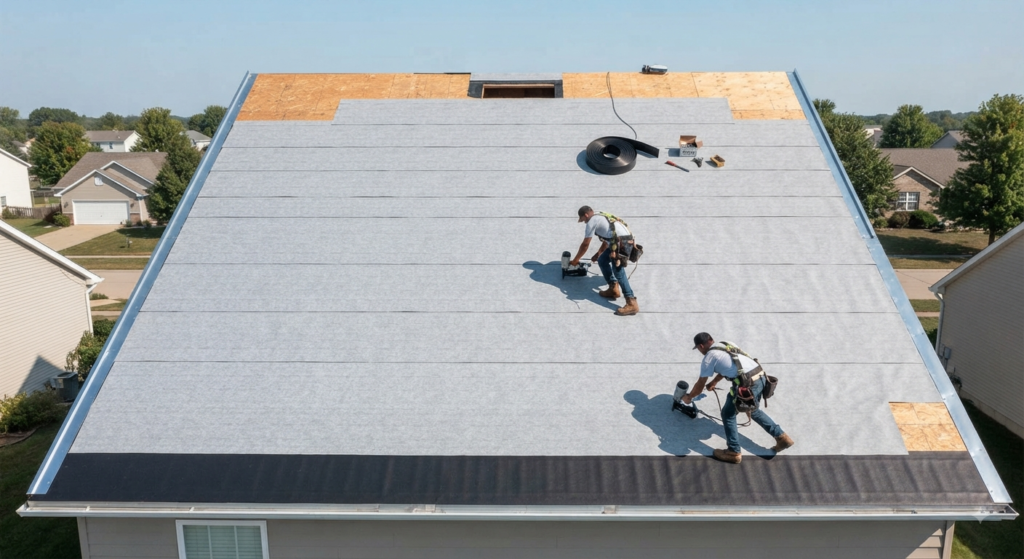
How this material is installed matters just as much as which type gets chosen. A rushed or incorrect installation can undo the benefits of even the highest-quality product.
What To Watch For
- Seams that are not properly overlapped, leaving gaps for water to sneak through
- Fasteners spaced too far apart, allowing the material to shift or tear in high wind
- Missing or incomplete coverage around vents, chimneys, and skylights
- Skipping a self-adhered membrane in valleys and eaves where ice damming is common
- Installing over a damp or damaged roof deck instead of repairing it first
A properly trained roofing crew accounts for all of these details, which is why professional installation tends to outlast a rushed do-it-yourself approach by a wide margin.
Roof Underlayment Lifespan by Material
Most homeowners replace this layer at the same time as their shingles, since removing shingles without addressing what lies beneath them leaves the new roof vulnerable from day one.
| Underlayment Type | Average Lifespan | Replacement Trigger |
| Felt (Asphalt-Saturated) | 12 to 20 years | Cracking, tearing, or visible wrinkling |
| Synthetic Underlayment | 25 to 30 years | Rare, usually replaced alongside shingles |
| Self-Adhered Membrane | 20 to 30 years | Loss of adhesion or seam separation |
A practical tip worth remembering: if a roof is nearing the end of its shingle warranty, it is usually more cost-effective to replace both layers together instead of paying for two separate projects a few years apart. Crews already have the roof stripped down to the deck at that point, which makes it the ideal time to upgrade to a higher-performing material without added labor costs later.
Explore our shingle roof replacement services to see how this protective layer is included as part of a complete roof system, rather than treated as a separate add-on.
Things To Know About Roof Underlayment
- It is required by building code on virtually every residential roof in Manitoba.
- Synthetic material resists tearing better than felt, especially in windy conditions.
- Self-adhered membranes are strongly recommended along eaves in areas prone to ice damming.
- This layer should always be replaced when shingles are replaced, not left in place.
- Poor installation can void shingle manufacturer warranties.
- Attic ventilation works alongside this barrier to reduce moisture buildup and prolong roof life.
- The right combination of materials depends on the roof’s slope, age, and exposure to sun and wind.
For homes near ice-prone valleys and eaves, reviewing our roofing ice shield options can add another layer of targeted protection where it matters most.
Wrapping Up the Case for Roof Underlayment
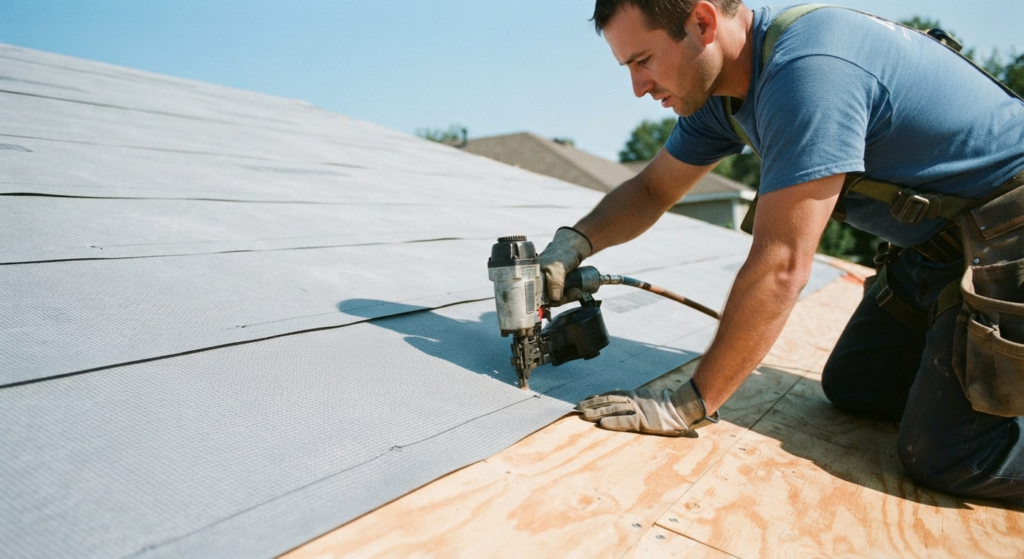
Choosing the right roof underlayment is one of the most important decisions in building a roofing system that can handle Manitoba’s extreme seasonal swings.
It works out of sight, but its performance decides whether a home stays dry through decades of freeze-thaw cycles, heavy snow, and spring runoff. Getting the material, placement, and installation right the first time saves homeowners from repeat repairs and protects everything underneath the roof deck for years to come.
Zega Roofing has spent close to 25 years helping Winnipeg homeowners choose and install the right materials for their specific roof, climate exposure, and long-term budget. If you have any questions about roofing or you’re ready to protect your home with a properly built roofing system, contact our team for a straightforward assessment.
To see completed projects and get a sense of the quality behind every installation, browse our roofing gallery, or check whether your neighborhood falls within the areas we serve across Winnipeg.
Frequently Asked Questions About Roof Underlayment
What is roof underlayment made of?
It is typically made from asphalt-saturated felt, synthetic polymer sheets, or rubberized self-adhered membranes. Each material offers a different level of water resistance, flexibility, and durability depending on the roof’s needs and its exposure to sun and cold.
Is it necessary under metal roofing?
Yes, this protective layer is required under metal roofing to prevent condensation damage and add a secondary moisture barrier. It also helps dampen noise from rain or hail and protects the deck from the thermal expansion that metal panels naturally go through.
How long does it typically last?
Most underlayment lasts between 12 and 30 years depending on the material used. Synthetic and self-adhered membranes tend to outlast traditional felt options by a wide margin, especially in colder climates.
Can it be repaired without replacing the shingles?
In most cases, this layer cannot be repaired without removing the shingles above it. Since it sits directly beneath the shingle layer, accessing damaged sections typically requires a partial or full shingle removal, followed by reinstallation of new shingles once repairs are complete.
Does roof underlayment prevent ice damming?
Self-adhered membranes are specifically designed to reduce the risk of ice damming along eaves and valleys. They create a sealed barrier that stops water from backing up under shingles during freeze-thaw cycles, which is one of the most common causes of winter roof leaks in Winnipeg.