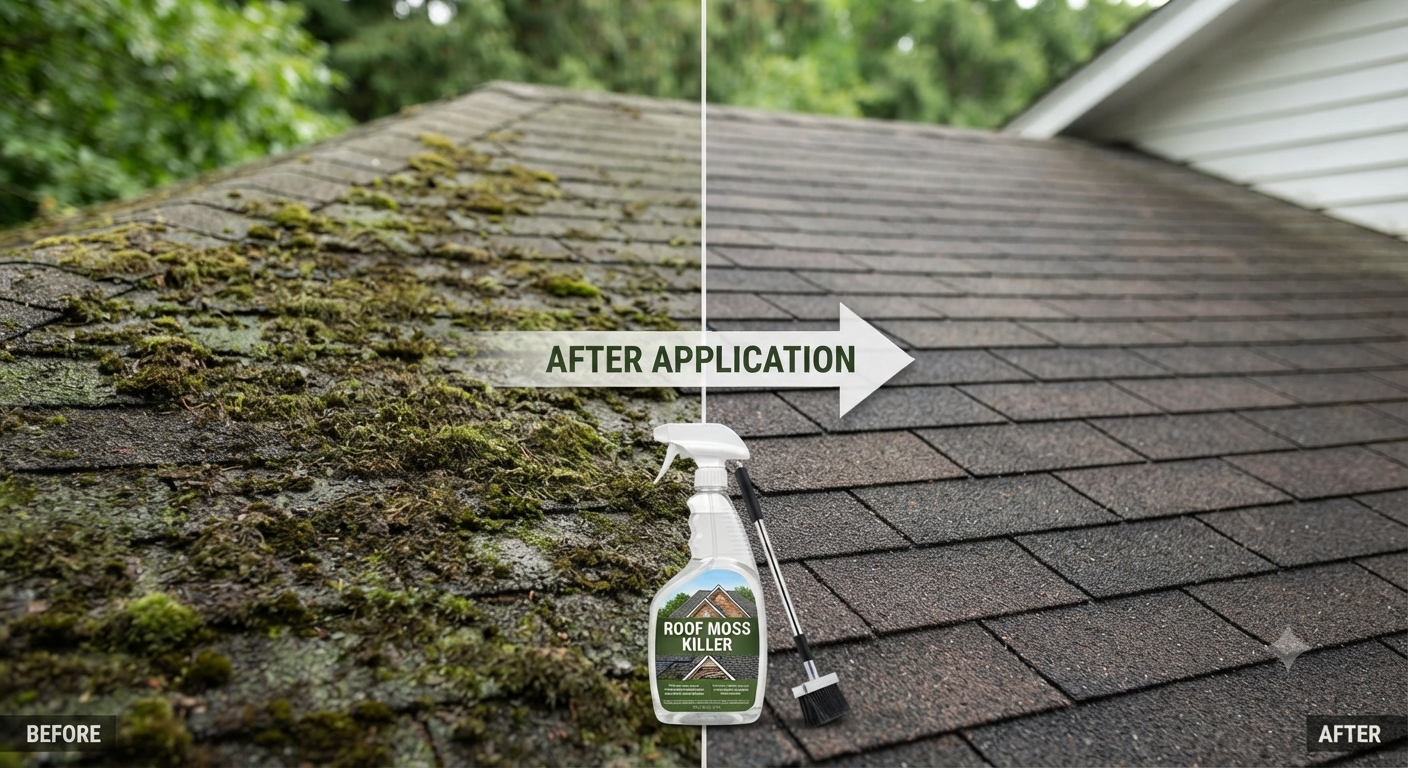
A roof moss killer works by breaking down moss at the root using active ingredients such as zinc sulfate, potassium salts, or oxygen bleach, then letting rain or a gentle rinse carry the dead growth away over one to two weeks.
The right product clears moss without stripping shingle granules, while trimmed branches and better airflow keep new growth from taking hold.
Winnipeg’s freeze-thaw winters and shaded, north-facing roof slopes create near perfect conditions for moss, which is why so many homeowners treat their roofs every spring or fall.
Zega Roofing regularly sees the heaviest moss buildup on older shingle roofs with poor drainage or overhanging trees, and catching it early prevents the moisture damage that follows once moss traps water against the shingles.
The Fastest Way to Kill Roof Moss Safely
The quickest way to clear moss is spraying a roof moss killer directly onto the affected shingles, letting it sit for the time listed on the label, then rinsing from the ground with a garden hose set to a gentle stream.
Skip the pressure washer. High pressure lifts granules and shortens the life of asphalt shingles, which turns a moss problem into a bigger repair down the road. Working on a cool, overcast day also helps, since the solution can evaporate too quickly in direct sun before it has time to reach the moss roots.
Homeowners who want a professional opinion before treating a larger roof can book a roof inspection with our team to check for underlying damage first.
Why Moss Grows on Roofs in the First Place
Moss needs moisture, shade, and something to hold onto, and an aging asphalt roof provides all three. Shingles that have lost some of their granule coating give spores an easy surface to grip, especially in valleys and along the north-facing slope where sunlight rarely reaches.
Overhanging branches drop debris that traps moisture against the roof deck, and clogged gutters make the problem worse by keeping water sitting near the roofline longer than it should.
Homes surrounded by mature trees rarely go a full season without needing a roof moss killer application, particularly after a wet spring. Once moss establishes itself, it spreads along the shingle edges and can work its way under tabs, which is where the real damage begins.
Types of Roof Moss Killer Products
Not every roof moss killer is made the same way, and using the wrong type can fade nearby siding, harm garden beds, or wear down shingles faster than the moss itself would.
Zinc and Copper Based Treatments
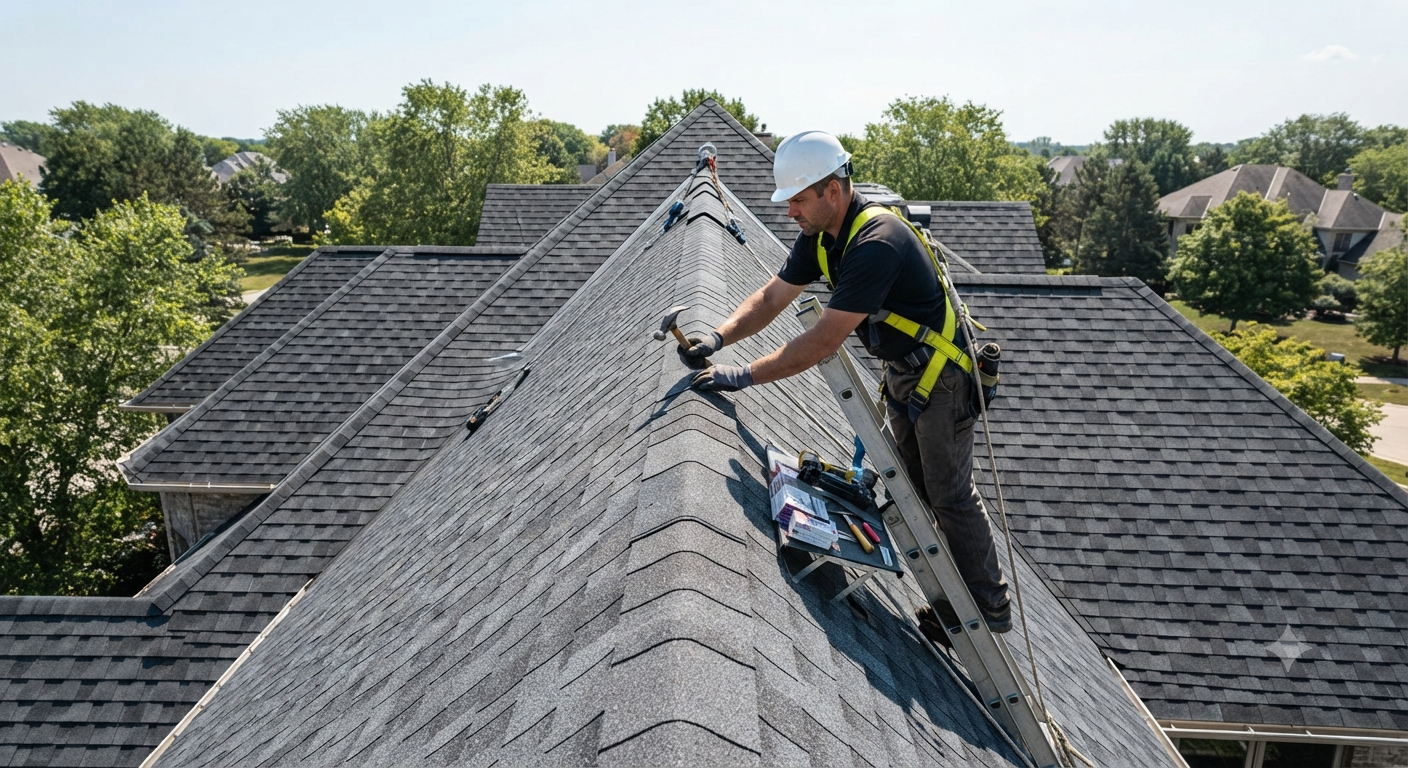
Zinc sulfate is one of the most common active ingredients in a roof moss killer, and it works slowly over several rain cycles rather than all at once. Some homeowners install zinc or copper strips along the ridge line as a preventive measure, since rainwater picks up small amounts of metal as it flows downward and discourages new spores from settling.
Oxygen Bleach and Soap Solutions
An oxygen bleach based roof moss killer is gentler on landscaping and safe for most roofing materials, making it a solid choice for homes with gardens directly below the roofline. Mixed with water and left to sit, it breaks down moss without the harsh fumes associated with chlorine bleach products.
Manual Removal and Brushing
For small, isolated patches, a soft bristle brush and plain water can lift moss clumps without any chemical treatment at all. This works best on flatter roof sections where footing is safer, and it pairs well with a follow-up spray to prevent the moss from returning within weeks.
The table below compares the most common roof moss killer options side by side.
| Treatment Type | Active Ingredient | Shingle Safety | Best For |
| Zinc or Copper Spray | Zinc sulfate | High | Long-term prevention |
| Oxygen Bleach Solution | Sodium percarbonate | High | Homes with nearby plants |
| Chlorine Based Cleaner | Sodium hypochlorite | Moderate | Heavy, established moss |
| Manual Brushing | None | High | Small, isolated patches |
How to Apply a Roof Moss Killer Step by Step
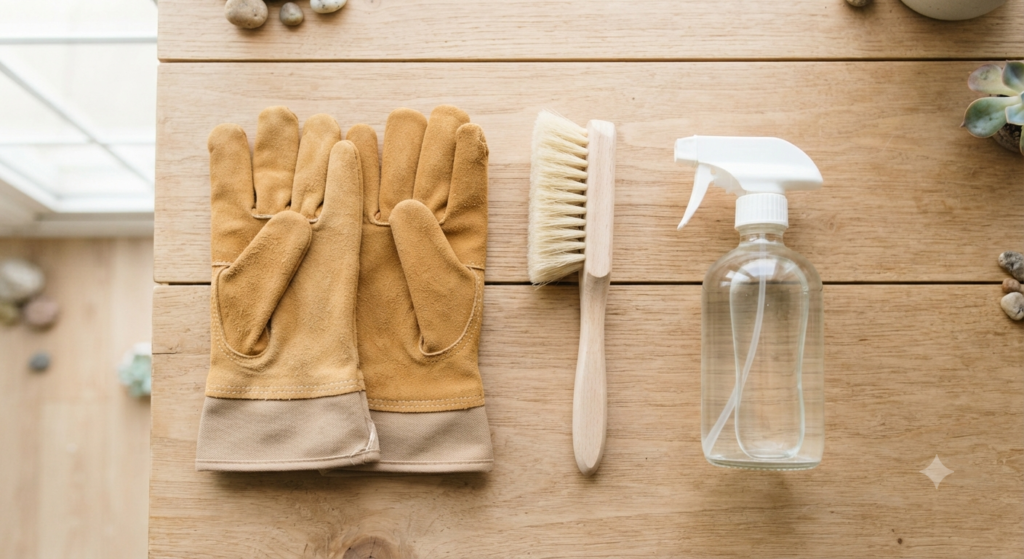
Applying a roof moss killer correctly protects both the shingles and anything growing beneath the roofline. Start by clearing loose debris, leaves, and branches from the roof surface so the treatment can reach the moss directly rather than sitting on top of organic buildup.
Mix the product according to the label, apply it evenly with a pump sprayer, and work from the top of the roof downward so runoff does not pass over untreated sections twice.
Let the solution sit for the recommended time before rinsing, since removing it too early reduces its effectiveness. Once the moss turns brown or grey, a light rinse from the ground is usually enough to carry it away, though some homeowners prefer to let rain finish the job naturally over the following week.
For roofs with steep pitches or multiple stories, our residential roofing team can handle the treatment safely from proper equipment rather than a ladder.
DIY Roof Moss Killer vs Professional Roof Cleaning
Choosing between a store bought roof moss killer and a professional cleaning service depends on the roof’s pitch, age, and how far the moss has already spread.
A single shaded patch on a low slope roof is usually manageable with a weekend DIY treatment, while widespread moss on a steep or aging roof often calls for equipment and experience most homeowners do not have on hand.
| Factor | DIY Treatment | Professional Service |
| Cost of materials | Lower upfront cost | Included in service |
| Roof pitch safety | Best for low slopes | Handles steep or high roofs |
| Coverage area | Small to medium patches | Full roof treatment |
| Follow-up inspection | Not included | Often included |
Which Roof Moss Killer Option Is Best for You
For small patches on an accessible, low-pitched roof, an oxygen bleach based spray paired with manual brushing is usually the best and safest starting point.
For roofs with moss spread across multiple sections, a zinc based roof moss killer applied by a professional offers longer lasting results because it keeps working with every rainfall rather than needing repeat applications. Homeowners unsure which route fits their situation can view examples of completed roof treatments in our gallery before deciding.
Signs Your Roof Needs Moss Treatment Now
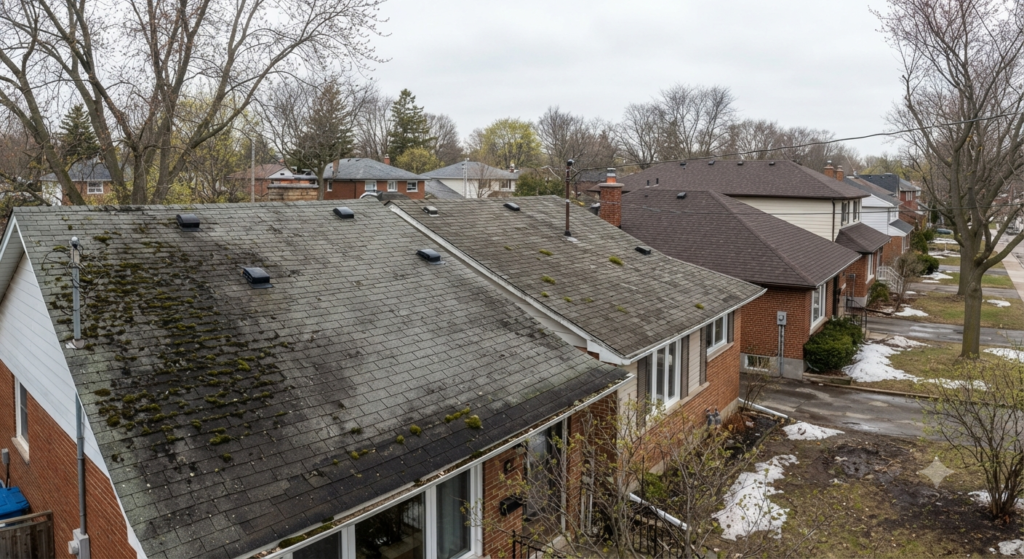
Dark green or black streaks along the shaded side of the roof are usually the first visible sign, followed by a slightly raised, cushiony texture where moss has thickened over time.
Granules collecting in the gutters after rain often mean moss has already started lifting shingle edges, which allows water to seep beneath the surface. Left untreated long enough, moss can contribute to the same kind of moisture damage addressed by proper roof membrane systems installed underneath the shingles.
Things To Know
A roof moss killer is not a one time fix. Pairing treatment with regular gutter cleaning, trimmed overhanging branches, and improved attic ventilation keeps moss from returning season after season.
Always read product labels carefully, since some treatments are unsafe for metal roofing or painted surfaces. Homeowners dealing with recurring moss alongside worn edges may also want to look into ice shield protection for added moisture defense during Winnipeg winters.
Final Word on Keeping Moss Off Your Roof for Good
Clearing moss does not have to mean choosing between harsh chemicals and a full roof replacement. A properly chosen roof moss killer, applied at the right time of year and followed up with simple prevention habits, keeps shingles in good shape through Winnipeg’s toughest seasons.
For roofs with widespread moss, aging shingles, or hard to reach slopes, our local roofing specialists can assess the damage and recommend the safest treatment plan for the property.
Frequently Asked Questions
Does vinegar work as a roof moss killer?
Diluted vinegar can slow moss growth short term, but it is weaker and less durable than zinc or oxygen bleach based products.
How often should moss treatment be repeated?
Most roofs need treatment once or twice a year, depending on shade coverage and rainfall.
Can moss damage shingles permanently?
Yes, moss left untreated can lift shingle tabs and trap moisture, leading to rot underneath.
Is pressure washing safe for removing roof moss?
No, pressure washing can strip granules and shorten shingle lifespan significantly.
What time of year is best for treating roof moss?
Cool, overcast days in spring or fall work best, since sun and heat can dry the treatment too quickly.