
Roof drip edge flashing usually lasts as long as the roof it protects, which for most asphalt shingle roofs means roughly 20 to 30 years, while copper drip edge can last 50 years or more. It matters because this narrow metal strip along the eaves and rakes guides water off the roof edge and into the gutters, keeping it away from the fascia, roof deck, and walls below.
The real lifespan depends less on the calendar and more on three things. The metal it is made from, how carefully it was installed, and how much ice, wind, and standing water it deals with each year. On Winnipeg homes, a drip edge that was nailed in the wrong spot or layered incorrectly with the underlayment can fail long before the shingles do, while a well-installed one often outlasts the first roof and gets reused or replaced only during a full reroof.
How Long Roof Drip Edge Flashing Lasts
Most drip edge is designed to match the service life of the roof covering. When a homeowner replaces asphalt shingles, the roofer will typically inspect the existing edge metal and replace it if it is bent, corroded, or no longer sits tight against the deck. Many roofers simply install new drip edge with every replacement because the cost is small compared to the protection it provides.
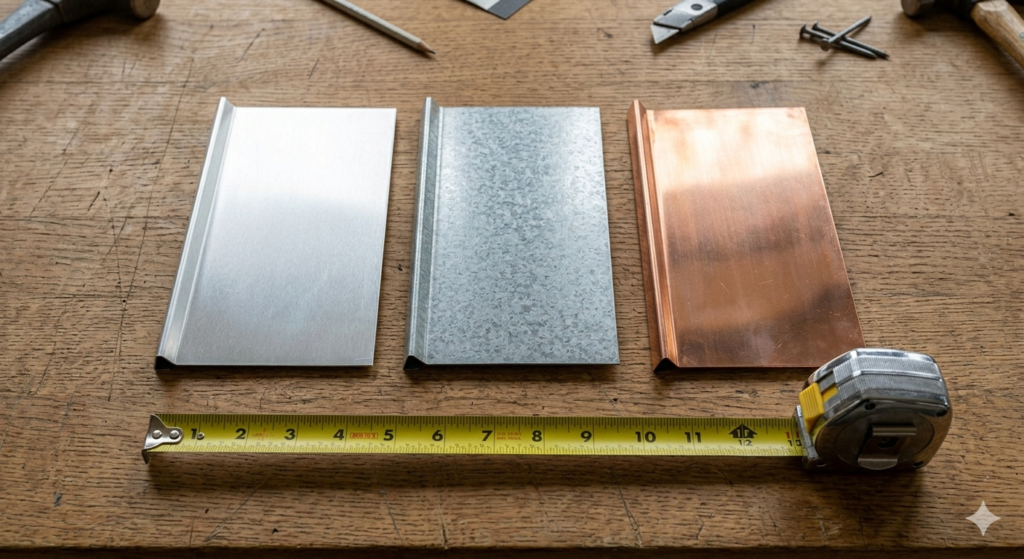
Material is the biggest factor. Aluminum does not rust and is common on residential roofs. Galvanized steel is stiffer and handles impact and ice better, but once the zinc coating is scratched through, rust can start at cut ends and nail holes. Copper is the longest-lasting option and is usually reserved for higher-end projects. Vinyl drip edge exists but is less common on Canadian roofs because cold temperatures can make plastic brittle.
Typical Lifespan by Material
| Drip Edge Material | Typical Lifespan | Strengths | Weaknesses in Cold Climates |
|---|---|---|---|
| Aluminum | About 20 to 30 years, often matching the shingles | Lightweight, rust-resistant, available in many colours | Softer metal can dent or bend under ladders, ice, or heavy snow sliding off |
| Galvanized steel | About 20 to 30 years with intact coating | Rigid, holds its shape under ice and wind | Rust can develop where the coating is scratched or cut |
| Copper | 50 years or more | Very durable, does not rust, develops a protective patina | Higher material cost and needs compatible fasteners |
| Vinyl | Often shorter than metal options | Low cost, will not corrode | Can crack or warp with deep cold and temperature swings |
Why Drip Edge Flashing Matters for Your Roof
Water does not always fall cleanly off a shingle edge. Surface tension lets it cling to the underside of the shingles and curl back toward the house. Without a drip edge, that water wicks into the top of the fascia and the edge of the roof sheathing. Over several seasons, the wood swells, softens, and eventually rots.
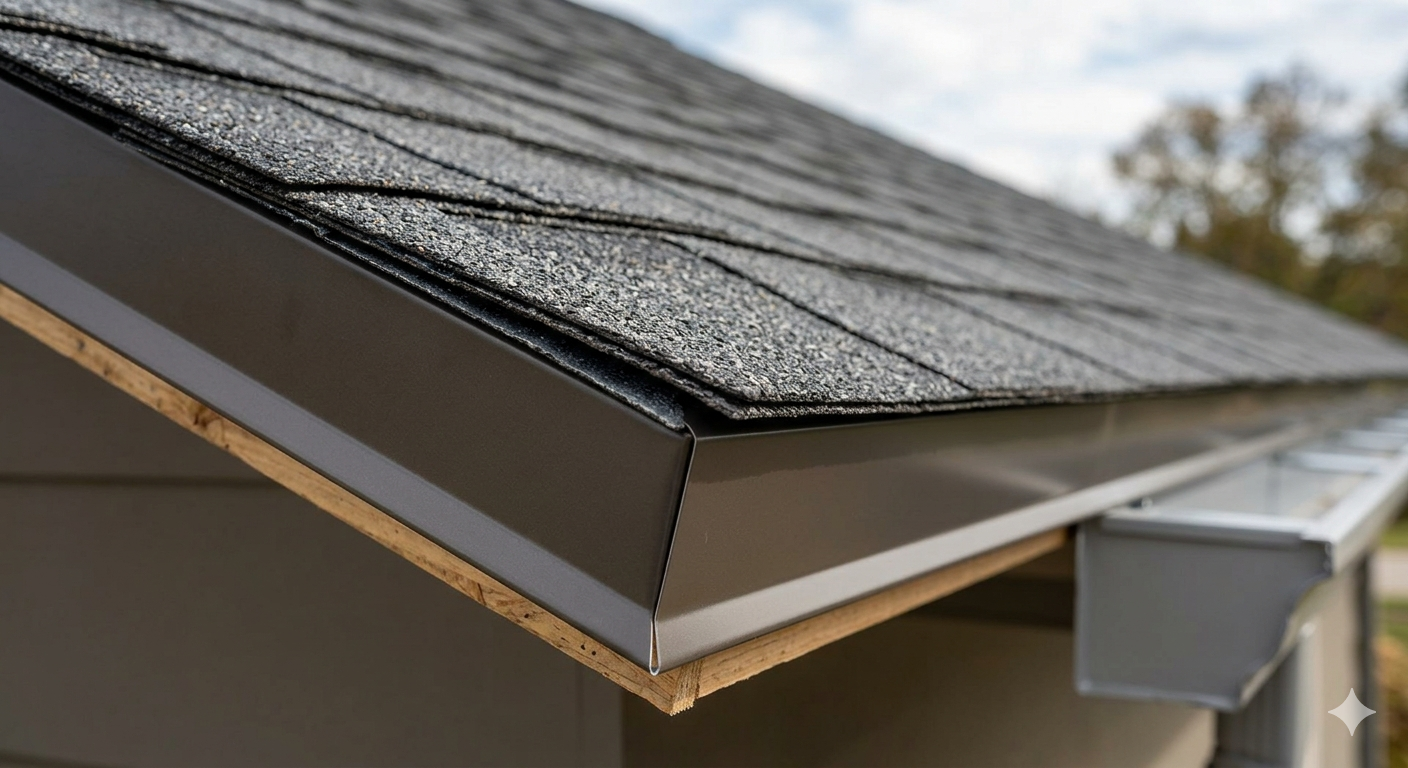
A properly installed drip edge creates a small gap and a bent lip that breaks that path. Water drips off the metal and lands in the gutter instead of running down the fascia. It also supports the first row of shingles so they do not sag over the edge, and it helps close the gap between the deck and fascia where insects, birds, and small animals often try to enter.
What Happens When Drip Edge Fails or Is Missing
- Fascia rot starts at the top edge where water keeps soaking the wood.
- Deck damage develops along the first few feet of roof sheathing, which can soften and lose its hold on nails.
- Gutter overshoot happens when water misses the gutter and splashes against siding or pools near the foundation.
- Ice-related leaks become more likely when meltwater backs up at the eaves and finds an unprotected edge.
- Pest entry becomes easier through gaps between the roof deck and the fascia board.
Because the drip edge works together with your gutters, a failing edge often shows up first as gutter problems. If water is running behind the gutters or staining the fascia, it is worth reading more about how a properly fitted roofing gutter system and edge metal should work together.
How Winnipeg Weather Shortens or Extends Drip Edge Life
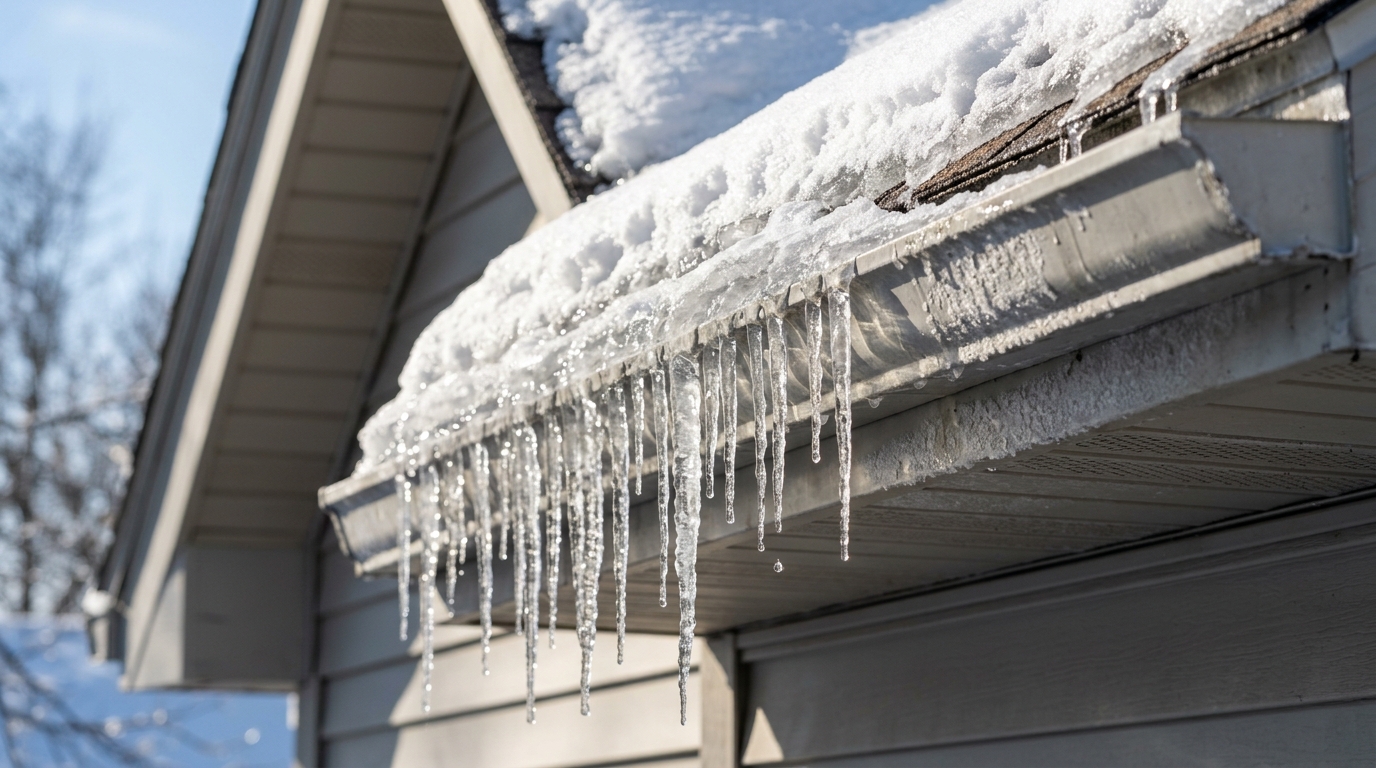
Manitoba winters put roof edges under steady stress. Snow piles up along the eaves, the sun warms the upper roof, meltwater runs down, and it refreezes at the colder overhang. Those freeze-thaw cycles can build ice dams that push water backward under the shingles and against the drip edge. Anyone curious about how long and cold the local season runs can review Winnipeg’s records through Environment and Climate Change Canada’s historical climate data.
Ice itself is heavy. When large sheets of ice or packed snow slide off a roof, they can catch the drip edge and bend it downward. Once the lip is bent, water no longer drips cleanly into the gutter. Strong prairie winds add another layer of wear, since loose edge metal that is not fastened often enough can lift and vibrate until nails work free.
- At the eaves, the drip edge should sit under the underlayment and any ice and water membrane, so meltwater that gets under the shingles still drains over the metal.
- At the rakes, the drip edge should go over the underlayment so wind-driven rain cannot get behind it.
- Good attic insulation and ventilation reduce the warm-roof, cold-edge pattern that creates ice dams in the first place.
That eave layering is closely tied to how a roof ice and water shield is placed, which is one of the main defences against winter leaks on Winnipeg roofs.
Signs Your Drip Edge Flashing Needs Attention
Drip edge rarely fails all at once. Most homeowners notice gradual changes that are easy to miss unless you look up at the roof line from the ground after a heavy rain or a spring melt.
| What You Notice | Likely Cause | Suggested Next Step |
|---|---|---|
| Dark streaks or peeling paint on the fascia | Water getting behind the drip edge or no drip edge installed | Have the edge and fascia inspected for moisture and rot |
| Bent or sagging metal along the eaves | Ice slides, heavy snow, or ladder damage | Straighten or replace the damaged section |
| Rust spots or flaking metal | Worn coating on galvanized steel | Replace corroded sections before holes form |
| Gaps between the drip edge and fascia | Loose fasteners or warped wood | Re-secure the metal and check the wood beneath |
| Water running behind the gutters | Drip edge too short or not extending over the gutter | Adjust or add a gutter apron style edge |
| Soft or crumbling roof edge when touched | Long-term moisture damage to the deck | Book a professional roof assessment |
Repair or Replace Your Drip Edge?
A short section of bent or loose drip edge can often be repaired on its own. Roofers can carefully lift the first course of shingles, remove the damaged piece, and slide in a new length that overlaps the existing metal. This works best when the rest of the edge is in good shape and the wood underneath is still solid.
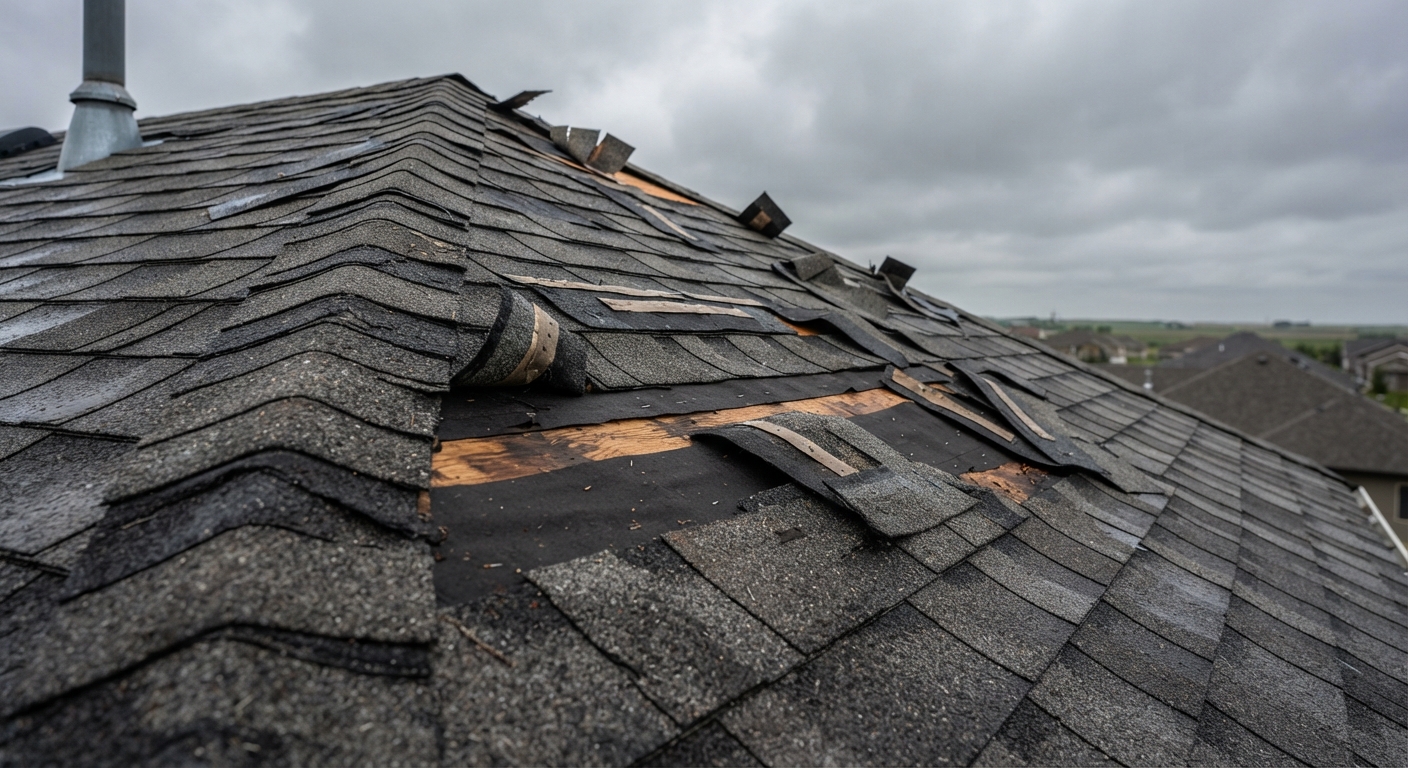
Full replacement makes more sense in a few situations. If the drip edge is corroded along most of its length, if the fascia or deck edge has started to rot, or if the shingles are already near the end of their life, it is usually smarter to replace the drip edge as part of a reroof. Doing it separately means disturbing the shingle edges twice. When a full shingle roof replacement is on the horizon, new drip edge is normally included in that work.
Homes that never had drip edge installed are a special case. Some older roofs were built without it. Adding it later is possible, but the best time is during reroofing, when the underlayment and ice protection can be layered correctly with the new metal. For damage on a newer roof, a targeted roof repair in Winnipeg can restore the edge without replacing the whole system.
Choosing the Right Drip Edge Profile
- L-style edge is a simple right-angle shape, often used on rakes and on lower-cost projects.
- T-style or D-style edge has an extended drip lip that pushes water farther from the fascia and is widely used on eaves.
- Gutter apron has a longer flange that reaches down into the gutter, which helps on roofs where water tends to run behind the gutter.
Things To Know
- Drip edge is cheap compared to the cost of repairing rotted fascia and roof sheathing, so it is rarely worth skipping.
- Eave and rake installations follow different layering rules, and mixing them up is one of the most common causes of early failure.
- Bent drip edge after a winter of heavy ice should be checked in spring, before summer storms test it.
- Galvanized steel and copper should not touch each other or be fastened with mismatched nails, since contact between different metals can speed up corrosion.
- If your shingles are being replaced, ask whether the existing drip edge will be kept or replaced so there are no surprises.
- Staining on the fascia is often the earliest visible warning that water is getting past the roof edge.
- Older homes in established neighbourhoods may have roofs that were built without any drip edge at all.
Zega Roofing works on homes throughout Winnipeg and the surrounding communities we serve, including roof edges that have taken a beating from snow and ice. If you have questions about your drip edge, need help assessing a damaged roof line, or want to talk through your repair options, contact our roofing team for more information.
A Small Strip With a Long Job to Do
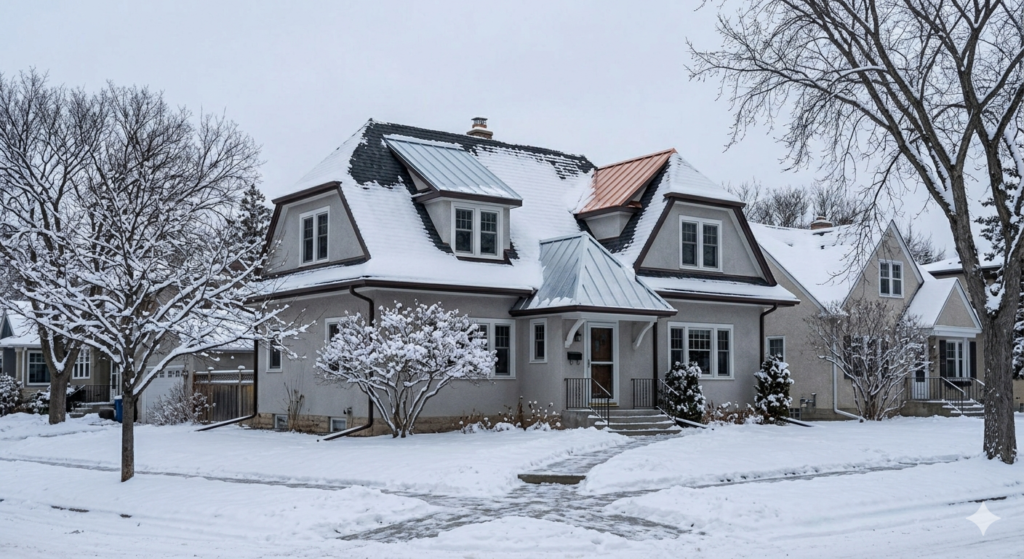
Roof drip edge flashing is a minor line item on a roofing project, yet it quietly protects the fascia, roof deck, and gutters for the entire life of the roof. With the right material and correct layering at the eaves and rakes, it should last as long as your shingles. In Winnipeg, where ice, snow, and wind work on roof edges every winter, a quick look at the roof line each spring is the simplest way to catch drip edge problems while they are still small.
Frequently Asked Questions
Does drip edge need to be replaced when I get a new roof?
Not always, but it usually is. If the existing drip edge is straight, rust-free, and fits the new roof height, it can sometimes stay. Most roofers replace it during a reroof because the material is inexpensive and new metal ensures proper layering with the new underlayment.
Is drip edge flashing required on a roof?
It is strongly recommended on most sloped roofs. Whether it is required can depend on the building code that applies to your home and the instructions of the shingle manufacturer. Ask a local roofer to confirm what applies to your property.
Can drip edge be installed without removing the shingles?
Yes, in many cases. A roofer can lift the first rows of shingles carefully and slide drip edge into place. Results depend on the age and flexibility of the shingles, since brittle shingles in cold weather can crack when lifted.
Which drip edge material works best in Winnipeg?
Aluminum and galvanized steel are the most common choices. Aluminum resists rust well, while galvanized steel is stiffer against ice and impact. Copper lasts the longest but costs more, and vinyl is generally less suited to very cold winters.
Can a damaged drip edge cause roof leaks?
Yes, especially along the eaves. A bent, loose, or missing drip edge lets water reach the fascia and the edge of the roof deck. During winter melts, it can also allow ice dam water to work its way into the structure.