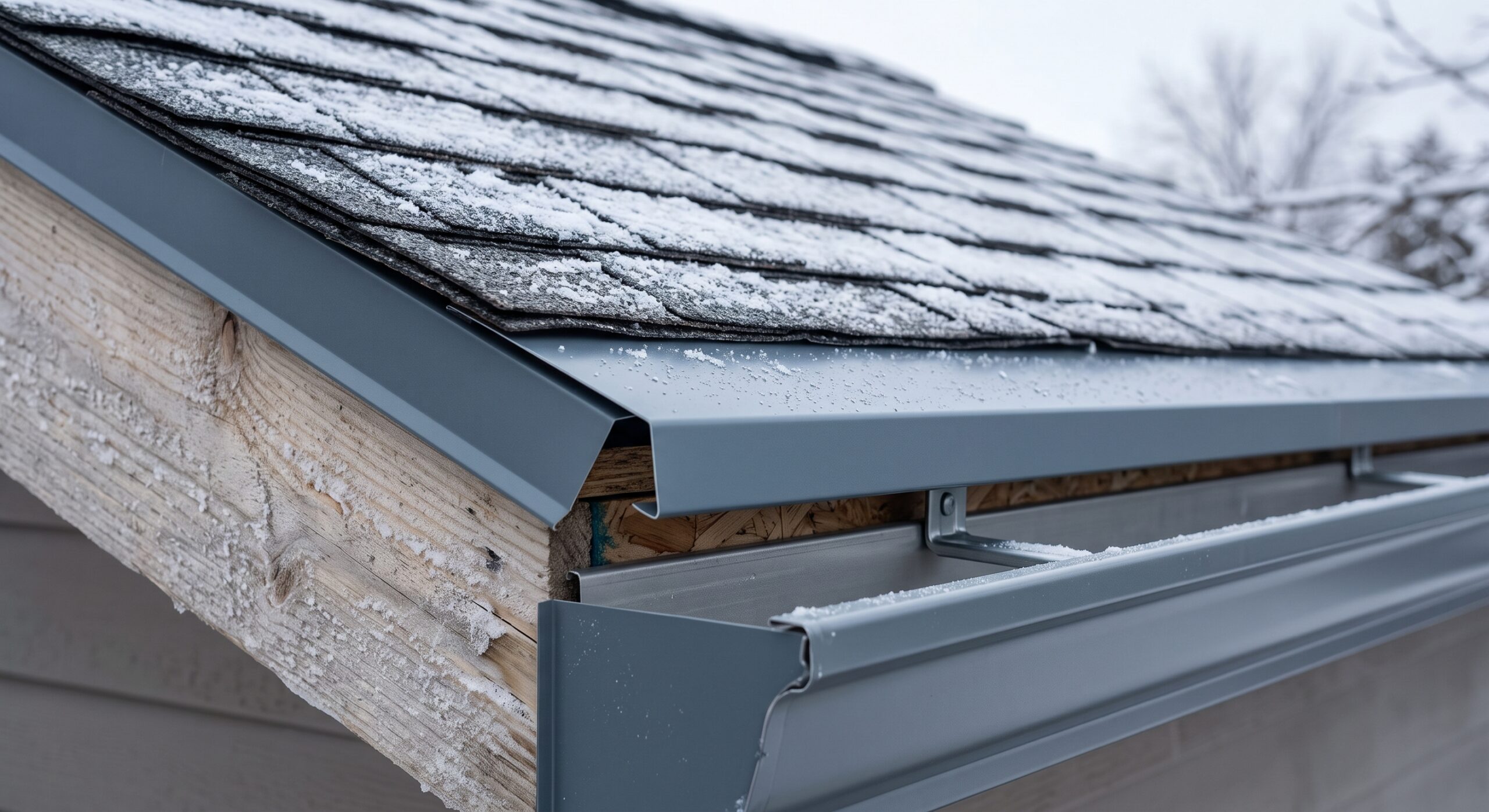
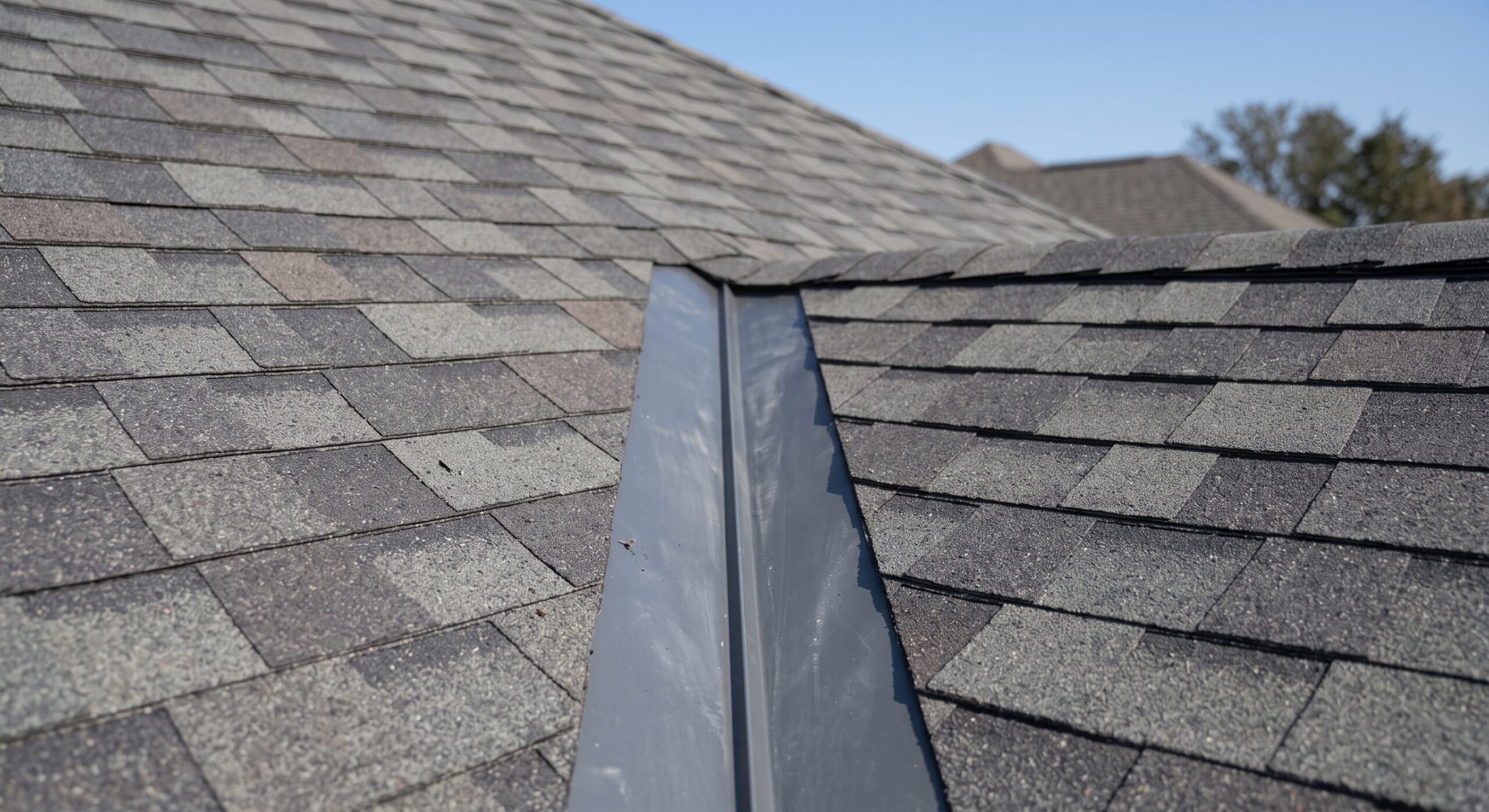
Roof flashing metal is the thin sheet material installed at roof joints, valleys, chimneys, and vent pipes to keep water from working its way into the structure below. A roof with damaged or missing roof flashing metal can develop a leak in a single freeze-thaw cycle, even if the shingles themselves are in good condition.
Winnipeg’s swings between heavy snow, spring melt, and summer wind put constant pressure on these small metal seams, which is why homeowners across the city ask about material choices, warning signs, and repair timing every roofing season. T
he sections below break down what roof flashing metal does, the materials it comes in, how to tell when it is failing, and how to decide between a repair and a full replacement.
What Roof Flashing Metal Actually Does on a Roof
Roof flashing metal works as a barrier at every point where a roof surface changes direction or meets another structure. Shingles alone cannot seal a joint, a corner, or a penetration, so the metal is bent and layered to direct water away from these vulnerable spots before it ever reaches the roof deck.
Without it, water finds the smallest gap and follows gravity downward, often traveling along rafters before it ever shows up as a ceiling stain. That delay is part of why flashing problems go unnoticed until the damage is already extensive.
Where roof flashing metal is typically installed
- Roof valleys, where two slopes meet and water volume is highest
- Around chimneys and skylights
- Along roof edges and eaves
- At vent pipe penetrations
- Where a roof meets a wall or a dormer
Types of Roof Flashing Metal Used on Residential Roofs
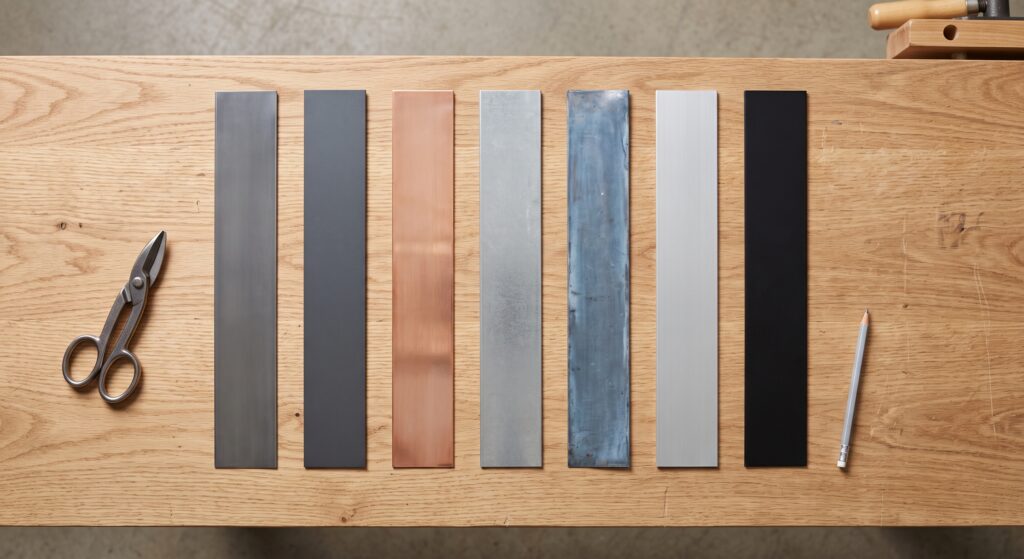
Not every metal performs the same way under Manitoba weather. Some materials resist corrosion better, while others are chosen for cost or ease of shaping around complex rooflines. The table below compares the most common options.
| Material | Corrosion Resistance | Typical Lifespan | Best Suited For |
| Galvanized steel | Moderate, can rust if coating wears | 15 to 20 years | Standard residential roofs |
| Aluminum | High, does not rust | 20 to 25 years | Most Winnipeg homes, lightweight and workable |
| Pre-finished steel | High with intact coating | 25 to 30 years | Homes wanting a colour-matched finish |
| Copper | Very high, develops protective patina | 40+ years | Higher-end installations, chimneys, dormers |
Aluminum tends to be the most common choice for standard roof flashing metal on Winnipeg homes because it resists corrosion well and is easy to form around irregular roof lines without cracking in cold temperatures. Copper is more expensive up front but rarely needs replacement, which is worth factoring in for anyone planning to stay in their home long term.
Signs Your Roof Flashing Metal Is Failing
Flashing failures rarely announce themselves clearly. Most homeowners notice a secondary symptom, like a stain or a draft, long before they spot the actual metal problem.
Catching these signs early keeps a small flashing repair from turning into a deck replacement, which is a far more involved and costly project.
Warning signs worth checking for
- Rust streaks or discoloration running down the siding below a joint
- Visible gaps, curling edges, or loose fasteners on the metal itself
- Water stains on ceilings near chimneys or roof valleys
- Soft or discoloured drywall in an attic space
- Granules or metal shavings collecting in the gutters
- Daylight visible through the roof deck near a vent pipe
If any of these show up after a heavy snowmelt or a windstorm, it is worth arranging a roofing gallery review of similar completed projects to understand what a proper flashing repair should look like before work begins.
Repairing vs Replacing Roof Flashing Metal: Which Is the Better Call
The decision between a patch repair and a full flashing replacement comes down to how localized the damage is and how old the original installation is. A small section with surface rust and no leak history can often be repaired. Widespread corrosion, multiple failure points, or flashing tied to a roof that is nearing the end of its own service life usually points toward replacement instead.
| Factor | Repair Makes Sense When | Replacement Makes Sense When |
| Damage scope | Limited to one joint or seam | Multiple areas show corrosion |
| Roof age | Roof has significant life remaining | Roof is near the end of its lifespan |
| Leak history | No prior leaks recorded | Recurring leaks in the same area |
| Material condition | Metal is intact, just loose or dented | Metal is thin, cracked, or rusted through |
Why one option wins over the other usually depends on the roof deck underneath. If moisture has already reached the wood, a surface repair only delays the next failure.
How a contractor determines this is by pulling back a section of shingle to inspect the deck condition directly, not by guessing from the visible metal alone.
For most Winnipeg homes with an aging roof, replacing the roof flashing metal at the same time as other roof work tends to be the more cost-effective and longer-lasting choice, since it avoids paying for labour twice on the same section of roof.
Roof Flashing Metal Installation and Winnipeg’s Climate
Winnipeg’s freeze-thaw pattern is one of the harder climates in the country for roofing components. Metal expands and contracts with temperature swings, and fasteners that were snug in October can loosen by February once repeated freezing has worked them slightly outward.
Proper installation accounts for this movement by using slip joints and enough overlap between flashing sections so the metal can expand without pulling apart at the seams. Sealant alone is never a substitute for correctly overlapped metal, since caulking degrades faster than the metal itself and needs regular reapplication.
Spring, after the snow has cleared but before summer storms arrive, tends to be the most practical time to schedule flashing work in this region. It gives a clear view of any winter damage while avoiding the scheduling backlog that hits most Winnipeg roofers in late summer and fall.
Homeowners in Zega Roofing‘s service area can also review coverage across areas we served to confirm timing availability for their neighbourhood.
For a broader look at how Canadian climate conditions affect residential roof components generally, the Canada Mortgage and Housing Corporation publishes maintenance guidance that applies well beyond flashing alone.
Things To Know About Roof Flashing Metal
- Flashing failure is one of the most common causes of roof leaks, more so than worn shingles in many cases
- Rust on flashing does not always mean the metal has failed structurally, but it should still be inspected
- Flashing around a chimney needs more overlap than flashing on a straight roof edge due to higher water volume
- Sealant should be treated as a backup, not the primary waterproofing method
- An annual visual check after winter can catch flashing issues before they reach the interior of the home
- Mixing incompatible metals, such as certain steel and copper combinations, can accelerate corrosion through galvanic reaction
Homeowners planning related roof work may also want to look at how roofing edge flashing and roof ice and water shield work alongside flashing to protect the roof deck through winter, since these components are usually addressed together during a full inspection.
Final Word on Roof Flashing Metal
A roof’s weather protection depends on more than shingles, and roof flashing metal is often the first component to fail long before the rest of the roof shows visible wear.
Choosing the right material, watching for early warning signs, and timing repairs around Winnipeg’s freeze-thaw seasons all play a part in keeping water out of the structure underneath.
Whether the situation calls for a small repair or a full section replacement usually comes down to how far the damage has spread and how much life remains in the surrounding roof.
If you have questions about roof flashing metal, repair timing, or want a professional inspection before the next season change, contact our roofing team at Zega Roofing. We are happy to walk through what your roof needs and provide a clear, honest assessment.
Frequently Asked Questions About Roof Flashing Metal
What is the most durable roof flashing metal option?
Copper is generally the most durable roof flashing metal, often lasting 40 years or more. Aluminum and pre-finished steel are more common on standard homes due to lower material cost while still offering strong corrosion resistance.
How often should roof flashing metal be inspected?
Once a year, ideally after winter, is a reasonable schedule for inspecting roof flashing metal. Additional checks after major windstorms or heavy snowmelt help catch damage before it reaches the interior.
Can roof flashing metal be repaired without replacing the whole roof?
Yes, localized flashing repairs are common and do not require a full roof replacement. This works well when the surrounding shingles and roof deck are still in good condition.
Does rust always mean roof flashing metal needs replacement?
Not always, since surface rust can sometimes be treated, but rust through the metal usually means replacement is needed. A physical inspection is the only reliable way to tell the difference.
Why does Winnipeg weather affect roof flashing metal more than other regions?
Winnipeg’s frequent freeze-thaw cycles cause metal to expand and contract, which loosens fasteners and seams over time. This makes properly overlapped installation more important here than in milder climates.