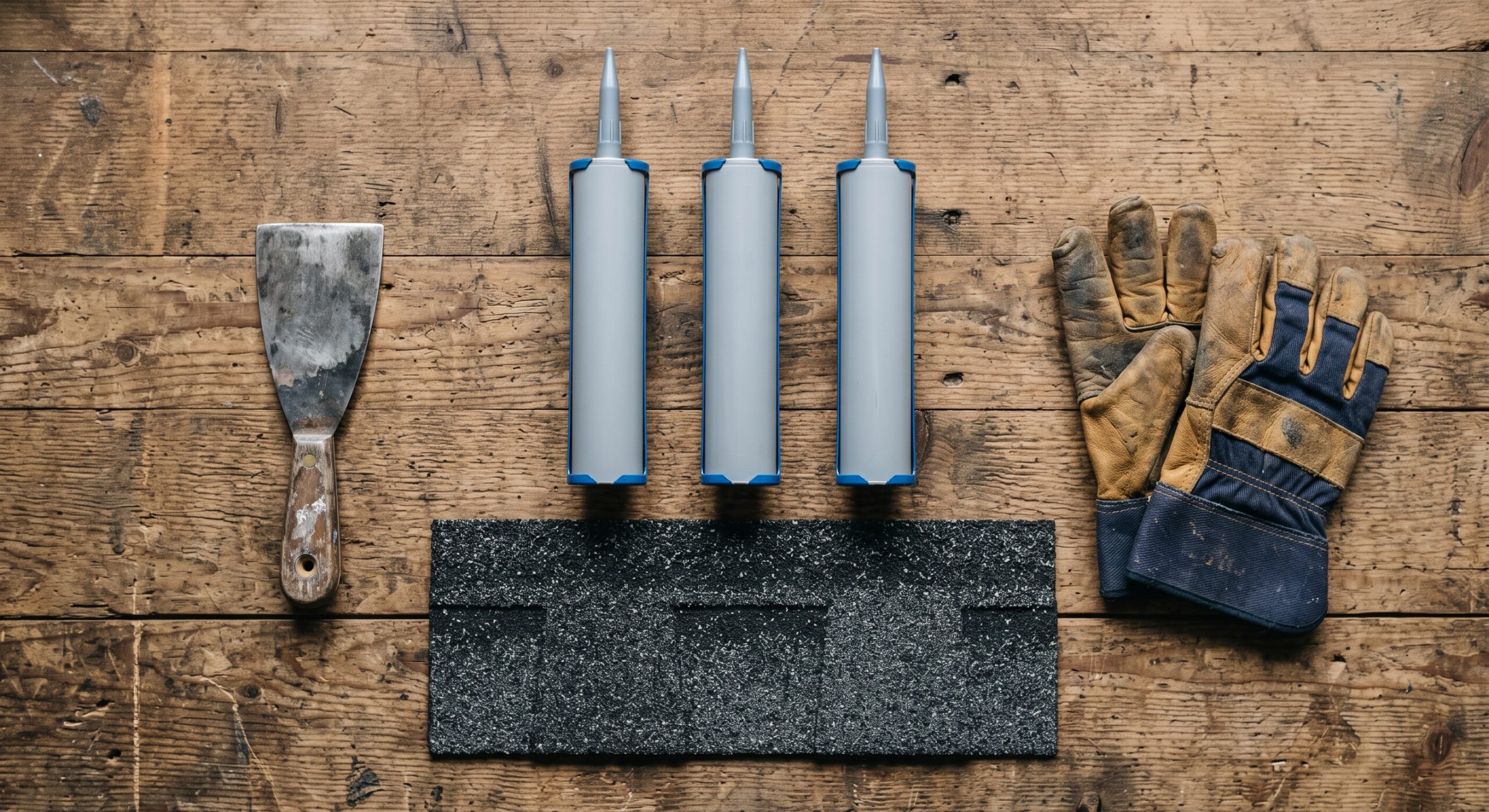
The best roofing glue for most Winnipeg homes is a fibered asphalt roofing cement, used in small dabs under shingle tabs and in a thin bed around flashing. Polyurethane sealant suits metal and vent penetrations, while wet-patch cement covers urgent repairs when moisture cannot be avoided.
Three factors decide whether the bond survives. The first is the roof material, the second is the air temperature on the day of work, and the third is how much wind the roof faces. Cold curing, freeze-thaw movement, and heavy-handed application cause most failures on prairie roofs. Get those right and a modest tube of adhesive can protect a roof through many winters.
Which Roofing Glue Is the Best Choice for a Winnipeg Roof?
For asphalt shingle roofs, the strongest all-round choice is a fibered asphalt cement sold in a caulk-gun tube. The fibres add body, so the material stays put on a slope and resists slumping on a hot July afternoon. It also flexes a little when temperatures swing from a bitter morning to a mild afternoon in March, which is exactly what Winnipeg roofs endure.
Metal roofs, skylight curbs, and plumbing vent boots need something different. A polyurethane or rubberized sealant stretches and rebounds, so it keeps a seal where two unlike materials move at different rates. Asphalt cement can stiffen and crack in those spots, which makes it a poor match for metal.
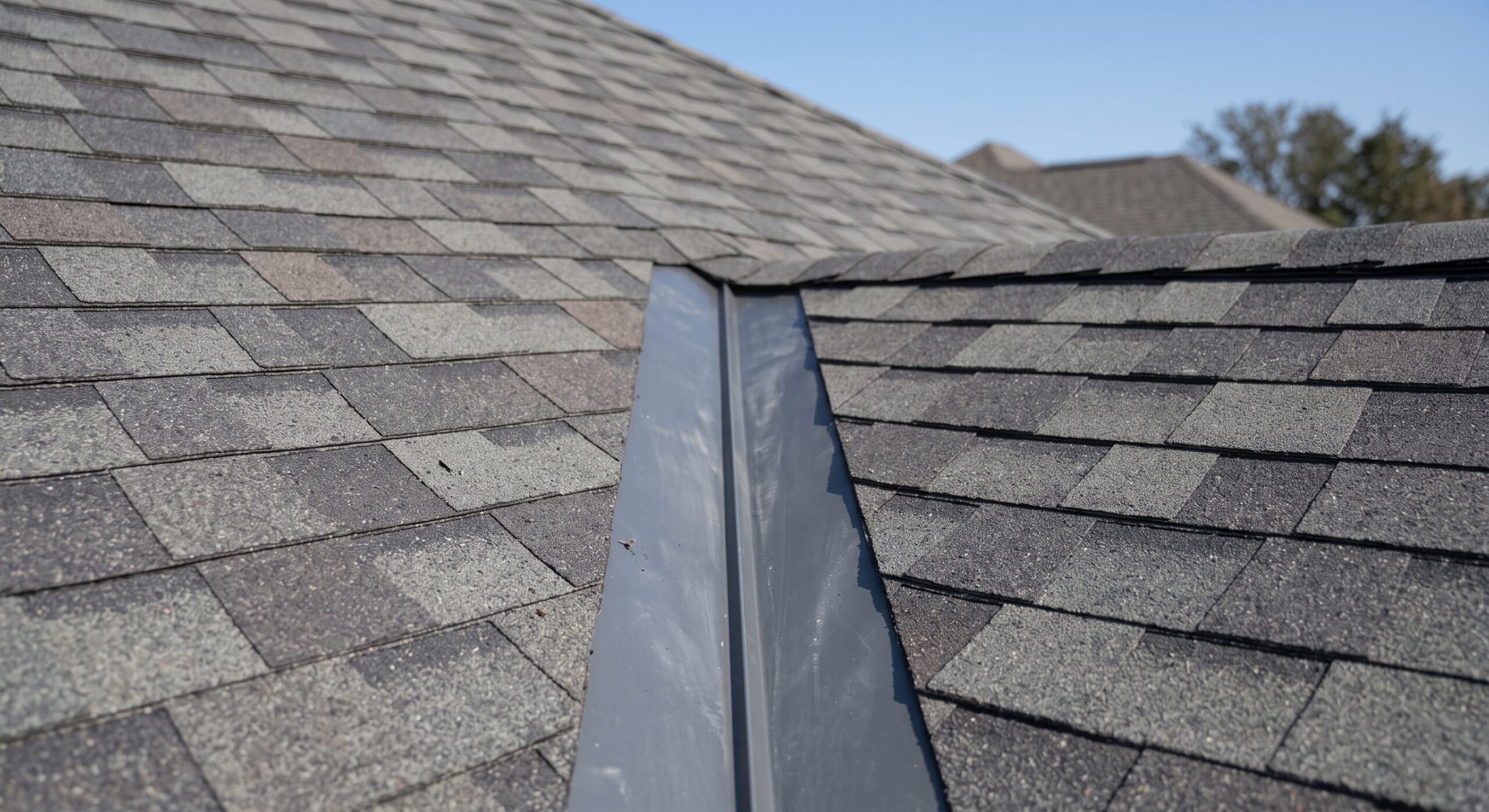
Ridge caps, hips, and valleys deserve extra thought because they take the heaviest wind and water load. Fibered cement works well at ridge caps when applied sparingly beneath each overlap, while valleys usually need a sealed membrane underneath rather than surface adhesive alone.
Emergency leaks call for wet-patch cement. It is formulated to grip damp surfaces, which helps when meltwater is dripping through a cracked flashing joint and the weather will not cooperate. Treat it as a temporary bridge, then book a proper repair once the surface dries.
The best option therefore depends on the surface. Shingles pair with fibered cement, metal and penetrations pair with elastomeric sealant, and damp emergencies pair with wet-patch cement. Choosing by surface rather than by price keeps a repair from failing after the first hard freeze.
Why Roofing Glue Matters on Prairie Roofs
Shingles are designed to bond to each other through factory sealing strips that soften in the sun and press together. In cold months that activation never happens. A roof installed in late October may sit unsealed until spring, and every gust in between can lift a tab, crease it, or tear it away.
Adhesive fills that gap. A few dabs under each tab hold the shingle flat until the weather warms, and they give storm winds far less edge to grab. Around chimneys, vents, and valleys, the same material seals seams where water likes to travel.
Consider a bungalow in St. James after a March windstorm. The homeowner spots three shingle tabs curled upward along the south edge. A few careful dabs of cement on a mild, dry afternoon can settle them flat, but leaving them alone lets meltwater slip beneath the row above and soak the sheathing over the following weeks.
Winnipeg adds a second problem. Snow melts on warm afternoons, refreezes overnight, and pushes into any small gap. Water that enters a hairline crack expands as it turns to ice and widens the crack a little more each cycle. The federal Canadian Climate Normals show how widely the city’s temperatures range, and a sound adhesive seal closes the gap before that cycle begins.
Wind is the third factor. Open prairie gusts get under loose edges, and a lifted tab lets rain and snow reach the underlayment. A small bond at the edge prevents that chain reaction. Adhesive also works alongside bigger protective layers such as a roofing ice shield along the eaves, which handles ice dam backup that adhesive alone cannot stop.
Types of Roofing Glue and Where Each One Fits
Product labels use several names for similar materials, so sorting them by base chemistry and by job keeps the choice simple.
Asphalt-Based Cement
- Fibered cement for shingle tabs, ridge caps, and general flashing seams
- Smooth cement for thin coats over small patches
- Wet-patch cement for damp surfaces and short-term leak control
Elastomeric and Polyurethane Sealants
- Suited to metal panels, skylight edges, and vent boots
- Stay flexible in deep cold, which suits prairie winters
- Bond to many surfaces but need clean, dry contact
Specialty Adhesives
- Membrane seam adhesive for flat garage and commercial roofs
- Tile bonding adhesive for replacing individual broken pieces
| Type | Best Surface | Cold Flexibility | Ideal Use |
| Fibered asphalt cement | Asphalt shingles | Moderate | Tab sealing and flashing seams |
| Wet-patch cement | Damp asphalt or metal | Moderate | Temporary leak repair |
| Polyurethane sealant | Metal, vents, skylights | High | Penetrations and metal seams |
| Membrane seam adhesive | Flat roof membranes | High | Seams on low-slope roofs |
Most homeowners with pitched shingle roofs will only ever need the first row, while flat roofs on garages and commercial buildings lean on the last. If a low-slope roof leaks at a seam, a roof membrane inspection is a better first step than adding more adhesive.
Compatibility deserves a final check. Some solvent-based products soften certain foam and membrane materials, so a small test patch or a call to the manufacturer avoids expensive surprises.
How to Apply Roofing Glue Step by Step
Application is simple, but small details decide whether the bond lasts through a full winter.
The order of work matters as much as the product. Clean surfaces bond, dusty ones do not, and pressure applied while the material is still tacky locks the bond in place. Rushing any of these steps is the most common reason a patch fails by the following spring.
Preparation Before You Climb
- Pick a dry day with air temperature at or above the minimum printed on the tube
- Wear soft-soled shoes and use a fall-arrest harness on any steep slope
- Sweep away dust, granules, and loose debris from the contact area
Application Steps
- Lift the shingle tab gently, taking care not to crease it in the cold
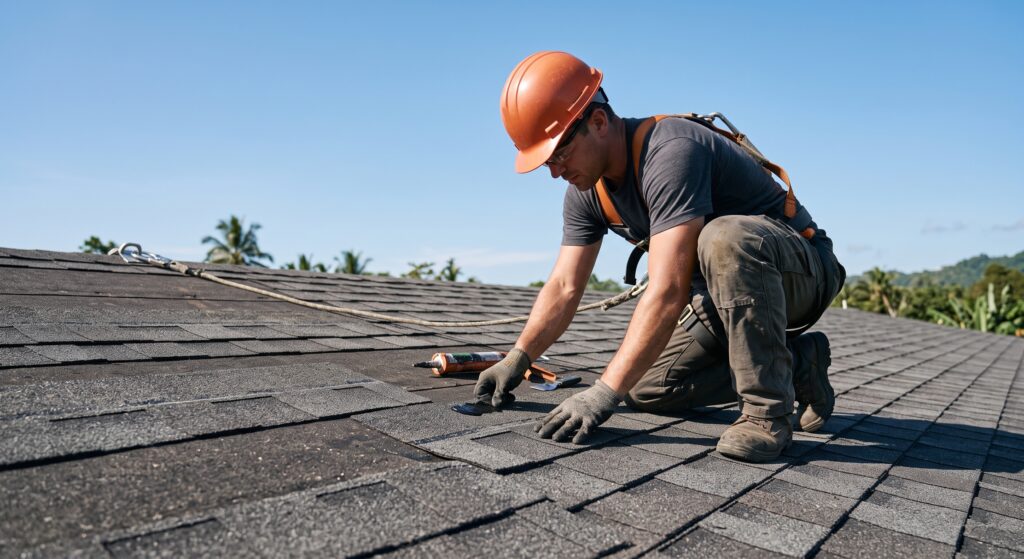
- Place a dab about the width of a loonie under each bottom corner and one near the centre
- Press the tab down firmly and hold for several seconds
- Wipe away any squeezed-out excess with a putty knife
Finishing Touches
- Recheck the roof after the first warm spell and re-press any tab that lifted
- Store unused tubes indoors so the material stays workable
- Log the date and location of each repair so the next inspection starts with a clear record
Restraint matters. Too much product traps moisture, can cause blistering, and may stain the shingle surface. Safety matters even more than tidy work, so if the roof is icy, steep, or higher than one storey, a professional crew is the sensible choice. Repairs on aging roofs sometimes show that a full shingle roof replacement is the better long-term move.
Cold Weather Rules for Winnipeg Winters
Adhesive behaves differently as the temperature drops. Standard cement thickens, becomes hard to push through a caulk gun, and skins over without bonding fully. Many labels give a minimum application temperature, and winter grades exist that stay workable in colder air. Reading the tube before buying prevents a wasted trip up the ladder.
Keep the tube warm before use, for example in a heated garage overnight, and work in short bursts so the material does not stiffen in the nozzle. Choose the sunniest slope in the warmest part of the day, then shield the bond from fresh snow until it sets. If a deep freeze is forecast, postpone non-urgent work until spring.
A seasonal view makes the timing easier to plan.
| Season | Typical Condition | Adhesive Approach |
| Spring | Thaw and wet surfaces | Inspect for lifted tabs and reseal once dry |
| Summer | Heat and long dry days | Best window for flashing and seam work |
| Fall | Cool, damp mornings | Finish repairs before the first hard freeze |
| Winter | Deep cold, snow, and ice | Emergency patches only |
The same calendar applies throughout the areas we served around Winnipeg, from Charleswood to East St. Paul.
DIY Repair or Professional Help
Small jobs such as pressing down two or three lifted tabs on a low, dry roof are reasonable for a careful homeowner. The risk rises quickly with height, slope, ice, or unfamiliar materials. A fall costs far more than any repair, so the safest option for anything beyond ground-level reach is a trained crew.
Professionals also spot the reason behind a failure. A lifted tab might come from nailing that was placed too high, poor attic ventilation that overheats the deck, or a gutter overflow that soaks the edge. Fixing the cause means the adhesive only has to do a small job.
Common Mistakes That Weaken a Glued Roof
Even careful homeowners repeat a handful of errors.
- Using interior construction adhesive that was never made for sun, rain, and freezing
- Smearing a thick layer across the whole tab instead of a few dabs
- Applying over wet, dusty, or icy surfaces
- Mixing incompatible products in the same seam
- Skipping the cause, such as a failed flashing or a blocked gutter
- Working in a strong wind, which blows debris into the fresh adhesive
- Painting over the adhesive, which traps solvents inside
A tube of roofing glue treats a symptom, so it never replaces a diagnosis of why the roof is leaking. A quick photo record before and after each repair also helps a contractor understand the history later, and the roofing gallery shows the kind of clean, even seam work a finished repair should resemble.
Things To Know Before You Buy
- Match the label to the roof material, whether asphalt shingle, metal, or membrane
- Read the minimum application temperature and the cure time before starting
- Choose a caulk-gun tube for control, since bucket cement is messy on a slope
- Treat any roofing glue as a supporting product, because nails and fasteners still do the main holding work
- Ventilate the work area and keep solvent-based products away from open flame
- Follow the shingle maker’s written instructions, since some warranties depend on the sealing method
- Photograph the roof before you start so later comparisons are easy
- Keep the tube’s safety data sheet handy and dispose of empty containers according to local Manitoba waste rules
Talk to a Roofing Professional
If you have any questions about roofing or would like a professional to look at your roof, contact us today. Zega Roofing offers free roofing inspections across Winnipeg and surrounding communities. Call +1 204-997-2697 or visit our contact page to book a visit.
Frequently Asked Questions
What Is the Best Roofing Glue for Asphalt Shingles?
Fibered asphalt roofing cement in a caulk-gun tube is the usual choice. It holds tabs in place, resists slumping on slopes, and tolerates temperature swings.
Can Roofing Adhesive Be Used in Winter?
Yes, for small urgent repairs, if the label allows the current air temperature. Warm the tube first and postpone larger work until conditions improve.
How Much Adhesive Goes Under a Shingle Tab?
Use dabs about the width of a loonie under each bottom corner and one near the centre. More product does not mean a stronger bond and can cause blistering.
Is Roofing Adhesive a Permanent Fix for a Leak?
No. It is a repair aid, not a cure. A recurring leak points to failed flashing, worn shingles, or drainage trouble that needs a full inspection.
How Long Does Roofing Cement Take to Cure?
A surface skin usually forms within hours, while a full cure can take several days. Cold air and high humidity slow the process considerably.
Wrapping Up
Roofing glue works best when the product matches the surface, the day is dry enough for a proper bond, and the amount stays modest. Fibered cement suits shingles, elastomeric sealant suits metal and penetrations, and wet-patch cement is a stopgap only. Pair that knowledge with good timing around Winnipeg’s freeze-thaw calendar and most small leaks never grow into big ones. Small, timely repairs protect a roof best.