

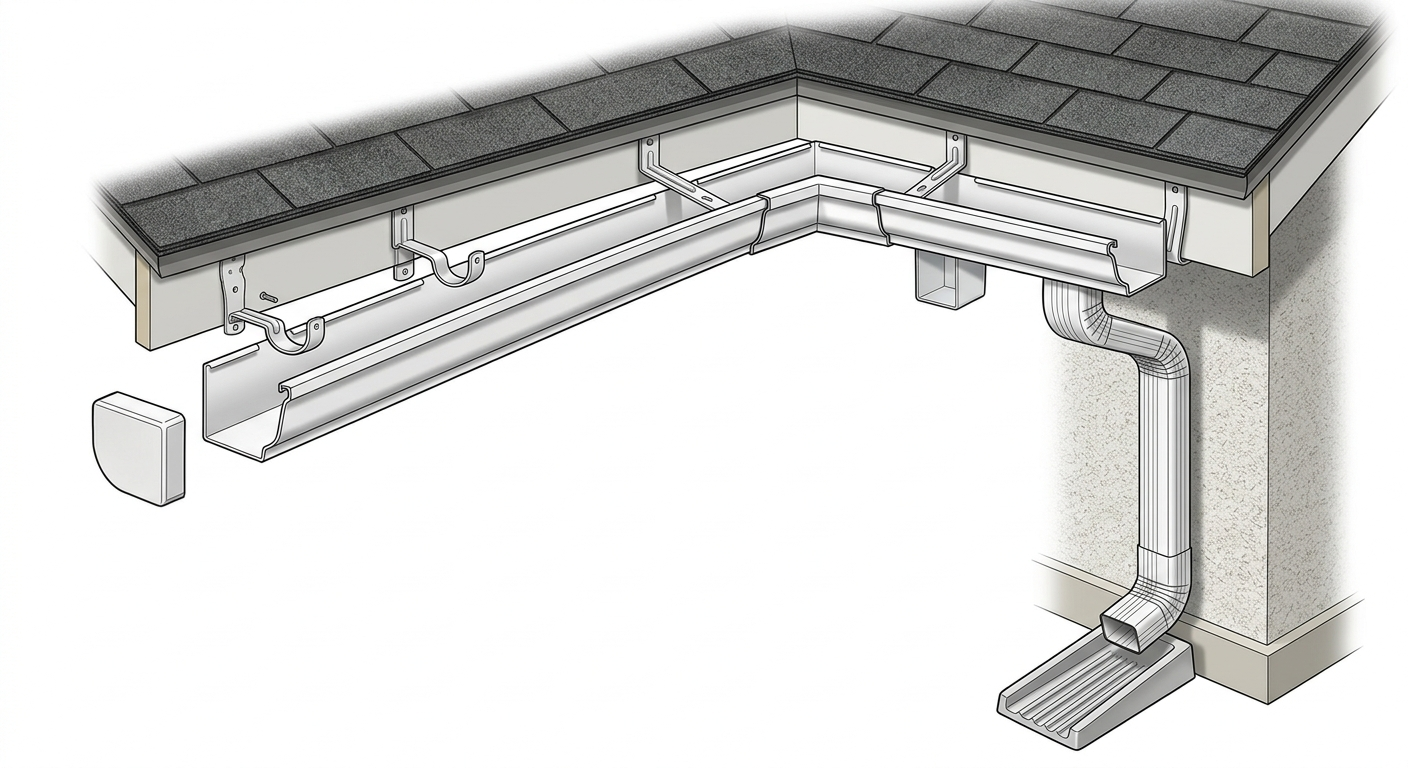
A roof gutter is a trough-like channel installed along the edge of your roofline that collects and diverts rainwater and snowmelt away from your home’s walls, windows, doors, and foundation.
Without a properly functioning roof gutter system, water runoff can seep into the ground directly beside your home, erode soil, flood basements, rot fascia boards, and cause structural damage that becomes expensive to reverse over time.
In Winnipeg, where spring thaws dump significant volumes of melted snow onto rooftops in a short span, a well-maintained roof gutter system is not a luxury — it is a necessity.
This article covers everything you need to know: what a roof gutter does, how to choose the right type, how each component works together, what maintenance looks like across seasons, how to spot early signs of failure, and when professional help is the smartest call you can make.
If you want to protect your home’s structure and foundation for the long term, understanding your roof gutter system is the best place to start.
How Does a Roof Gutter Actually Work?
A roof gutter works by catching water that runs off the surface of your roof during rain or snowmelt and channeling it toward a downspout. The downspout then carries that water vertically down the side of the building and releases it at the base, either into a splash pad, a drain, or a buried discharge pipe that routes water well away from the foundation.
The system relies on gravity and a slight pitch — typically a quarter inch of drop for every ten feet of gutter run — to keep water moving consistently toward the downspout rather than pooling.
When that pitch is incorrect, whether it is too flat or angled in the wrong direction, water sits in the channel and eventually causes rust, rot, and overflow. Proper slope is one of the most critical factors in a roof gutter installation, and it is something that often gets overlooked in DIY setups.
Beyond the channel and the downspout, a complete roof gutter system includes brackets, hangers, end caps, outlet tubes, and sealants at every joint. Each connection point is a potential leak location, which is why the quality of both materials and installation directly affects how long the system performs without problems.
In cold climates like Winnipeg, the expansion and contraction of metal through freeze-thaw cycles puts added stress on those joints. A roof gutter that was sealed carelessly in the fall will very likely be leaking by spring.
Why Every Winnipeg Home Needs a Proper Roof Gutter System
Winnipeg’s climate creates a challenging combination of conditions for any roof gutter system to handle. Heavy summer thunderstorms can dump rain faster than a poorly sized or clogged system can move it, leading to overflow that splashes directly against the foundation.
Winter produces significant ice buildup at the eaves, and spring thaw can generate runoff volumes that overwhelm a system that was not sized or installed with local weather in mind.
Foundation protection is the most important reason to maintain a functional roof gutter system. When water is allowed to pool along the base of a home repeatedly, it softens the surrounding soil, increases hydrostatic pressure against foundation walls, and eventually finds its way into the basement.
Waterproofing a basement or repairing a cracked foundation is dramatically more expensive than maintaining a roof gutter system year to year.
Beyond the foundation, fascia boards — the wooden boards that your roof gutter typically attaches to — are highly vulnerable to water damage if the gutter overflows or pulls away from the roofline.
Rotted fascia not only looks poor but also compromises the structural attachment of the entire gutter system. Soffits, siding, and even the landscaping directly below the roofline can all take damage from uncontrolled runoff.
A properly installed and cleaned roof gutter prevents all of these problems before they start, which is why professional roofing services in Winnipeg consistently emphasize gutter health as part of a complete roofing strategy.
Types of Roof Gutters: Which Option Works Best for Canadian Homes?
Choosing the right type of roof gutter for a Canadian home involves more than picking a material or profile. You need to consider climate, roof pitch, the volume of runoff your home generates, and the visual fit with your exterior.
Below are the most common types used in residential and commercial properties across Canada, with a comparison table to help clarify the differences.
K-Style Gutters
K-style gutters are the most widely installed type in North American residential construction. They have a flat back and a decorative front profile that resembles crown moulding, which gives them a clean, finished look along the roofline.
Their shape also makes them structurally strong, meaning they can hold more water volume than a half-round of the same width without bending or sagging. For most homes in Winnipeg, a five-inch or six-inch K-style roof gutter is the standard recommendation.
Half-Round Gutters
Half-round gutters have a simple, curved profile that mimics a tube cut in half lengthwise. They are more commonly found on older or heritage-style homes where the rounded shape suits the architectural character.
They are slightly easier to clean because debris does not grip the smooth curved interior as readily, but they hold less water volume compared to K-style gutters of the same width. They are also more likely to overflow during heavy downpours if they are not sized generously.
Box Gutters
Box gutters are wider, rectangular channels typically used on commercial buildings or large-scale residential projects with significant roof area. They handle high volumes of runoff and are often built into the roof structure rather than hanging from the fascia.
They require precise installation and regular maintenance but are highly effective for large properties.
Fascia Gutters
Fascia gutters replace the fascia board entirely, functioning as both the structural backing and the water channel in one. They create an extremely clean, seamless exterior look and are popular in modern architectural designs.
Their installation is more involved because they must be precisely fitted, but the result is a durable, low-profile system that reduces the number of joints and potential leak points.
| Gutter Type | Best For | Key Benefit | Consideration |
| K-Style | Most residential homes | High capacity, strong profile | Corners collect debris |
| Half-Round | Heritage or older homes | Easy to clean, classic look | Lower water volume capacity |
| Box Gutter | Commercial or large roofs | Handles heavy runoff volumes | Built-in, complex installation |
| Fascia Gutter | Modern homes | Seamless, minimal look | Replaces fascia board entirely |
For pricing on any of these roof gutter options, contact Zega Roofing directly for a quote tailored to your specific home and roofline.
The Three Main Parts of a Roof Gutter System Explained
A roof gutter system is more than the channel you see along the eave. Understanding each component helps you identify which part is failing when problems arise, and it makes it easier to communicate clearly with a contractor when you need repairs.
The Gutter Channel
The gutter channel is the horizontal trough that runs along the edge of the roof. It is the most visible part of the system and the primary component responsible for catching and holding water as it flows off the roof surface.
The channel must be sized according to the roof’s square footage, the local rainfall intensity, and the pitch of the roof. Undersized channels overflow during moderate rain events, while oversized channels on small homes can look visually out of place and may sag over time without adequate support.
The Downspout
The downspout is the vertical pipe that carries water from the channel down to ground level. It is typically rectangular or round in profile and is attached to the exterior wall with brackets to keep it secure through wind and the weight of moving water.
Most homes require at least one downspout for every thirty to forty feet of gutter run, though homes in high-rainfall climates or with large roof areas may need more. The downspout extension at the base is critical: it should direct water at least six feet away from the foundation to prevent pooling.
The Hangers and Brackets
Hangers and brackets are the fasteners that hold the gutter channel to the fascia board. They must be spaced appropriately — typically every two feet — to prevent the channel from pulling away from the house under the weight of water, ice, or debris.
Inadequate spacing or corroded fasteners are one of the most common reasons gutters fail in Winnipeg. When a section of gutter begins to sag or pull away, it is almost always a hanger issue rather than a problem with the channel itself.
Roof Gutter Maintenance Through the Seasons in Winnipeg
Maintaining a roof gutter system properly requires attention at multiple points throughout the year. Winnipeg’s dramatic seasonal shifts mean that neglect in one season creates compounding problems in the next.
Spring is the time to inspect the system after winter. Ice, snow weight, and freeze-thaw cycles can loosen hangers, crack sealant at joints, and shift the alignment of the channel. Look for sagging sections, open joints, and any areas where water stained the fascia board over winter, as this indicates overflow or a leak.
Summer brings storms that deposit leaves, dirt, seeds, and debris into the channel. A mid-summer inspection and cleaning ensures the system is clear heading into the heavy rainfall months of late summer.
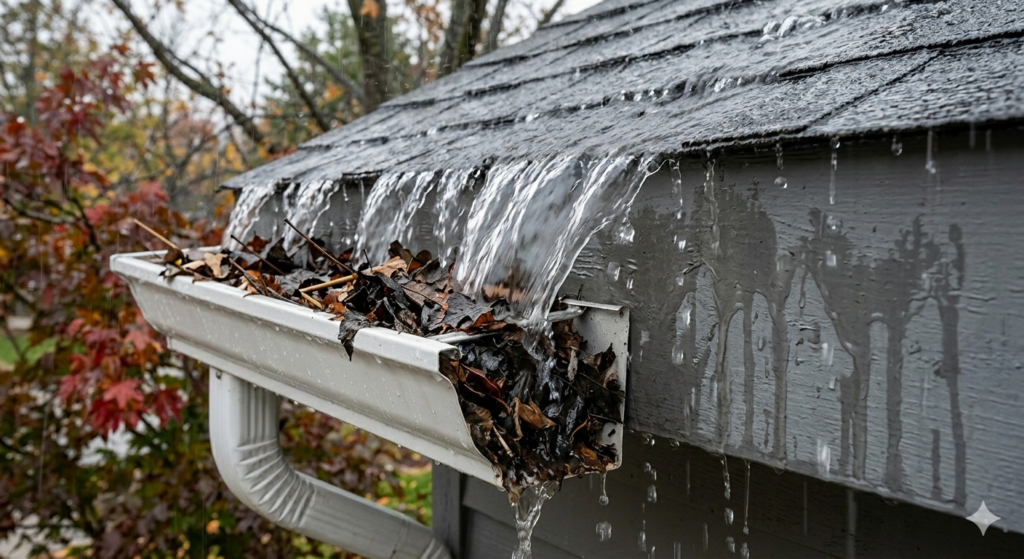
Fall is the most important cleaning period. Leaves from nearby trees fall directly into the channel and compact over time into a dense mat that blocks water flow entirely. Cleaning the roof gutter in late fall, after the majority of leaves have fallen, ensures the system is clear before freeze-up.
Winter is the season where most visible damage happens. Ice dams — ridges of ice that form at the eave when heat escapes from the attic and melts snow that then refreezes at the cold edge — can back water up under shingles and into the channel. A properly ventilated attic, combined with a clear roof gutter system, significantly reduces ice dam formation.
If you want to explore related topics, check out our coverage of roofing ice shield protection and how it works alongside your gutter system to defend against winter moisture damage.
Signs Your Roof Gutter System Needs Attention Now
| Warning Sign | What It Indicates | Recommended Action |
| Water pooling at the foundation | Downspout not directing water far enough away | Extend downspout or regrade soil |
| Sagging gutter channel | Hanger failure or debris weight | Replace hangers, clean channel |
| Peeling paint on fascia board | Overflow or leak at a joint | Reseal joints, check pitch |
| Water stains on siding | Gutter overflowing during rain | Clean channel, check for blockages |
| Rust spots or holes in channel | Material deterioration | Patch or replace affected section |
| Ice dams forming at the eave | Poor attic ventilation, blocked gutter | Address attic ventilation, clear gutter |
Catching these issues early prevents them from becoming structural problems. A roof gutter that overflows consistently will damage the fascia, soffit, siding, and eventually the foundation — all of which are far more expensive to repair than the gutter itself.
If you have noticed any of these signs, it is worth getting a professional assessment sooner rather than later.
For homeowners dealing with related roofing issues at the edges of their roof, it is also worth reading about roofing edge flashing and how it works in conjunction with your gutter system to seal the transition between the roof deck and the fascia.

Things To Know About Roof Gutters Before You Install or Replace
- A roof gutter system should be installed with a slope of at least a quarter inch per ten feet of run to ensure consistent water flow toward the downspout. A level channel will always accumulate standing water, which accelerates corrosion and encourages mosquito breeding in warmer months.
- Seamless gutters are cut to length on-site using a portable machine, meaning there are no joints along the run except at corners and downspout connections. This significantly reduces the number of potential leak points and is the preferred option for most residential installations.
- Gutter guards and leaf screens can reduce cleaning frequency but do not eliminate it entirely. Fine debris, roof grit, and seeds can still accumulate over time and require periodic flushing.
- In Winnipeg, aluminum is the most practical material for a roof gutter system. It does not rust, handles the freeze-thaw cycle reasonably well, and is lightweight enough that it does not put excessive stress on fascia boards or hangers.
- The size of your roof gutter should be determined by your roof’s drainage area and the local rainfall intensity, not just the width of your fascia board. Undersized gutters are one of the most common installation mistakes on Canadian homes.
- Downspout placement matters as much as channel size. Even a perfectly installed roof gutter channel will underperform if the downspouts discharge water too close to the foundation or into areas where the soil does not drain well.
- Professional installation of a shingle roof replacement should always include an evaluation of the existing gutter system to ensure the new roofline drains correctly into the channel.
How Zega Roofing Approaches Roof Gutter Services in Winnipeg
Zega Roofing provides comprehensive roofing and drainage solutions for homeowners and commercial clients across Winnipeg and surrounding communities.
With 25 years of experience in the local climate, the team understands how Winnipeg’s winters, spring thaws, and summer storms each place unique demands on a roof gutter system.
Whether you need a new installation, a full replacement, or a targeted repair of a failing section, Zega Roofing brings certified expertise, quality materials, and a customer-first approach to every job. For pricing, inspections, or to book a service visit, contact Zega Roofing at +1 204-997-2697.
Frequently Asked Questions About Roof Gutters
What is a roof gutter called?
A roof gutter is most commonly called a rain gutter, eavestroph, or simply a gutter. In construction and roofing contexts, it may also be referred to as a drainage channel or water channel. The term eavestrough is particularly common in Canada and refers to the trough-like channel that runs along the eave of the roof.
What is a gutter on a roof?
A gutter on a roof is a channel installed along the lower edge of the roofline that collects and redirects rainwater and snowmelt away from the building. It prevents water from falling directly off the roof edge and pooling against the foundation, walls, or landscaping below. The channel connects to a downspout that carries water safely to the ground level and away from the structure.
What are gutters called in Canada?
In Canada, gutters are most commonly referred to as eavestrough. The term comes from the old word for the eave of a roof combined with trough, describing the channel shape. You will hear both “gutter” and “eavestrough” used interchangeably by Canadian homeowners and contractors, though eavestrough is distinctly the Canadian term that sets the country apart from American usage where “gutter” is more universally used.
What are the three types of gutters?
The three most common types of gutters are K-style, half-round, and box gutters. K-style is the most popular for residential homes due to its high water capacity and flat-back design. Half-round suits heritage homes with its curved, classic profile. Box gutters are used on commercial or large-scale buildings where high drainage volumes are required. Fascia gutters are a fourth option growing in popularity for modern homes that prefer a seamless, built-in appearance.
What are the three main parts of a roof?
The three main parts of a roof are the roof deck, the roof covering, and the drainage system. The roof deck is the structural base, typically made of plywood or OSB, that supports everything above it. The roof covering includes shingles, membrane, or other surface materials that shed water. The drainage system includes the gutters, downspouts, and flashing that move water off the roof and away from the building safely.
Final Thoughts on Roof Gutter Systems for Winnipeg Homeowners
A roof gutter system is one of the most practical investments a homeowner can make in long-term property protection. It works quietly in the background during every rain event and every spring thaw, doing the critical job of keeping water away from your foundation, fascia, and walls. When it is clean, properly sloped, and well-attached, you rarely think about it. When it fails, the consequences reach far beyond the gutter itself.
Understanding how your roof gutter system works, which type suits your home, what each component does, and what warning signs to watch for puts you in a much stronger position as a homeowner. Regular maintenance costs very little compared to foundation repairs, fascia replacement, or basement waterproofing. The smartest approach is to treat your roof gutter as an active part of your home’s structural defense, not as an afterthought or a cosmetic feature. Taking care of it consistently, especially in a climate like Winnipeg’s, is one of the most cost-effective things you can do to protect the value and integrity of your property.